Saint Macarius the Abbot Festival (Queen of the Castle)
The patronal feast of Oliveto Citra, featuring Byzantine relics, the Contrada Fair, and the memory of the Queen of the Castle
About Saint Macarius the Abbot Festival
A patronal feast in the heart of the Sele Valley
The Saint Macarius the Abbot Festival is the defining event for Oliveto Citra, a village of just over three thousand inhabitants perched three hundred meters high in the province of Salerno, Campania, overlooking the Sele Valley. The patron saint is celebrated on May 24, but when this date coincides with a major liturgical solemnity, the Municipality and the Parish move the festivities to the following weekend, allowing the entire community and those living abroad to reunite in the village.
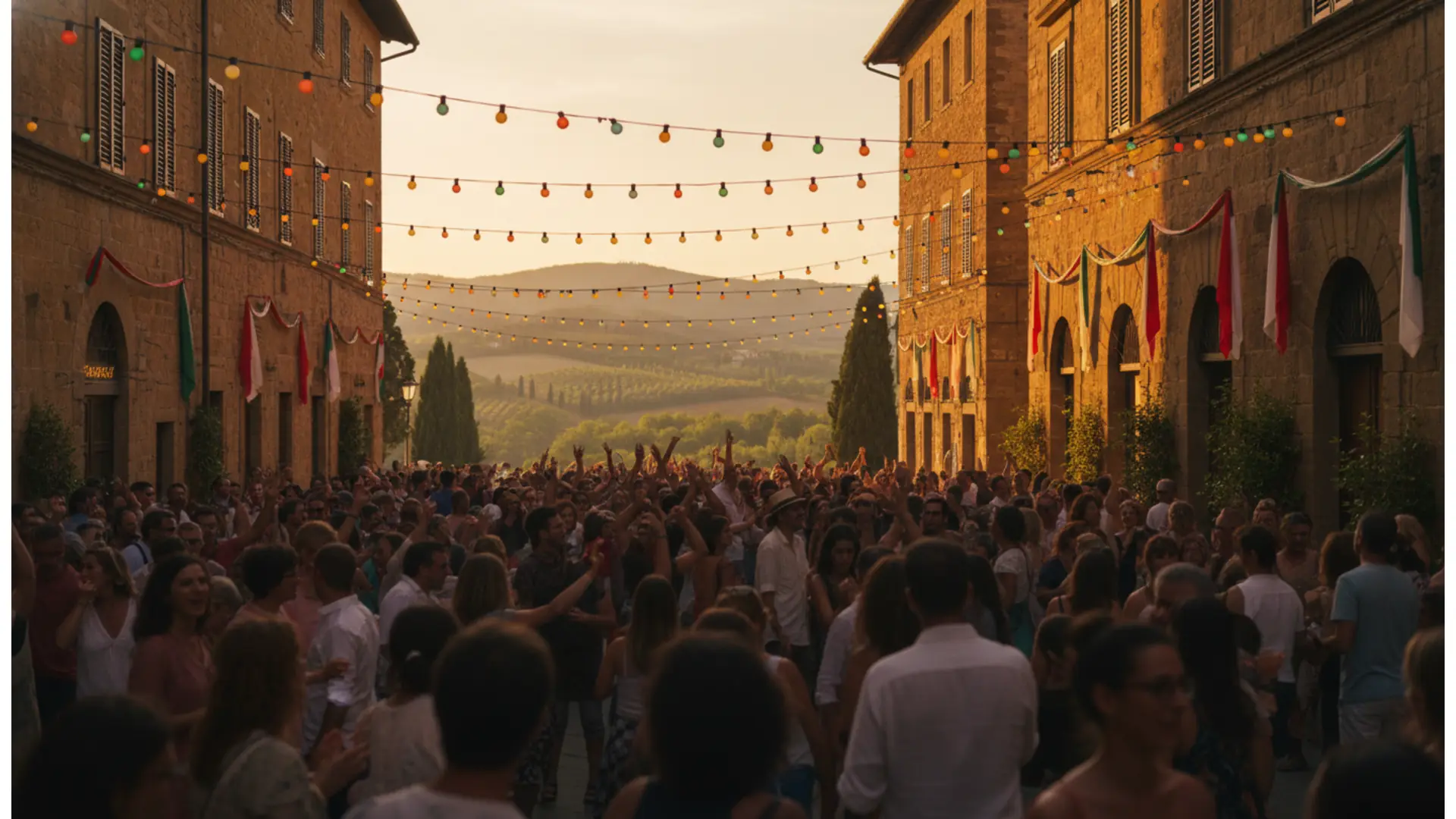
This is not a festival built for tourism; it is the day the village truly recognizes itself. The streets of the historic center fill with stalls from the early hours of the morning, families set tables for relatives returning from afar, and in the evening, the village follows the statue of the Saint in silence through the alleys, accompanied by the notes of the town band.
Saint Macarius, the monk from Collesano
The figure of the patron saint has a fascinating and little-known history. Macarius—from the Greek makarios, meaning "blessed" or "happy"—belonged to an extraordinary family of Italo-Greek monks originating from Collesano, Sicily, during the Arab occupation. His father Christopher, mother Kali, and brother Sabas are also venerated as saints. The family moved around 941 to the monastic area of Mercurion, between Calabria and Basilicata, where Macarius died in 1005.
His relics arrived in Oliveto Citra in 1517 and were housed in the church of Santa Maria del Paradiso. They underwent official examinations in 1632 and 1845, and in 2012, a silver bust containing the Saint's remains was blessed by Pope Benedict XVI. For centuries, the farmers of the valley have invoked Macarius for healing and for good weather for their harvests: a concrete, agricultural devotion that explains why the festival remains so deeply felt.
The Queen of the Castle and May 24, 1985
There is a second thread that makes this date unique. During the patronal festivities on May 24, 1985, twelve children playing in the small square of the Norman Castle reported hearing a child crying and seeing a young woman holding a baby. Since that day, Oliveto Citra has become a destination for pilgrimages linked to the Queen of the Castle, with prayer meetings held throughout the year. The anniversary of the alleged apparitions thus coincides with the patronal feast, and the two levels—the popular one of the fair and the Marian one of the pilgrims—coexist in the same village.
Contrada Fair, processions, and town band
The structure of the festivities is well-established and repeats year after year:
- The Contrada Fair, which opens at dawn along Via P. Capasso, Via F. Cavallotti, and Via A. De Gasperi: stalls selling goods, tools, sweets, and local products, inheriting the tradition of the ancient valley cattle fairs.
- The novena and rosaries in the days leading up to the festival, with prayers to the Saint at the rural Chapel of Saint Macarius the Abbot, outside the town center.
- Two processions: the first brings the Saint from the rural chapel to the village, the second accompanies him back through the streets of the center, both escorted by the "Città di Oliveto Citra" town band.
- The evening musical show in Piazza Garibaldi, a civil and convivial moment that closes the festival.
"In the Footsteps of Macarius"
In recent years, the Municipality has given the festivities the title "In the Footsteps of Macarius", including them in the Fermenti Art Festival program and a cultural enhancement project supported by the PNRR. The stated goal is to promote the historical, religious, and identity-based heritage of Oliveto Citra, connecting the patronal feast with the museum, the castle, and the village's itineraries.
Oliveto Citra, a village to discover
Those who arrive for the festival find much more than a procession. The Guerritore Castle, of Norman origin and remodeled until the 16th century, dominates the town and the valley. In the municipal territory, one can also find the famous mofete, natural soil degassing phenomena—the most extensive being the Varchera—that make the landscape of Oliveto Citra truly unique. All around, the Sele Valley offers vineyards, olive groves, and an enogastronomic tradition that the town celebrates in autumn with the historic Grape Festival.
Saint Macarius the Abbot Festival — edition 2026
An edition moved by one week
May 24, 2026, fell on the solemnity of Pentecost: to avoid overlapping two major celebrations, the Santa Maria della Misericordia Parish and the Municipality of Oliveto Citra postponed the patronal feast to the following weekend, May 30 and 31. This choice allowed for a more relaxed program, preceded by a week of spiritual preparation.
"In the Footsteps of Macarius"
The initiative was announced by the municipal administration under the title "In the Footsteps of Macarius", a reference to the journey that, according to tradition, brought the monk from Collesano to the village in the Sele Valley. The 2026 edition was part of the Fermenti Art Festival program and a cultural enhancement project supported by the PNRR, designed to promote the historical, religious, and identity-based heritage of Oliveto Citra, in the province of Salerno.
Fair, processions, and music
On Saturday, May 30, the Contrada Fair enlivened Via P. Capasso, Via F. Cavallotti, and Via A. De Gasperi from 8:00 AM. In the evening, the rosary, supplication, and mass were held at the rural chapel, followed by the procession with the "Città di Oliveto Citra" town band, conducted by maestro Antonio Conforti. On Sunday the 31st, celebrations took place at the church of Santa Maria della Misericordia, followed by the second procession and, at 10:00 PM in Piazza Garibaldi, the musical show featuring "gli Equipe 84 La Storia," dedicated to the repertoire of one of the most beloved bands in Italian music.
Programme Saint Macarius the Abbot Festival 2026
From Monday, May 25 to Friday, May 29, 2026
- 6:30 PM — Holy Rosary, preparatory prayer, and Eucharistic celebration
Saturday, May 30, 2026
- 8:00 AM — Via P. Capasso, Via F. Cavallotti, and Via A. De Gasperi: traditional Contrada Fair
- 6:30 PM — Rural Chapel of Saint Macarius the Abbot: Holy Rosary, Supplication to the Saint, and Eucharistic celebration
- 8:00 PM — Procession from the rural chapel accompanied by the "Città di Oliveto Citra" town band, conducted by maestro Antonio Conforti
Sunday, May 31, 2026
- 11:00 AM — Santa Maria della Misericordia Church: Eucharistic celebration
- 6:00 PM — Holy Rosary and Eucharistic celebration
- 7:30 PM — Procession through the streets of the center with the town band
- 10:00 PM — Piazza Garibaldi: musical show with "gli Equipe 84 La Storia"
Highlights Saint Macarius the Abbot Festival 2026
- Contrada Fair from 8:00 AM on Saturday, May 30, heir to the ancient fairs of the Sele Valley
- Two processions escorted by the "Città di Oliveto Citra" town band
- Concert "gli Equipe 84 La Storia" in Piazza Garibaldi, Sunday, May 31 at 10:00 PM
- Week of preparation with rosary and evening mass from May 25 to 29
- Festival included in the Fermenti Art Festival program and a PNRR cultural enhancement project
Prices Saint Macarius the Abbot Festival 2026
Practical information — Saint Macarius the Abbot Festival
How to get there
By car: Take the Contursi Terme exit on the A2 del Mediterraneo motorway (Salerno-Reggio Calabria), then the SS 91 towards Oliveto Citra, about 10 minutes away. From Salerno, it is approximately 45 km.
By train: The reference station is Contursi Terme on the Salerno-Potenza line, connected to the village by local bus lines; alternatively, use the Salerno station, served by High-Speed trains, continuing by bus or rental car.
By plane: Salerno-Costa d'Amalfi Airport (approx. 50 km) or Naples-Capodichino (approx. 100 km).
Practical tips
- The historic center is closed to traffic during the processions: it is advisable to leave the car in the parking lots at the bottom of the hill and walk up.
- The Contrada Fair opens very early, around 8:00 AM: this is the best time to capture its authentic atmosphere.
- Modest clothing and respectful behavior are required in churches and during processions: this is first and foremost a religious rite.
- Late May evenings in the hills can be cool: a light jacket is useful for the show in Piazza Garibaldi.
Where to stay
Accommodation in Oliveto Citra is limited to a few bed & breakfasts and farmhouses. A few kilometers away, you will find the thermal hotels of Contursi Terme, the most convenient solution for those staying more than one day.
Information
Municipality of Oliveto Citra, tel. +39 0828 799001 — www.comune.olivetocitra.sa.it. For pilgrimages linked to the Queen of the Castle: Regina del Castello Foundation.
Festival-goer photos
No photos yet. Share yours!
Share your photos
5 photos max, 5 MB per photo (JPG, PNG, WebP)
Noticed an error or missing information?
Help us keep this listing up to date. Every proposal is verified by our team before publication.
Festival-goer reviews
No rating yet — be the first!
No comments yet. Be the first!
Were you there?
Share your experience with the community.
Published by Valentin Contard, festival listings writer. Reviewed, corrected and approved by Christophe Contard, editor-in-chief. .
Where does it take place — Saint Macarius the Abbot Festival
Centro storico, Cappella rurale di San Macario Abate e Piazza Garibaldi