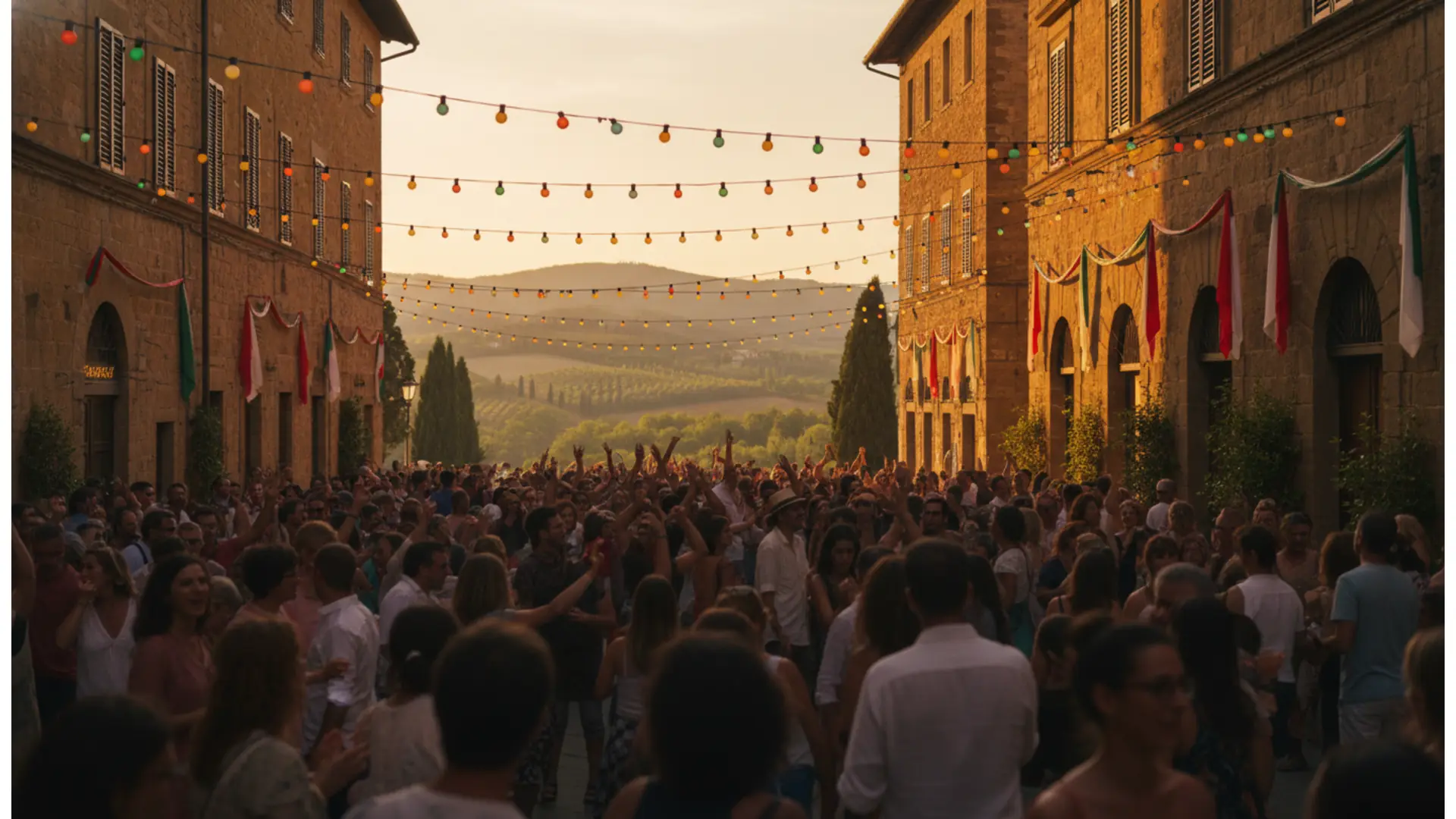
Saint Joseph Festival and the Squartucciati
Votive altars, processions, and the art of squartucciati in the heart of the Belice Valley
About Saint Joseph in Poggioreale
A festival that smells of spring and devotion
Every year, around March 19th, the small town of Poggioreale, in the province of Trapani, in the heart of the Belice Valley, gathers around the figure of Saint Joseph. The festival, documented since the 18th century throughout the Belice territory, combines religious, popular, and gastronomic dimensions, transforming the town into a large, widespread altar. It is one of the most cherished events for the community, capable of drawing back former residents and visitors curious to discover a still-authentic tradition.
Votive altars and the Holy Family lunch
The heart of the festival lies in the Saint Joseph altars, the artari, which devotees set up inside their homes to ask for or give thanks for a grace received. These are multi-tiered structures built against a wall, topped with an image of the Holy Family and decorated with bay leaves, oranges, and an extraordinary abundance of votive sweets and breads. Among these, the large cucciddati stand out—round loaves that can weigh several kilos—alongside Sicilian cassata, cassatelle, sfinci, and seasonal fruit.
The most moving moment is the ritual lunch on March 19th: three people chosen from among the most needy are invited to represent the Holy Family. The head of the household washes their hands and marks them with wine, tracing a cross in an ancient gesture of hospitality and solidarity. After the priest's blessing, around 2:00 PM, the food from the altars is distributed.
The squartucciato, the artisanal bread of Poggioreale
What makes the Poggioreale festival unique is the squartucciato, a thin pastry filled with dried figs and hand-carved with a refined technique known as squartuccio. The women of the town, and today also students thanks to a months-long school course, carve religious and natural symbols into the surface: hearts, crosses, lilies, peacocks, and fish. The result is a true edible work of art, capable of preserving and passing on the community's memory.
Procession, band, and fireworks
The festival days are marked by ancient rites: the setting up and blessing of domestic and historical altars, the musical band's parade through the streets, the Holy Mass in the Mother Church, and the procession of the statue of the Patriarch Saint Joseph along the main streets of the center, accompanied by fireworks. The organization is managed by the Pro Loco Elimo Tourist Association in collaboration with the local school and under the patronage of the Municipality of Poggioreale.
A heritage of the Belice Valley
Visiting Poggioreale for Saint Joseph means coming into contact with a deep Sicily, where faith, gastronomy, and folk art merge. The same tradition is found in neighboring towns, such as Salaparuta, but in Poggioreale, the squartucciato takes on a particular identity, a symbol of a community that has managed to preserve its roots even after the 1968 earthquake that profoundly marked the Belice Valley.
Saint Joseph in Poggioreale — edition 2026
For the 2026 edition, the Saint Joseph Festival in Poggioreale was held from March 18th to 21st, with the highlight being the solemnity on March 19th. The celebrations kicked off on March 18th with the setting up and blessing of domestic and historical altars, filled with votive breads, cassata, cassatelle, sfinci, and seasonal fruit.
On March 19th, the musical band's parade, the Holy Mass in the Mother Church, and the procession of the statue of Saint Joseph through the city center took place, closing with fireworks. Around 2:00 PM, after the priest's blessing, the food from the altars was distributed, preceded by the ritual lunch offered to three people representing the Holy Family. The absolute star was the squartucciato, made by the local women and students trained during the school course dedicated to this ancient art.
Programme Saint Joseph in Poggioreale 2026
March 18
- Setting up and blessing of domestic and historical votive altars
March 19 — Solemnity of Saint Joseph
- Musical band parade through the town streets
- Holy Mass in the Mother Church
- Holy Family lunch ritual with three guests and blessing
- Approx. 2:00 PM — distribution of altar food after the blessing
- Procession of the Saint Joseph statue along the main streets
- Fireworks
Throughout the festival
- Visit to the votive altars set up in homes
- Display and tasting of squartucciati and cucciddati
Highlights Saint Joseph in Poggioreale 2026
Prices Saint Joseph in Poggioreale 2026
Practical information — Saint Joseph in Poggioreale
When
The festival revolves around March 19th, the Solemnity of Saint Joseph. Votive altars can be visited during the days of the event, while the procession, band, and fireworks take place on March 19th.
How to get there
Poggioreale is located in the Belice Valley, in the province of Trapani. By car, it can be reached from the A29 Palermo-Mazara del Vallo motorway, taking the exit towards Salaparuta-Poggioreale. The most convenient train station is Castelvetrano, from where you can continue by car or bus.
Tips
The festival is free and community-based. It is advisable to check with the Pro Loco Elimo regarding which altars are open to visitors and the times of the procession, which may vary from year to year.
Festival-goer photos
No photos yet. Share yours!
Share your photos
5 photos max, 5 MB per photo (JPG, PNG, WebP)
Noticed an error or missing information?
Help us keep this listing up to date. Every proposal is verified by our team before publication.
Festival-goer reviews
No rating yet — be the first!
No comments yet. Be the first!
Were you there?
Share your experience with the community.
Published by Valentin Contard, festival listings writer. Reviewed, corrected and approved by Christophe Contard, editor-in-chief. .
Where does it take place — Saint Joseph in Poggioreale
Centro storico e Chiesa Madre