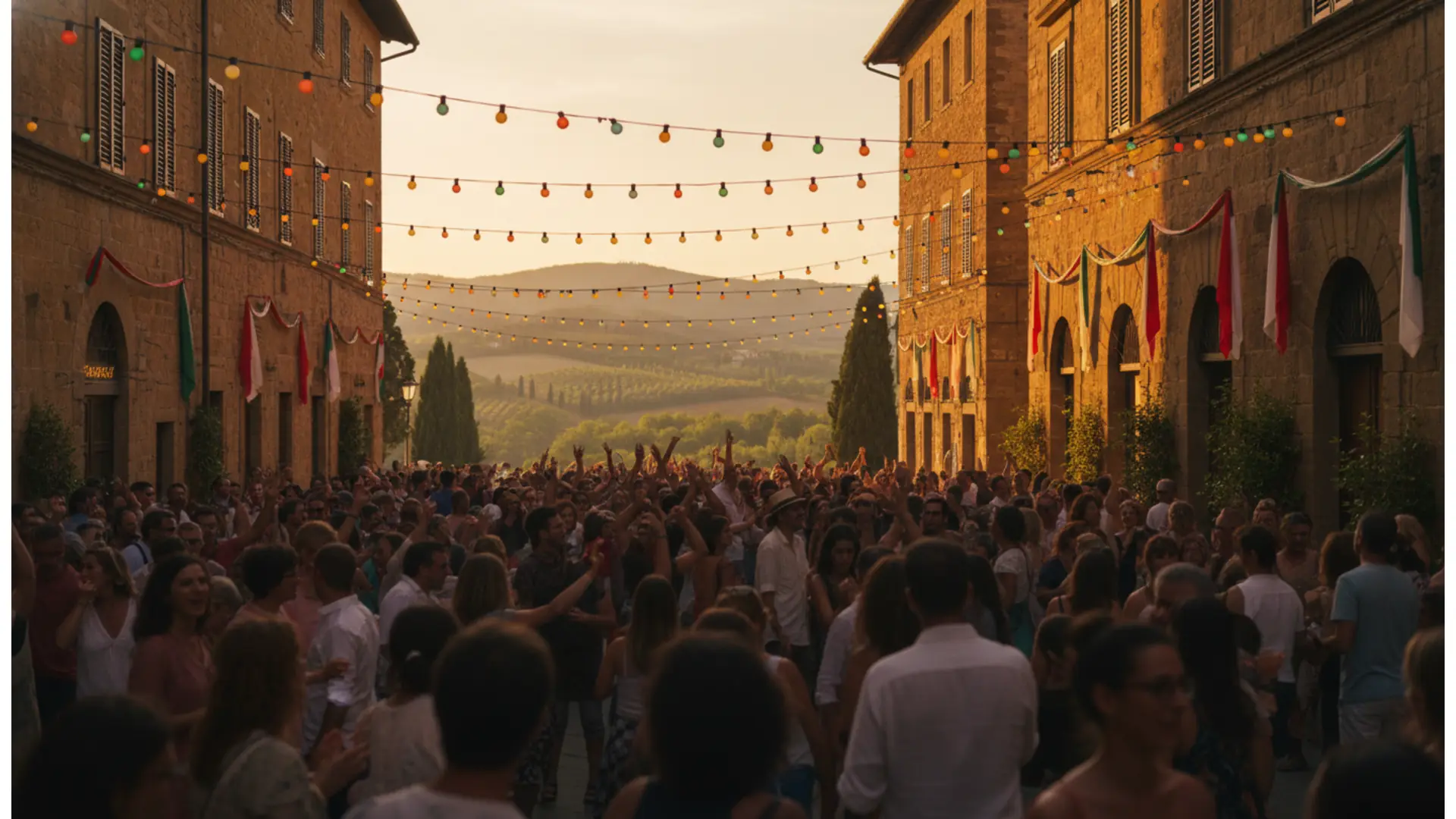
Saint Blaise Festival
Votive bread, historical pageants, and the legend of the locusts in the Arab quarter of Rabato
About Saint Blaise Salemi
A festival of bread and devotion in the heart of Sicily
The Saint Blaise Festival is one of the most deeply felt and identity-defining events in Salemi, an ancient hilltop village in the province of Trapani, Sicily. Celebrated annually on February 3rd, the saint's liturgical feast day, it transforms the maze of narrow streets in the historic center into a stage for faith, memory, and artisanal mastery. Saint Blaise has been a co-patron of the city since 1542, alongside Saint Nicholas—a bond born from an event the community has never forgotten.
The miracle of 1542 and the memory of the locusts
Tradition holds that in 1542, during the reign of Charles V, the countryside of Salemi was devastated by swarms of locusts that devoured the crops. Through the intercession of Saint Blaise, the invasion ceased and the fields were saved; since then, the saint has been honored as a co-patron of the city. This episode is the symbolic heart of the festival, brought to life through the votive breads and the procession that traverses the town.
Cavadduzzi and cuddureddi: bread turned into art
The true stars of the festival are the votive breads. About a month in advance, local women prepare a dough of only flour and water, molded by hand and then with the sbria, an ancient tool used to shape the dough, with details finished using a knife tip.
- Cuddureddi: shaped like a throat, they remind us that Saint Blaise is the protector of the throat, having once saved a child who was choking on a fish bone.
- Cavadduzzi: these evoke the locusts of 1542 and come in the most imaginative forms, from seahorses to the saint's blessing hand.
These small masterpieces of unleavened bread are blessed during Mass and distributed to the faithful as a sign of devotion and fulfillment of a vow.
The pageant and the Church of Saint Blaise in Rabato
On February 3rd, a medieval pageant departs from the Norman-Swabian Castle and winds through the narrow alleys of the Arab Rabato quarter, ending at the Church of Saint Blaise, once a branch of the Mother Church. For the occasion, the church floor is covered with bay leaves, and the statue of the saint is adorned with bay, myrtle, and flowers. Drums and costumed participants accompany the procession in a blend of historical re-enactment and popular religious fervor. Inside the church, the faithful and the parish priest await the participants for the blessing.
Workshops and folk culture
The festival also features artisanal workshops dedicated to preparing the traditional dough for the ritual breads, offering a chance to pass down ancient knowledge and allowing visitors to discover one of the most fascinating traditions of Western Sicily. Today, the Saint Blaise Festival is also a tourist attraction, drawing curious travelers and enthusiasts of folk festivals from across the island to Salemi.
Saint Blaise Salemi — edition 2026
The 2026 Saint Blaise Festival in Salemi (Trapani) was held between February 2nd and 3rd. The highlight was on February 3rd with the medieval pageant departing from the Norman-Swabian Castle and heading, through the narrow streets of the Arab Rabato quarter, to the Church of Saint Blaise.
The characteristic votive breads—the cuddureddi, shaped like a throat, and the cavadduzzi, which recall the locusts of 1542—were molded by the women of the quarter and blessed during Mass. Artisanal workshops allowed visitors to discover the traditional dough-making process, in an event that blends religious devotion with historical re-enactment.
Programme Saint Blaise Salemi 2026
February 3rd — Saint Blaise Festival
- Preparation and blessing of the cavadduzzi and cuddureddi votive breads
- Medieval pageant from the Norman-Swabian Castle through the Rabato quarter
- Arrival and blessing at the Church of Saint Blaise, decorated with bay, myrtle, and flowers
- Religious celebration with the parish priest and distribution of blessed bread to the faithful
- Artisanal workshops for preparing the traditional dough
The program follows the traditional and devotional structure of the festival; detailed schedules are communicated locally by the parish and the Municipality of Salemi.
Highlights Saint Blaise Salemi 2026
Prices Saint Blaise Salemi 2026
Practical information — Saint Blaise Salemi
How to get there
Salemi is located in the hinterland of the province of Trapani. By car, it can be reached via the A29 Palermo-Mazara del Vallo motorway, taking the Salemi exit. The nearest airport is Trapani-Birgi; alternatively, Palermo Punta Raisi airport is available.
When
The festival takes place on February 3rd, with events and workshops held in the days leading up to it.
Tips
Wear comfortable shoes for walking the steep, narrow streets of the Rabato. The votive breads are distributed after the blessing: it is a unique opportunity to admire and taste the famous cavadduzzi and cuddureddi.
Festival-goer photos
No photos yet. Share yours!
Share your photos
5 photos max, 5 MB per photo (JPG, PNG, WebP)
Noticed an error or missing information?
Help us keep this listing up to date. Every proposal is verified by our team before publication.
Festival-goer reviews
No rating yet — be the first!
No comments yet. Be the first!
Were you there?
Share your experience with the community.
Published by Valentin Contard, festival listings writer. Reviewed, corrected and approved by Christophe Contard, editor-in-chief. .
Where does it take place — Saint Blaise Salemi
Quartiere Rabato e centro storico