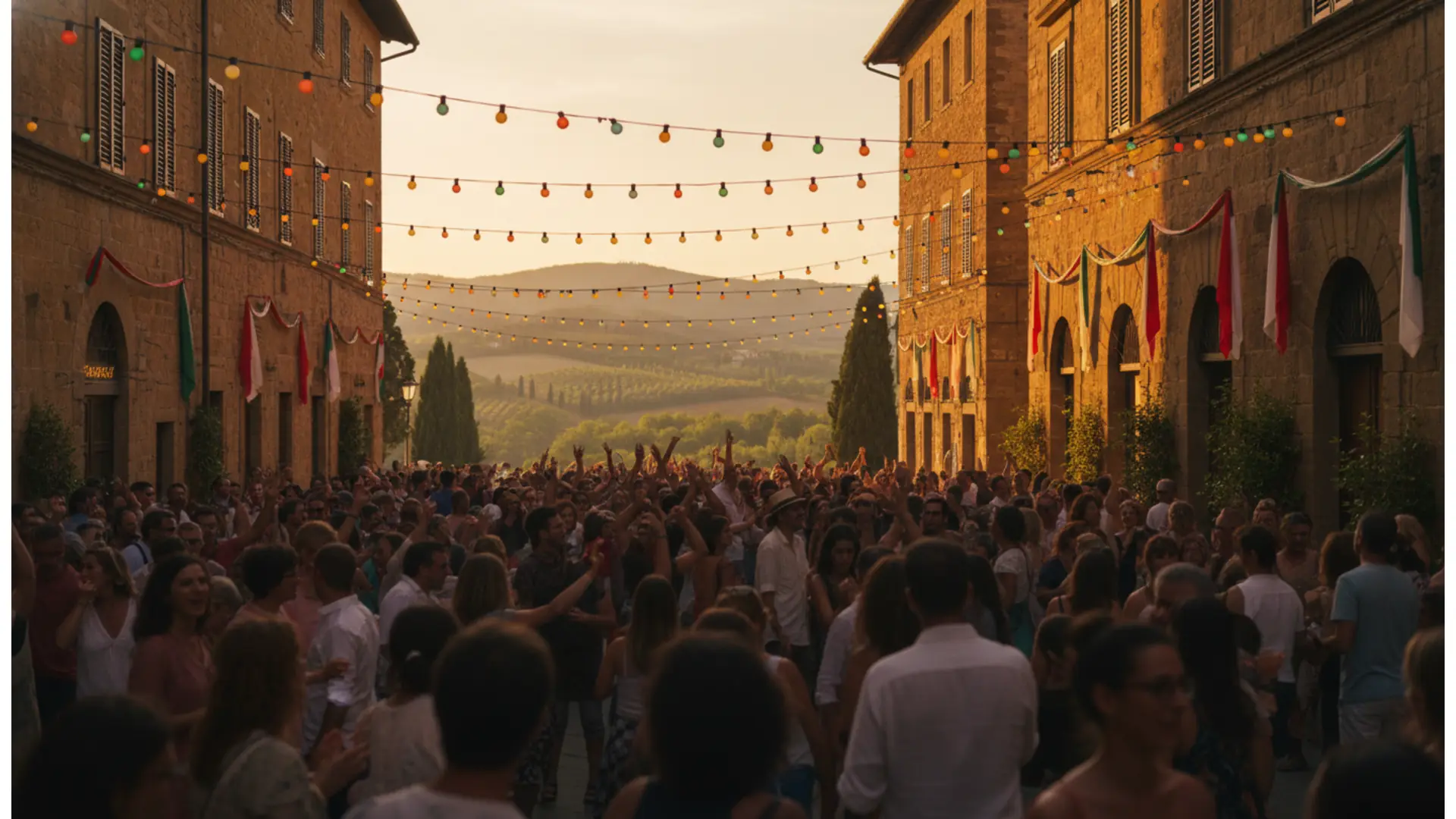
Saint Blaise Festival
The patron saint feast in the village of the Alto Casertano
Edition 2026 not confirmed to date
This edition has not been confirmed by the organiser to date. We recommend checking before going.
About Saint Blaise in Castel di Sasso
An ancient devotion in the heart of the Alto Casertano
The Saint Blaise Festival is the most heartfelt religious and community event in Castel di Sasso, a small municipality in the Alto Casertano area of the province of Caserta, in inland Campania. Saint Blaise, Bishop and Martyr, is the patron saint of the Sasso parish, where every year, around February 3rd, the population gathers to renew a devotion passed down from generation to generation. The parish communities of Saint Blaise and Saint Mary of the Assumption experience these days as the most intense moment of the liturgical year, amidst faith, memory, and popular tradition.
The protector of the throat
Bishop of Sebaste in Armenia between the 3rd and 4th centuries, Saint Blaise is universally invoked as the protector of the throat: according to tradition, he saved a child who was choking on a fish bone stuck in his throat. From this episode comes the most characteristic rite of the festival, the blessing of the throat: the priest anoints the throats of the faithful with blessed oil, in an ancient gesture that still retains details of great popular charm in Castel di Sasso. At the end of the blessing, it is customary to distribute the traditional Saint Blaise biscuits, a sign of protection and abundance for the year ahead.
The triduum, masses, and procession
The festivities begin at the end of January with Eucharistic adoration and the triduum prayer, which spiritually prepare the community. On February 2nd, Candlemas, mass is celebrated with the traditional blessing of the candles. On February 3rd, the heart of the festival, holy masses are held throughout the day, the most solemn of which is presided over by the Bishop of the diocese. After the celebrations, the statue of the patron saint is carried in procession along the village streets, accompanied by the faithful, prayers, and hymns.
The hymn to Saint Blaise and the choir tradition
A key element of the festival is the hymn to Saint Blaise composed by the master organist Gennarino Luongo, who over the years personally taught the lyrics and melody to the local choir members. The hymn, handed down and rearranged over time to encourage assembly participation, is sung during the celebrations, particularly during the blessing of the throat, and represents a unique musical and spiritual heritage of the Castel di Sasso community.
A community festival
Beyond its religious significance, the Saint Blaise Festival is the occasion when the village rediscovers its identity: families return to the town, the streets come alive, and the small hamlet of Sasso becomes the center of a devotion that unites generations. For those visiting the Caserta hinterland, it is an authentic immersion into Campanian popular religiosity, far from tourist circuits and rich in genuine gestures.
Saint Blaise in Castel di Sasso — edition 2026
In 2026, the community of Castel di Sasso once again renewed its devotion to the patron saint Saint Blaise, following the liturgical calendar that culminates on February 3rd. The festivities combined, as per tradition, moments of prayer during the triduum, holy masses, the characteristic blessing of the throat, and the procession with the statue of the saint.
Programme Saint Blaise in Castel di Sasso 2026
The festival follows an established order every year, spanning from late January to February 3rd.
- Preparatory triduum: Eucharistic adoration in the late afternoon, triduum prayer, and holy mass.
- February 2nd (Candlemas): Holy mass with the traditional blessing of the candles.
- February 3rd (Patron saint feast): Holy masses throughout the day, the most solemn presided over by the Bishop; blessing of the throat with blessed oil and singing of the hymn to Saint Blaise.
- Procession: The statue of Saint Blaise is carried through the village streets, accompanied by the faithful.
- Saint Blaise biscuits: Distribution of traditional sweets associated with the festival.
Highlights Saint Blaise in Castel di Sasso 2026
- Blessing of the throat with blessed oil, a rite linked to the patron saint protector of the throat
- Procession of the statue of Saint Blaise through the streets of the Sasso hamlet
- Traditional hymn to Saint Blaise sung by the parish choir
- Distribution of the typical Saint Blaise biscuits
Prices Saint Blaise in Castel di Sasso 2026
Practical information — Saint Blaise in Castel di Sasso
How to get there
Castel di Sasso is located in the hinterland of the province of Caserta. By car, it can be reached from the Caserta Nord exit (A1 motorway), continuing towards the Alto Casertano; the celebrations take place at the parish church of Saint Blaise in the Sasso hamlet. The reference railway station is Caserta, from where you should continue by your own means.
When
The festival is celebrated every year around February 3rd, with a preparatory triduum starting in the last days of January.
Admission
Participation in all celebrations is free and open to everyone.
Festival-goer photos
No photos yet. Share yours!
Share your photos
5 photos max, 5 MB per photo (JPG, PNG, WebP)
Noticed an error or missing information?
Help us keep this listing up to date. Every proposal is verified by our team before publication.
Festival-goer reviews
No rating yet — be the first!
No comments yet. Be the first!
Were you there?
Share your experience with the community.
Published by Valentin Contard, festival listings writer. Reviewed, corrected and approved by Christophe Contard, editor-in-chief. .
Where does it take place — Saint Blaise in Castel di Sasso
Chiesa parrocchiale di San Biagio