Sagne co' gliù Beccalà Festival
The historic mid-August festival in Pisoniano, in the Prenestini Mountains
Edition 2026 not confirmed to date
This edition has not been confirmed by the organiser to date. We recommend checking before going.
About Sagne co' gliù Beccalà
A mid-August festival in the Prenestini Mountains
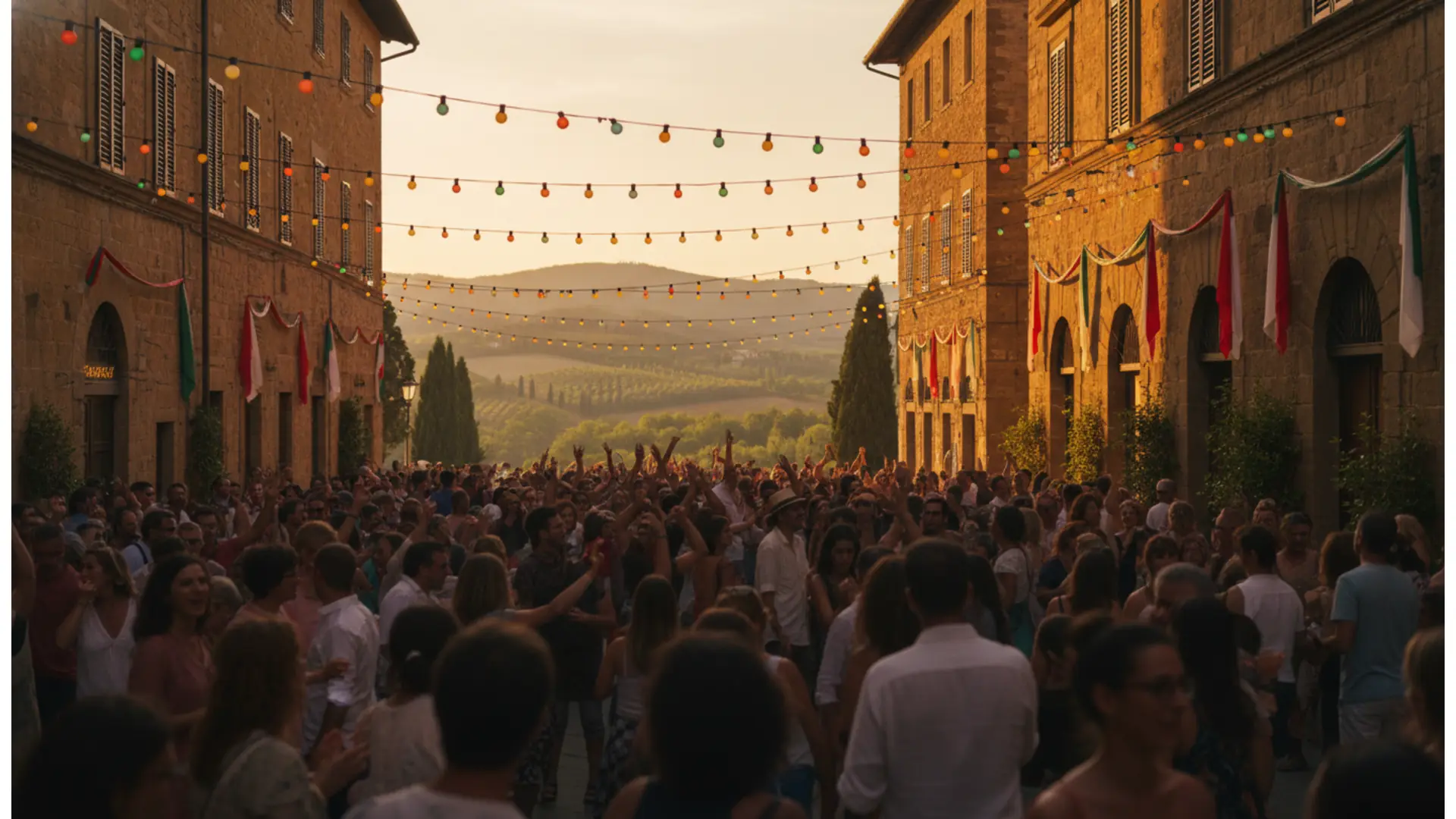
Pisoniano is a small town in the Metropolitan City of Rome Capital, in the Lazio region, nestled at an altitude of about 500 meters among the Prenestini Mountains, with its stone houses, historic churches, and trails leading toward the Aniene valley. With just over seven hundred inhabitants, the village comes alive in mid-August, when the historic square fills with long tables, lights, and the aroma of sauce for the Sagne co' gliù Beccalà Festival.
The event is one of the longest-running festivals in the Tiburtino-Prenestino area: for decades, the community has gathered around the same dish, prepared with the same hands and the same recipe. It is not a tourist-trap event, but a genuine village feast that has attracted visitors from across the territory east of Rome.
The dish: sagne with cod
Sagne is a fresh, handmade pasta, rolled out with a rolling pin and cut into irregular strips: a peasant tradition widespread throughout inland Lazio, where eggs were a luxury and pasta was made simply with water and flour. In Pisoniano, they are served with a red cod sauce—salted cod which, in mountain villages far from the sea, was for centuries the only fish available and the traditional dish for feast days.
The result is a savory, dense sauce where the tomato balances the saltiness of the desalted fish. It is the village's signature dish, and the festival makes it the absolute star of the evening.
How the evening unfolds
The food stalls generally open at 8:00 PM in the main square. In addition to sagne with cod, the stands offer sausage sandwiches, French fries, and other local specialties. A detail that visitors always appreciate: wine is provided by the organizers, a custom the festival has maintained since its inception.
- Opening of the stalls in the historic square in the early evening
- Hand-rolled sagne with cod sauce, the festival's signature dish
- Sausage sandwiches, fried foods, and local products
- Wine provided to participants
- Folk music, singing, and dancing until late at night
The Hemp Museum
On the day of the festival, the Hemp Museum of Pisoniano also opens, housed across three floors of an ancient building in the historic center. The exhibition tells the story of the entire cultivation and processing cycle of Aniene hemp, an agricultural activity practiced in the village until the 1960s and now extinct. It is a brief but precious visit to understand how these mountain communities lived before depopulation.
Why it's worth the trip
The Sagne co' gliù Beccalà Festival is an example of a still-authentic event: small, run by the village, and featuring a dish not easily found elsewhere. Those arriving in the afternoon can combine the gastronomic evening with a stroll through the village, a visit to the museum, or a hike on the trails of the Prenestini Mountains, which offer wide views over the Roman countryside on clear days. For those coming from Rome, it is a trip of just over an hour, and the mid-August atmosphere of the square—with families, shared tables, and folk music—is that of the village festivals of yesteryear.
Sagne co' gliù Beccalà — edition 2026
The Sagne co' gliù Beccalà Festival returns to Pisoniano, in the Metropolitan City of Rome Capital, for its 2026 edition. At the moment, the date circulating on a Lazio festival calendar is Saturday, August 22, 2026, but it is explicitly marked as to be confirmed: it is therefore advisable to check with the Municipality of Pisoniano or the Pro Loco channels before setting off.
Based on previous editions, the format should remain the established one: food stalls open in the evening in the historic square, hand-rolled sagne with red cod sauce as the signature dish, sausage sandwiches and fried foods, wine provided by the organizers, and folk music with dancing until late at night. The Hemp Museum is also traditionally open on the day of the festival.
Programme Sagne co' gliù Beccalà 2026
Highlights Sagne co' gliù Beccalà 2026
Prices Sagne co' gliù Beccalà 2026
Practical information — Sagne co' gliù Beccalà
How to get there
Pisoniano is located about 50 km from Rome and about twenty kilometers from Tivoli. By car: A24 Rome-L'Aquila, take the Tivoli exit, then follow Via Empolitana and provincial roads toward Ciciliano and Pisoniano; alternatively, take Via Prenestina as far as Palestrina and then head toward the Prenestini Mountains. Public transport is limited: Cotral connections from the Ponte Mammolo metro station (Line B) are active, but with few evening runs, so a car is the most practical solution.
Parking
The historic center is narrow and partially pedestrianized during the festival: it is best to leave your car in the parking areas at the entrance to the village and walk up to the square.
Costs
Free entry to the event. You only pay for what you consume at the stalls, with typical village festival prices; wine is traditionally provided by the organizers.
Tips
The stalls open in the evening, around 8:00 PM: arriving early helps to find a seat at the tables. Mountain evenings can be cool even in August: a light sweater is useful. Recommended: a visit to the Hemp Museum, open on the day of the festival.
Festival-goer photos
No photos yet. Share yours!
Share your photos
5 photos max, 5 MB per photo (JPG, PNG, WebP)
Noticed an error or missing information?
Help us keep this listing up to date. Every proposal is verified by our team before publication.
Festival-goer reviews
No rating yet — be the first!
No comments yet. Be the first!
Were you there?
Share your experience with the community.
Published by Valentin Contard, festival listings writer. Reviewed, corrected and approved by Christophe Contard, editor-in-chief. .
Where does it take place — Sagne co' gliù Beccalà
Piazza del centro storico