Rite of the Crosses (Blessing of the Crosses)
The blessing of chestnut wood crosses on the Civitella hill, held on the Feast of the Annunciation
About Rite of the Crosses
An ancestral rite on the Civitella hill
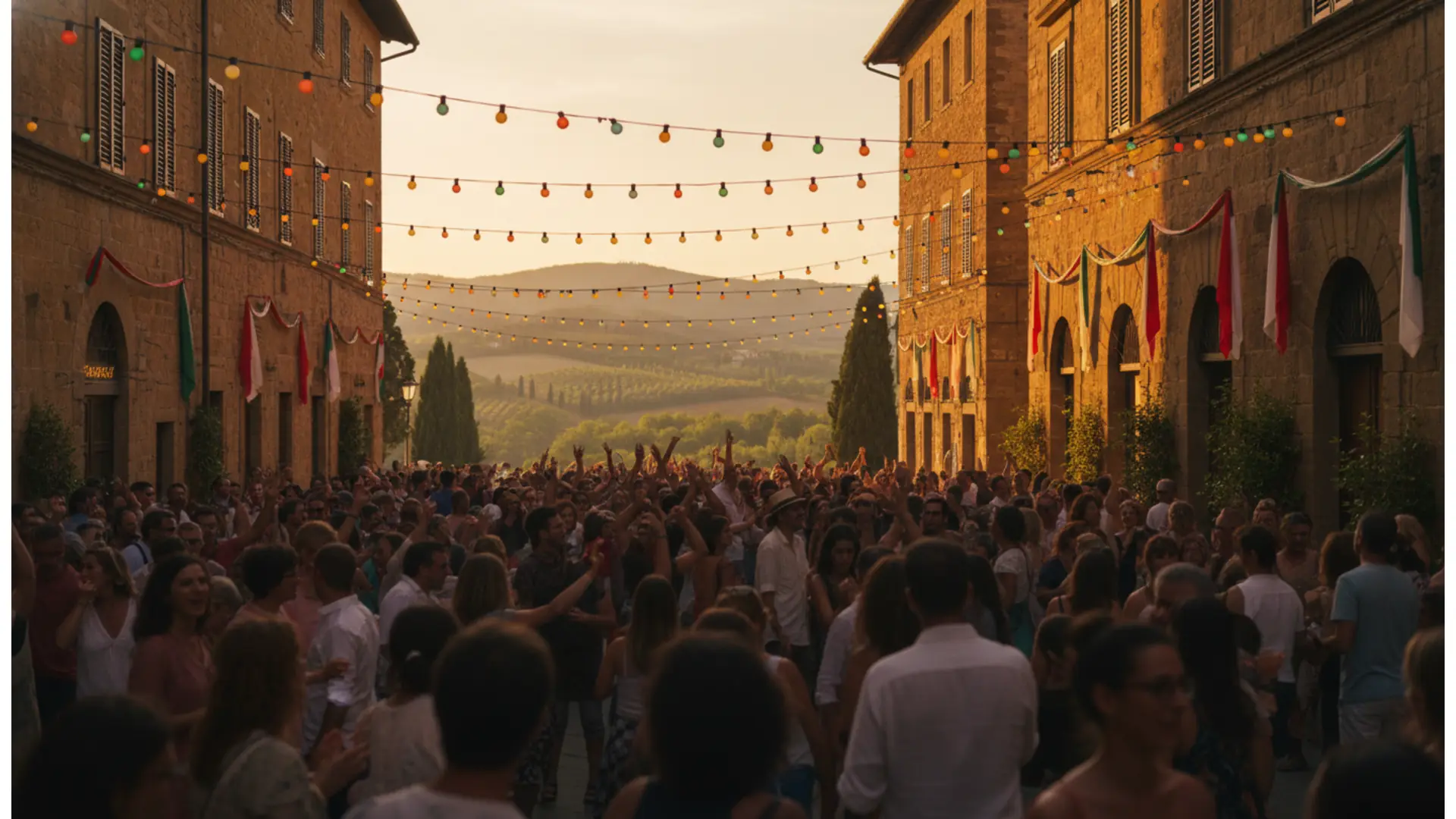
In Moio della Civitella, a small town in the province of Salerno in the heart of Cilento, Campania, March 25th is no ordinary date. On the Feast of the Annunciation, the community climbs the Civitella hill, on the north-western slope of Mount Gelbison, to renew the Rite of the Crosses: the blessing of small chestnut wood crosses that are then taken to fields, vineyards, and homes as a sign of protection and fertility.
This is not a staged re-enactment, but a living tradition passed down through generations by the inhabitants of Moio and the village of Pellare, who still recognize this gesture as one of the most defining traits of their rural culture.
Chestnut wood crosses
The heart of the rite is simple and, for that very reason, fascinating. During the climb to the top of the hill, participants gather freshly sprouted chestnut twigs: two twigs joined together form a cross, made in various sizes, from the smallest ones to those intended for larger plots of land. The crosses are then blessed by the priest during the celebration at the Annunziata chapel.
Once blessed, the crosses return to the valley: they are planted in sown fields, placed on doorsteps, in vegetable gardens, and in vineyards. In Cilento's rural culture, the chestnut cross is both an apotropaic and generative element, warding off evil and ensuring a bountiful harvest for the coming season.
The Annunziata Chapel
The rite takes place around the small Annunziata chapel, a sacred building dedicated to Our Lady of the Annunciation that stands on the summit of the Civitella. Its origins date back to the 15th century, with 19th-century renovations. Local Marian devotion links it to the nearby sanctuary of Mount Gelbison in Novi Velia through the legend of the "seven sisters," the seven Madonnas of Cilento.
The clearing in front of the small church offers a vast view over the Cilento hills and towards the sea: the climb, even for those not participating in the liturgy, is worth the excursion alone.
An archaeological site overlooking Elea-Velia
The hill is not just a place of devotion. The Civitella preserves the remains of a fortified settlement from the Lucanian age, an outpost that controlled the territory behind the Greek colony of Elea-Velia: one can still recognize sections of the defensive walls, the large blocks of the fortress, and the foundations of an ancient gateway. The area is maintained by the Parco della Civitella, which has offered guided tours of the site during the rite.
Faith, seasons, and the agricultural calendar
In the ancient calendar, March 25th marks the transition from winter to spring and the start of the agricultural year. The Rite of the Crosses sits exactly on this threshold: it unites the Christian solemnity of the Annunciation with propitiatory gestures linked to sowing and harvesting, in a continuity that recalls the ancient rogations. According to Luigi Scarpa, president of the Pro Loco Moio della Civitella APS, this is a practice that may have no equivalent elsewhere and belongs to the intangible culture of the Moio and Pellare community, deeply rooted in peasant civilization.
How the day unfolds
- Walk up to the top of the hill along the path leading to the Annunziata church
- Gathering of chestnut twigs and crafting of the crosses, with a dedicated moment for children and teenagers
- Holy Mass in the Annunziata chapel
- Blessing of the crosses, a symbol of rebirth
- Visit to the summit plateau, the panoramic terrace, and the archaeological area
Organizers
The event is organized by the Pro Loco Moio della Civitella APS together with the Parco della Civitella, with the local parish handling the religious aspects. Participation is free and open to all: visitors from outside are welcomed without formality, provided they respect the devotional nature of the occasion.
When to go
The reference date is always March 25th. Only in exceptional cases, when the date falls during Holy Week, is the rite moved by a few days: this happened in 2024, when the blessing was held on April 2nd. Those visiting Cilento during this period can combine the day with a trip to nearby Vallo della Lucania, just 3.5 km away, and the excavations of Velia.
Rite of the Crosses — edition 2026
The 2026 Edition
On March 25, 2026, the Rite of the Crosses was punctually renewed on the Civitella hill in Moio della Civitella, in the province of Salerno. The clearing in front of the Annunziata chapel, on the north-western slope of Mount Gelbison, came alive as it does every year with the blessing of the small chestnut wood crosses.
The day followed the usual schedule: the climb to the top of the hill, the gathering of freshly sprouted twigs, the crafting of the crosses—with a tutorial moment designed for children and teenagers so that the gesture continues to be passed down—and finally the Holy Mass with the blessing. The crosses then returned to the valley to be planted in fields, vegetable gardens, and on doorsteps.
The 2026 edition was organized by the Pro Loco Moio della Civitella APS with the Parco della Civitella, in a setting that combines Marian devotion, rural memory, and the enhancement of the ancient fortified settlement that once dominated the Elea-Velia plain.
Programme Rite of the Crosses 2026
As per tradition, the day of March 25, 2026, was structured in four moments:
- Climb to the Civitella - walk towards the summit of the hill, where the ancient Annunziata church stands
- Gathering of twigs and crafting of the crosses - chestnut sprouts are cut along the path; a tutorial is dedicated to children and teenagers
- Holy Mass in the Annunziata chapel
- Blessing of the crosses, a symbol of rebirth, which are then planted in the fields
The exact times for the 2026 edition were not officially released online: for confirmation, it is best to contact the Pro Loco Moio della Civitella APS.
Highlights Rite of the Crosses 2026
- Gathering chestnut twigs during the climb up the hill
- Blessing of the crosses in the Annunziata chapel, likely of 15th-century origin
- Tutorial for children and teenagers on building the crosses
- Panoramic terrace at the summit, with views over the Cilento hills
- Remains of the Lucanian defensive walls of the Civitella fortified settlement
Prices Rite of the Crosses 2026
Practical information — Rite of the Crosses
How to get there
Moio della Civitella is located in the Cilento, Vallo di Diano and Alburni National Park, about 3.5 km from Vallo della Lucania and 4 km from Cannalonga. By car: SS18 Cilentana, take the Vallo della Lucania exit, then follow signs for Moio and Pellare. By train: Vallo della Lucania-Castelnuovo station on the Tyrrhenian line, then bus or taxi. Nearest airport: Salerno-Costa d'Amalfi.
The climb to the Civitella
The summit plateau, at just over 500 meters above sea level, is reached on foot along an uphill path. Hiking boots or comfortable shoes are recommended, along with water and clothing suitable for late March weather, which can be cool and windy at higher altitudes.
Costs
Participation is free. In some editions, a packed lunch is suggested, to be brought by participants.
Contacts
Pro Loco Moio della Civitella APS - [email protected]. Further information is available from the Municipality of Moio della Civitella (province of Salerno).
Festival-goer photos
No photos yet. Share yours!
Share your photos
5 photos max, 5 MB per photo (JPG, PNG, WebP)
Noticed an error or missing information?
Help us keep this listing up to date. Every proposal is verified by our team before publication.
Festival-goer reviews
No rating yet — be the first!
No comments yet. Be the first!
Were you there?
Share your experience with the community.
Published by Valentin Contard, festival listings writer. Reviewed, corrected and approved by Christophe Contard, editor-in-chief. .
Where does it take place — Rite of the Crosses
Cappella dell'Annunziata - Collina della Civitella