Poggiomarino Carnival
Papier-mâché floats, masquerades, and the rhythm of the quadrille in the Vesuvius area
About Poggiomarino Carnival
The Poggiomarino Carnival
Every winter, for a few days, Poggiomarino transforms. The town, nestled on the Sarno plain in the shadow of Mount Vesuvius, within the Metropolitan City of Naples and the heart of Campania, turns its streets over to allegorical floats, masked groups, and music. This is the Poggiomarino Carnival, the most anticipated popular festival of the year—an event born not in an office, but in the workshops where volunteers spend months molding papier-mâché, welding structures, and sewing costumes.
A tradition brought back to life
The Poggiomarino Carnival is a historic local tradition that lived long in the collective memory before being brought back to the streets by the Il Carro association, led by president Angelo Albano and vice-president Raffaele Guastafierro, with the support of the municipal administration. Its revival set a machine in motion driven almost entirely by volunteer hands: from those who sketch the designs and build the floats to those who rehearse choreography for weeks and manage route safety.
Working alongside Il Carro are the Pro Loco Poggiomarino APS and local schools, most notably the Istituto Comprensivo 1 Capoluogo, which involves hundreds of students every year in crafting masks and participating in the parade. It is this alliance between community associations and schools that gives the Poggiomarino Carnival its unique identity: it is not just a show to watch, but a celebration created together.
The 2026 edition: "Made in Napoli"
In 2026, the Poggiomarino Carnival spanned two days, Sunday, February 15th, and Tuesday, February 17th, the latter coinciding with Shrove Tuesday. The chosen theme was "Made in Napoli", an explicit tribute to the Neapolitan identity: its music, colors, irony, and the street theatricality that defines the entire Vesuvius area.
The Il Carro association group presented its "Parata", a choral performance that wound through the town center, drawing the public into the festivities. Local media described the day as an explosion of color, music, and tradition that engaged citizens of all ages, with students from the Istituto Comprensivo 1 Capoluogo among the absolute stars.
Floats, quadrilles, and masked groups
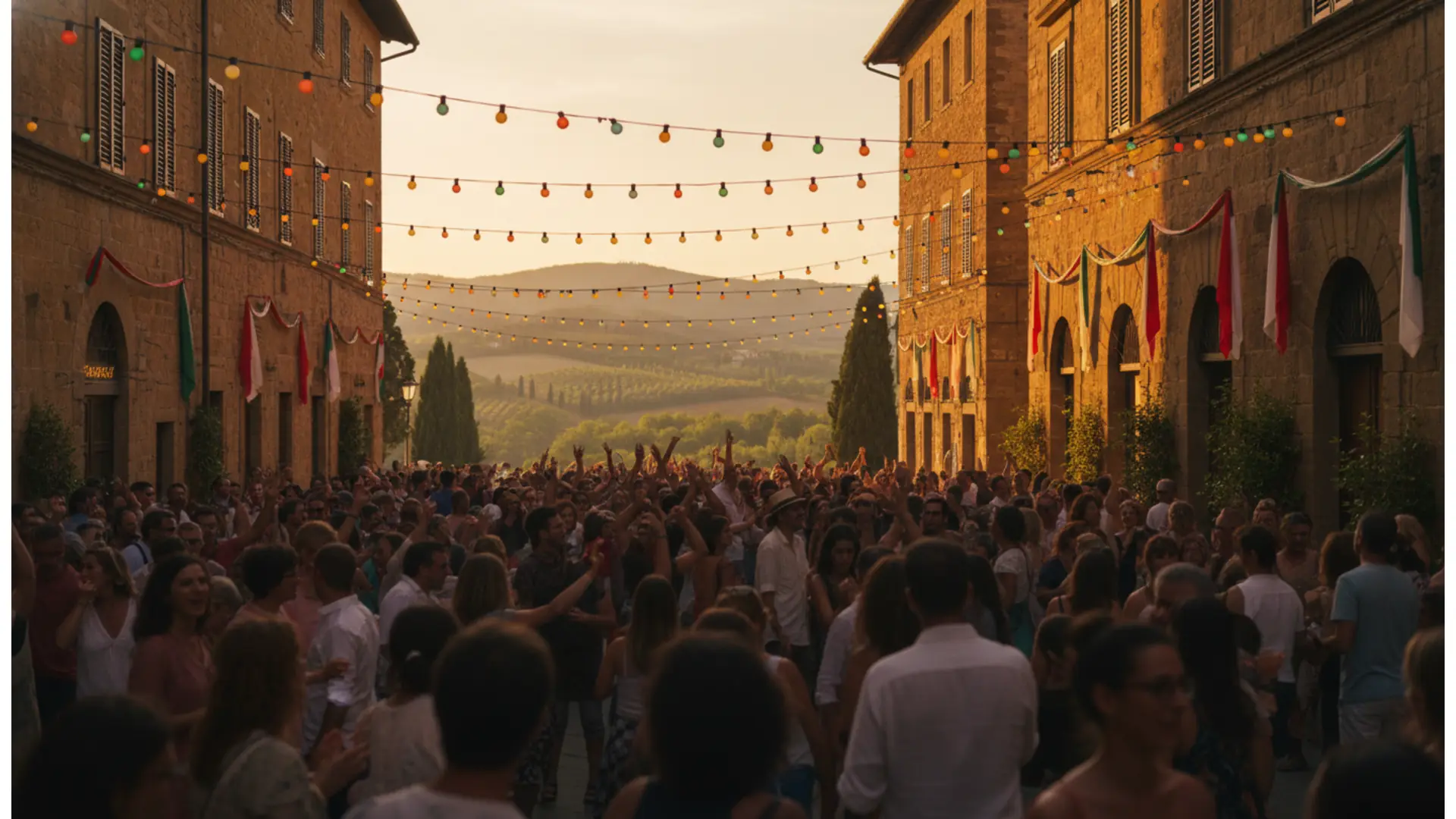
The heart of the festival remains the parade. Allegorical floats advance slowly along the town streets, followed by groups on foot: children in masks, dancers, and performers in costume. They are accompanied by music and the rhythm of the quadrille, the masked dance that serves as a true carnival signature in the Vesuvius hinterland and the Agro Nocerino-Sarnese area—much like the nearby carnivals of Palma Campania and Striano, which share the same calendar and passion as Poggiomarino.
- Allegorical papier-mâché floats built by volunteers in the preceding months
- Masked groups from local schools and associations
- Live music and choreography along the entire route
- Street parades that are completely free and open to everyone
A community celebration
In Poggiomarino, the Carnival is above all a social event. Families step out, shops bustle with activity, and streets usually reserved for cars become shared spaces for a few hours. The involvement of schools completes the picture: the youth are not mere spectators, but creators of the festival, resulting in an event that renews itself every year with fresh energy.
Poggiomarino, between the Sarno and Vesuvius
With approximately 31,000 inhabitants and the hamlets of Flocco and Fornillo, Poggiomarino is a town with a young urban history: it developed around the Conte di Sarno canal, the massive hydraulic project begun in the late 16th century, and adopted its current name in the 18th century. Excavations related to the canal unearthed one of the most important archaeological discoveries in the area: the protohistoric stilt-house village of Longola, a Bronze Age settlement that scholars link to the very origins of the population in the Pompeii area.
Visitors arriving for the Carnival find themselves in a territory that blends the vitality of the Vesuvius countryside with proximity to some of Italy's most visited sites: Pompeii, Sarno, the Vesuvius National Park, and the coast are all just a short distance away.
When to go
The Poggiomarino Carnival follows the festival's movable calendar: parade days are concentrated between Carnival Sunday and Shrove Tuesday, typically falling between late January and early March depending on the year. Departure times and the final route are communicated by organizers on social media channels in the days immediately preceding the event; it is always wise to check, as parades may be postponed in case of bad weather, as is common for carnivals in the region.
Poggiomarino Carnival — edition 2026
"Made in Napoli": the 2026 Carnival
Two dates, one single theme. The 2026 Poggiomarino Carnival filled the streets of the Metropolitan City of Naples town on Sunday, February 15th, and Tuesday, February 17th, concluding with Shrove Tuesday.
The central theme, "Made in Napoli," transformed the festival into a tribute to its roots: music, colors, and street theatricality that were explicitly Neapolitan. Members of Il Carro performed their "Parata," while students from the Istituto Comprensivo 1 Capoluogo paraded in costumes and choreography prepared in the preceding weeks, joined by the Pro Loco Poggiomarino APS.
Local media reported on a town engaged at every age, filled with smiles and moments of authentic emotion: confirmation that when a tradition is placed in passionate hands, it not only endures but renews itself.
Programme Poggiomarino Carnival 2026
Highlights Poggiomarino Carnival 2026
- 2026 Theme: "Made in Napoli," a tribute to Neapolitan popular culture
- Two parade days: Sunday, February 15th, and Tuesday, February 17th (Shrove Tuesday)
- The "Parata" by the Il Carro association, featuring music, colors, and the rhythm of the quadrille
- Students from the Istituto Comprensivo 1 Capoluogo in costume along the route
- Allegorical papier-mâché floats built by local Poggiomarino volunteers
- Collaboration with the Pro Loco Poggiomarino APS
- Outdoor event, free and family-friendly
Prices Poggiomarino Carnival 2026
Practical information — Poggiomarino Carnival
How to get there
By train — The Poggiomarino station is served by the Circumvesuviana (EAV) network, with connections from Naples and other Vesuvius-area towns. The town center is a short walk from the station, making it the most convenient option on parade days.
By car — From the A3 Naples–Salerno motorway, take the Scafati or Angri exit; from the A30 Caserta–Salerno, the reference exit is Palma Campania. Please note: during parades, town center streets are closed to traffic; it is advisable to park in peripheral areas and continue on foot.
By plane — Naples–Capodichino International Airport is approximately 35 km away.
Costs
The parades take place on public streets and participation is free: no tickets are required. Only food stands, souvenirs, and masks sold on-site require payment.
Useful tips
- Check the schedule and route on the social media channels of the Il Carro association and the Pro Loco Poggiomarino APS in the days leading up to the festival.
- February in Campania can be rainy: parades are postponed in case of bad weather, so it is best to check until the last minute.
- When with children, position yourselves along the wider sections of the route and keep a safe distance from moving floats.
- The Carnival is a great opportunity to explore the surrounding area: Pompeii, Mount Vesuvius, and the Longola archaeological site are all in the immediate vicinity.
Festival-goer photos
No photos yet. Share yours!
Share your photos
5 photos max, 5 MB per photo (JPG, PNG, WebP)
Noticed an error or missing information?
Help us keep this listing up to date. Every proposal is verified by our team before publication.
Festival-goer reviews
No rating yet — be the first!
No comments yet. Be the first!
Were you there?
Share your experience with the community.
Published by Valentin Contard, festival listings writer. Reviewed, corrected and approved by Christophe Contard, editor-in-chief. .
Where does it take place — Poggiomarino Carnival
Vie del centro cittadino