Patronal Feast of San Vitaliano da Capua
On July 16th, the town in the Nola area celebrates its patron saint with a novena, a procession, and community festivities.
Edition 2026 not confirmed to date
This edition has not been confirmed by the organiser to date. We recommend checking before going.
About San Vitaliano Feast
A festival that gives the town its name
Few Italian towns bear the name of their patron saint: San Vitaliano, a small center in the Metropolitan City of Naples, in Campania, is one of them. The Patronal Feast of San Vitaliano da Capua, which falls on July 16th, is therefore not just a date on the liturgical calendar: it is the moment when the community rediscovers its deepest identity, the one already reflected in the town's name and the dedication of its parish.
Who was Vitaliano da Capua
A Bishop of Capua venerated for centuries throughout Southern Italy, Saint Vitaliano is the patron saint of several Italian locations, from San Vitaliano itself to Sparanise and Catanzaro. In the Nola area, his cult has been rooted for generations: the local parish, dedicated to Maria SS. della Libera and overlooking Piazza N. Tofano, preserves the devotion to the saint with specific liturgical texts, a novena, and traditional prayers and supplications, now also available in digital format for the faithful.
The novena: nine days of preparation
The spiritual heart of the festival begins well before the solemn day. According to the traditional schedule documented by parish programs, from July 7th to 15th, the church hosts the Holy Rosary and prayers to Saint Vitaliano every evening, followed by Holy Mass with the novena. These are quiet days, attended primarily by the local community, as the town slowly prepares for the most anticipated event of the summer.
July 16th: solemn masses and the procession
On the patron saint's day, the parish marks the day with several solemn celebrations, traditionally spread between early morning, late morning, and late afternoon, so that everyone—workers, the elderly, and families—can participate. The most moving moment, however, comes in the evening, when the statue of Saint Vitaliano leaves the church for the procession through the town streets.
- The parade winds through the main streets and town centers, accompanied by a brass band
- Balconies are decorated, and the faithful offer floral tributes as the saint passes
- The procession concludes with a blessing of the community
- The following day, by tradition, a thanksgiving mass is celebrated
The civil festivities: music, flavors, and fireworks
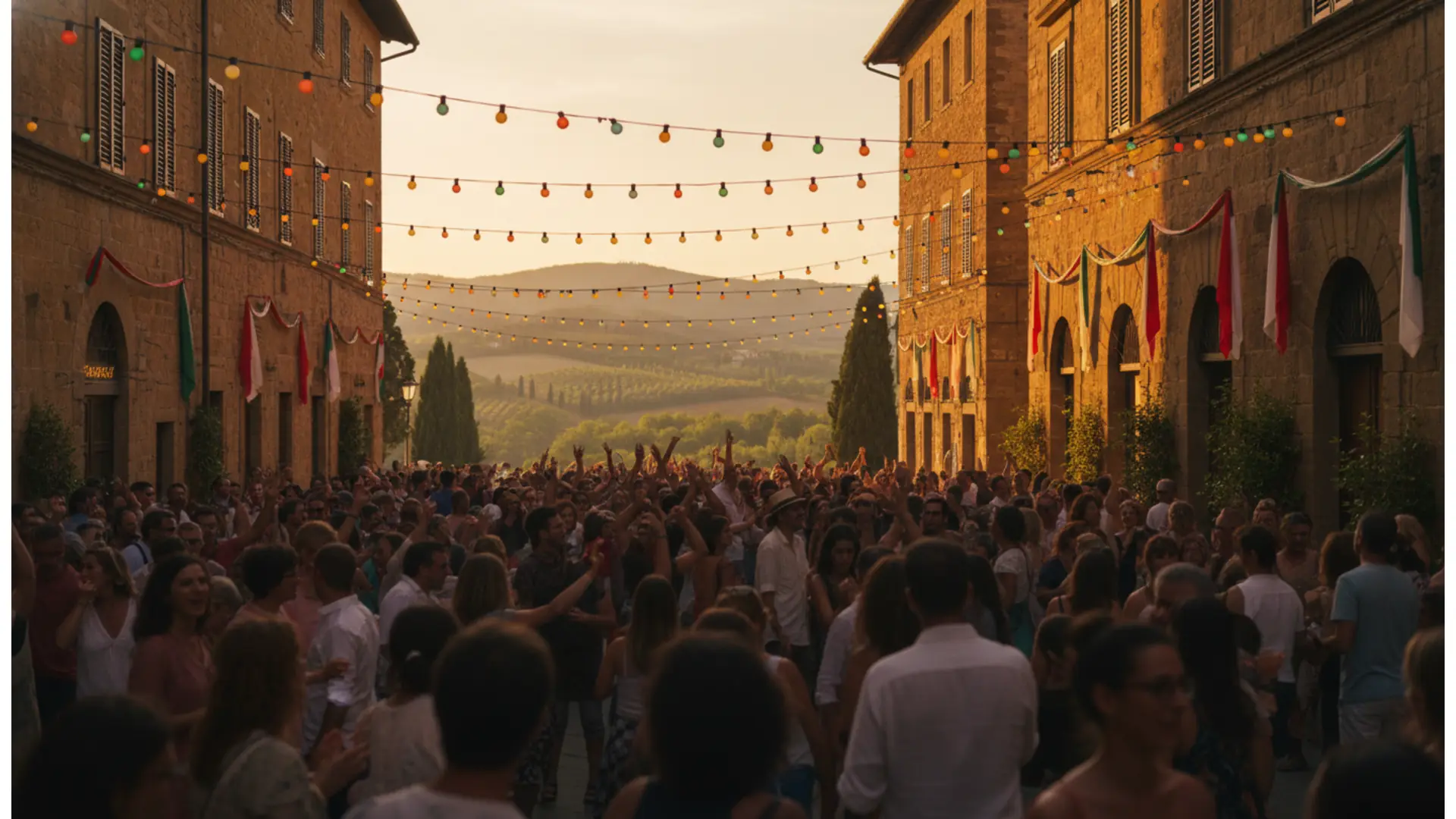
Alongside the liturgy, the patronal feast has always had its popular side. The evenings of the festivities, organized by the committee, typically feature live music and performances in the square with local artists and groups, food stalls offering Campanian specialties—baked pasta, grilled meats, traditional desserts—and small craft markets, as well as games and entertainment for children. The festivities are almost always closed by a fireworks display, which draws crowds from neighboring towns as well.
The committee: how the festival is born
The organization is entrusted to a patronal feast committee specifically formed each year, chaired by the parish priest in accordance with the rules of the Campanian Episcopal Conference. The committee is not a permanent body: it dissolves once the festival is over, after presenting the budget. A detail that also explains the nature of the program, which is oriented by choice toward folk performances, quality music, and dramatizations of the saint's life rather than light entertainment.
San Vitaliano and the Nola area
The town is located in the plain northeast of Mount Vesuvius, in that agricultural and productive area that revolves around Nola and preserves a very dense calendar of patronal feasts and summer festivals. Participating in the San Vitaliano festival means coming into contact with a less touristy and more authentic Campania, where the evening procession remains a collective ritual capable of truly bringing the town to a standstill.
Why it is worth being there
It is a festival that requires no tickets or reservations: you just need to be there. Those arriving from outside will find a hospitable community, the scent of food stalls along the streets, the sound of the band, and a bond with the patron saint that has been passed down for generations. A fragment of Campanian popular traditions experienced without filters, in the heart of summer.
San Vitaliano Feast — edition 2026
2026 Edition: what we know so far
For 2026, no official program has been found published by the Maria SS. della Libera Parish or the Municipality of San Vitaliano. The festival is linked to the liturgical recurrence of the patron saint, which falls on July 16th, but until the committee releases the festival calendar, dates and times remain to be confirmed.
What to expect
Based on previous editions, the structure of the festival typically includes the novena in the days leading up to the solemnity, solemn masses on the patron's day, an evening procession with a brass band, and civil festivities with music in the square, food stalls, and a final fireworks display. None of these events are currently confirmed for 2026.
How to stay updated
The program is generally released close to the festival through parish channels, the official municipal website, and posters displayed in town. For information, you can contact the Municipality of San Vitaliano at +39 081 8445521.
Prices San Vitaliano Feast 2026
Practical information — San Vitaliano Feast
How to get there
San Vitaliano is located in the Nola area, northeast of Naples. By car, the main reference point is the Nola exit of the A30 motorway (Caserta-Salerno), which is also connected to the A16 Naples-Canosa; from Naples, you can take the state road toward Nola. The town is served by bus connections in the Nola area; the nearest reference train station is in Nola.
Admission and costs
Religious celebrations and civil festivities are traditionally free and open to all. Any purchases at food stalls are paid for separately.
Tips
The evening of July 16th is the busiest time: it is advisable to arrive early and park in the peripheral streets, as the center is closed to traffic during the procession. Bring water and light clothing: in mid-July, evening temperatures remain high.
Information
For the updated program, it is useful to contact the Maria SS. della Libera Parish in San Vitaliano or the Town Hall (tel. +39 081 8445521), which publish the festival calendar every year.
Festival-goer photos
No photos yet. Share yours!
Share your photos
5 photos max, 5 MB per photo (JPG, PNG, WebP)
Noticed an error or missing information?
Help us keep this listing up to date. Every proposal is verified by our team before publication.
Festival-goer reviews
No rating yet — be the first!
No comments yet. Be the first!
Were you there?
Share your experience with the community.
Published by Valentin Contard, festival listings writer. Reviewed, corrected and approved by Christophe Contard, editor-in-chief. .
Where does it take place — San Vitaliano Feast
Chiesa parrocchiale Maria SS. della Libera e vie del centro
Piazza N. Tofano, 80030 San Vitaliano