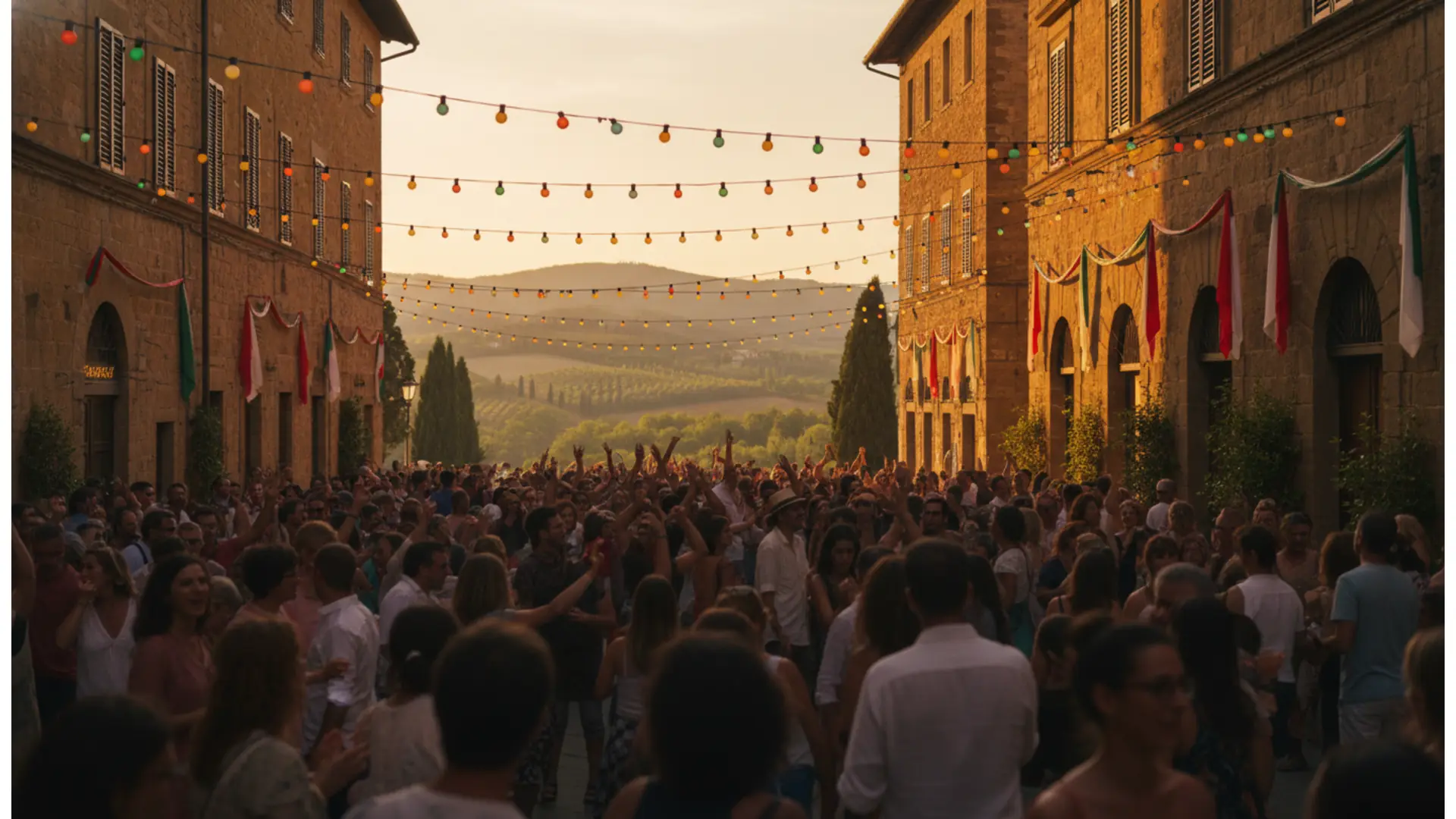
Patronal Feast of Saint George the Martyr
The patronal feast of Pignataro Maggiore, featuring processions, illuminations, and fireworks in Piazza Umberto I
About Saint George the Martyr
The patron saint of Pignataro Maggiore
Saint George the Martyr is the patron saint of Pignataro Maggiore, a town of just over six thousand inhabitants in the province of Caserta, Campania, located about forty kilometers north of Naples and twenty kilometers northwest of the provincial capital. Devotion to the warrior saint dates back at least to the Norman-Swabian era, when the cult of the martyr from Lydda spread throughout Southern Italy alongside the Norman military presence and the spirit of the Crusades. The ancient Church of San Giorgio, a 14th-century building, is dedicated to him and remains one of the most cherished landmarks for the local community, alongside the church of Grazzano and the 18th-century episcopal palace.
When the festival is celebrated
The liturgical calendar places Saint George's Day on April 23rd, but in Pignataro Maggiore, the external festivities take place later in the season, when the weather allows for enjoying the town square until late at night. Local sources point to the last Sunday of May, though in some years the secular program has shifted to the first Sundays of June: in 2017, for example, the program spanned over ten days. This is a typical choice for many patronal festivals in Campania, moving outdoor events to a milder period better suited for attracting visitors from neighboring towns.
Piazza Umberto I, the heart of the festivities
The center of gravity for the festival is Piazza Umberto I, the town's primary gathering place and the site of almost all secular, political, and religious events throughout the year. The Church of Santa Maria della Misericordia overlooks the square, which is also home to bars and cafes that remain open until late into the night during the festival. The procession starts and ends here, and it is also where the stage for performances and the elaborate illuminations that transform the historic center are set up.
Rites, processions, and musical tradition
- The procession of the patron saint through the town streets, the most heartfelt and well-attended moment of the entire festival week.
- The brass band concert, an unmissable appointment of the Southern Italian band tradition, with the bandstand (cassarmonica) at the center of the square.
- The illuminations, which create arches and vaults of light over the main streets and are a reason to visit in their own right.
- Musical performances: over the years, the stage has hosted well-known names from the Italian and Neapolitan music scene, such as Michele Zarrillo and Enzo Avitabile, capable of drawing crowds from neighboring provinces.
- The final fireworks display, which traditionally closes the festivities on the final night.
The flavors of the festival
Pignataro Maggiore is the land of buffalo mozzarella and dairy products. During the festival evenings, street stalls offer local specialties alongside classic torrone and brittle. The town's signature dessert is the guanto, a fried pastry made with flour, eggs, and wine, while the pizza figliata with honey and walnuts, prepared months in advance, remains primarily associated with the feast of Saint Vito in September. Around the square, there is no shortage of fried pizzas and traditional Caserta-style fried foods, enjoyed standing up between one band performance and the next.
A community celebration
As happens in many towns in the Terra di Lavoro region, the patronal festival is much more than a calendar of events: it is the moment when the town reunites, when families return, and when the square becomes the collective living room of the municipality. For those visiting inland Campania, the feast of Saint George the Martyr is an opportunity to observe an authentic popular rite up close, far from tourist circuits yet very close to the province's art destinations, from Capua to Casertavecchia, and from the Campanian amphitheater to the springs of the Volturno river.
Tips for your visit
The evenings come alive after 9 PM, when the square fills up and the shows begin: it is advisable to arrive early to find parking in the streets adjacent to the center, which are partially closed to traffic during the festival. The detailed program, including times and artists, is usually released a few days beforehand through posters displayed in town, parish announcements, and the organizing committee's social media channels.
Saint George the Martyr — edition 2026
The 2026 Saint George Feast in Pignataro Maggiore
In 2026, the municipality of Pignataro Maggiore, in the province of Caserta, once again celebrated its patron saint, Saint George the Martyr, during the last weekend of May, following the custom of moving the secular festivities from the liturgical date of April 23rd to a milder period.
The heart of the festival remained Piazza Umberto I, with the square packed during the final evenings and local venues open until late at night. Local press reported on the evening of Saturday, May 30th, 2026, which was also monitored by the Carabinieri as part of standard event security, confirming the large turnout.
The detailed program for this edition, including times and artist names, was not officially released online; as is often the case with patronal festivals in the Terra di Lavoro region, the poster circulated primarily within the town, through parish notices, and on the organizing committee's social media channels.
Programme Saint George the Martyr 2026
Highlights Saint George the Martyr 2026
Prices Saint George the Martyr 2026
Practical information — Saint George the Martyr
How to get there
By car: A1 Milan-Naples motorway, exit at Capua, then follow provincial roads toward Pignataro Maggiore (Caserta is about 20 km away, Naples about 40 km).
By train: The railway station on the Rome-Naples line is located about 2 km from the town center; from the station square, the center can be reached in a few minutes by car.
Admission and hours
Events in Piazza Umberto I are outdoors and, as is traditional for patronal festivals, free to attend. The evenings liven up after 9 PM and continue until late at night.
Tips
- Check dates and programs on the parish and festival committee channels: dates vary from year to year between late May and early June.
- Park outside the pedestrianized area of the historic center.
- Combine your visit with a trip to local dairies to watch the production of buffalo mozzarella.
Festival-goer photos
No photos yet. Share yours!
Share your photos
5 photos max, 5 MB per photo (JPG, PNG, WebP)
Noticed an error or missing information?
Help us keep this listing up to date. Every proposal is verified by our team before publication.
Festival-goer reviews
No rating yet — be the first!
No comments yet. Be the first!
Were you there?
Share your experience with the community.
Published by Valentin Contard, festival listings writer. Reviewed, corrected and approved by Christophe Contard, editor-in-chief. .
Where does it take place — Saint George the Martyr
Piazza Umberto I e centro storico