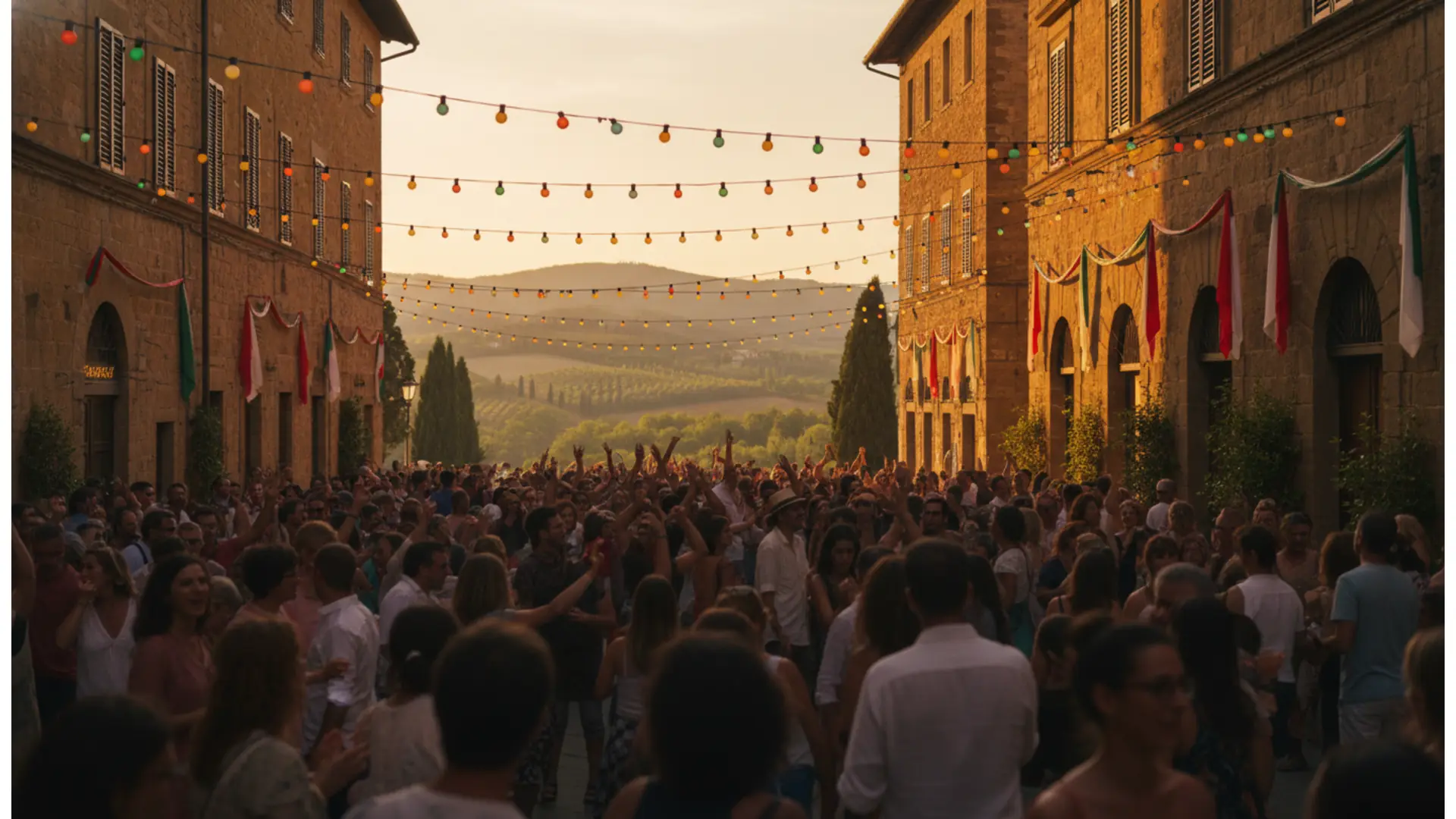
Passio Christi of Taurano
The living Passion of Christ in the Irpinian village of Vallo di Lauro
About Passio Christi
An Easter of faith and theater in the Vallo di Lauro
The Passio Christi is the signature event of the Municipality of Taurano, a small village in the Vallo di Lauro in the province of Avellino, nestled in the green heart of Campania. Organized by the Pro Loco of Taurano, this sacred performance stages the Passion, Death, and Resurrection of Jesus Christ in period costumes, involving the entire town: actors, seamstresses, artisans, technicians, and volunteers work for weeks to build the sets, costumes, and staging.
The route: from the Convento di San Giovanni del Palco to Golgotha
What makes the Passio Christi of Taurano unique is its itinerant nature: there is no single stage, but rather a succession of real locations in the village that become, one after another, the natural scenery for the Gospel narrative.
- The square of the Franciscan Convento di San Giovanni del Palco hosts Jesus' Last Supper with the twelve apostles and the episode of the Garden of Olives.
- The elementary school building on Via Piazza serves as the backdrop for the trial before the Sanhedrin.
- In the main square, at the heart of the village, the encounter with Herod, the choice between Jesus and Barabbas, and the sentence pronounced by Pontius Pilate take place.
- The Via Crucis then winds through the entire historic center and the most characteristic alleys of Taurano.
- The Golgotha scene is set up in an uninhabited area on the outskirts of the village, surrounded by vegetation, offering a deeply evocative finale.
Good Friday and the White-Robed Brotherhoods of the Vallo
The Passio Christi is part of a broader ritual context: that of the Biancovestiti (White-Robed Brotherhoods) of the Vallo di Lauro, who walk to the Holy Sepulchres of the valley's towns—Lauro, Taurano, Moschiano, Marzano, Quindici, and Pago del Vallo di Lauro—on Good Friday, chanting ancient Via Crucis hymns. The Taurano procession has always stood out for the presence of horses, a chariot, and actors in historical garb, making it one of the most recognizable in the entire Vallo.
A decades-long tradition
The Taurano performance has decades of uninterrupted history and is passed down from generation to generation: many actors started as children and today accompany their own children on the same stage. While the numbering of the editions is not entirely uniform across local sources, the event's continuity is widely documented by the Irpinian press and tourism portals of the Province of Avellino.
Beyond devotion: a civil message
In recent years, the Pro Loco has chosen to weave a contemporary message into the Gospel narrative, dedicating the performance to the theme of peace and the condemnation of modern wars. Symbolic gestures integrated into the scenes and the final monologue beneath the Cross transform the sacred performance into a collective reflection on the pain and injustice of our time, while maintaining the philological rigor of the costumes and sets.
Taurano, a village in Western Irpinia
With about 1,500 inhabitants, Taurano is one of the smallest municipalities in the province of Avellino, lying at the foot of the Partenio mountains and overlooking the Vallo di Lauro plain. The Convento di San Giovanni del Palco, a Franciscan site linked to the memory of Saint Francis, is its most famous landmark and serves as the starting point for the Passio Christi. The town is also known for its hazelnut cultivation and a calendar of popular festivals that spans the entire year, from Carnival to summer food festivals.
Tips for attending the Passio Christi
As this is an itinerant evening event, it is advisable to arrive well in advance and be prepared for a couple of hours of walking on uneven ground. Admission is free, and public participation is an integral part of the performance: spectators follow the actors from scene to scene, becoming the crowd of Jerusalem themselves.
Passio Christi — edition 2026
The 45th edition of the Passio Christi organized by the Pro Loco of Taurano took place in two stages. On Good Friday, April 3, 2026, the Taurano procession, featuring 93 actors, reached the main square of Lauro together with the Biancovestiti of the Vallo, opening the parade with four horses, a chariot, litters, fire-eaters, jugglers, and snake charmers.
The full performance took place on the evening of Easter Sunday, April 5, 2026, starting around 7:30 PM. The route touched the square of the Convento di San Giovanni del Palco (Last Supper and Garden of Olives), the schools on Via Piazza (Sanhedrin), the central square (trial before Herod and Pontius Pilate), and the alleys of the historic center, concluding with the Golgotha scene in the outskirts of the village.
The 2026 edition took on a strong civil value: the Gospel scenes were intertwined with a testimony against contemporary wars and injustices, with the symbolic gesture of a child throwing away a cartridge belt in front of Jesus. The finale was entrusted to a monologue beneath the Cross dedicated to Saint Francis, in the year marking 800 years since the Saint's death, performed by the Pro Loco president Attilio Graziano — a tribute to the historical bond between Taurano and its Franciscan Convent.
Programme Passio Christi 2026
Highlights Passio Christi 2026
Prices Passio Christi 2026
Practical information — Passio Christi
How to get there
Taurano is located in the Vallo di Lauro, in the province of Avellino. By car: A16 Naples-Canosa motorway, Baiano exit, then SS7bis towards Lauro-Taurano; or A30 Caserta-Salerno, Nola exit. The nearest train station is Nola (Circumvesuviana and RFI lines), about 15 km away; the reference airport is Naples-Capodichino.
Hours and admission
The performance takes place in the evening, usually starting around 7:30 PM. Admission is free. We recommend wearing comfortable shoes: the route crosses the historic center's alleys and continues to the outskirts where Golgotha is set up. In case of bad weather, the event may be subject to changes: it is advisable to check the Pro Loco Facebook page.
Where to park
Parking areas are limited in the historic center, which is closed to traffic during the event: it is recommended to leave your car in the parking lots at the entrance to the village and continue on foot.
Contacts
Pro Loco Taurano — Via Acquaro 6, 83020 Taurano (AV) — tel. +39 081 8240433 — [email protected]
Festival-goer photos
No photos yet. Share yours!
Share your photos
5 photos max, 5 MB per photo (JPG, PNG, WebP)
Noticed an error or missing information?
Help us keep this listing up to date. Every proposal is verified by our team before publication.
Festival-goer reviews
No rating yet — be the first!
No comments yet. Be the first!
Were you there?
Share your experience with the community.
Published by Valentin Contard, festival listings writer. Reviewed, corrected and approved by Christophe Contard, editor-in-chief. .
Where does it take place — Passio Christi
Convento di San Giovanni del Palco e centro storico di Taurano
Via Acquaro 6, 83020 Taurano