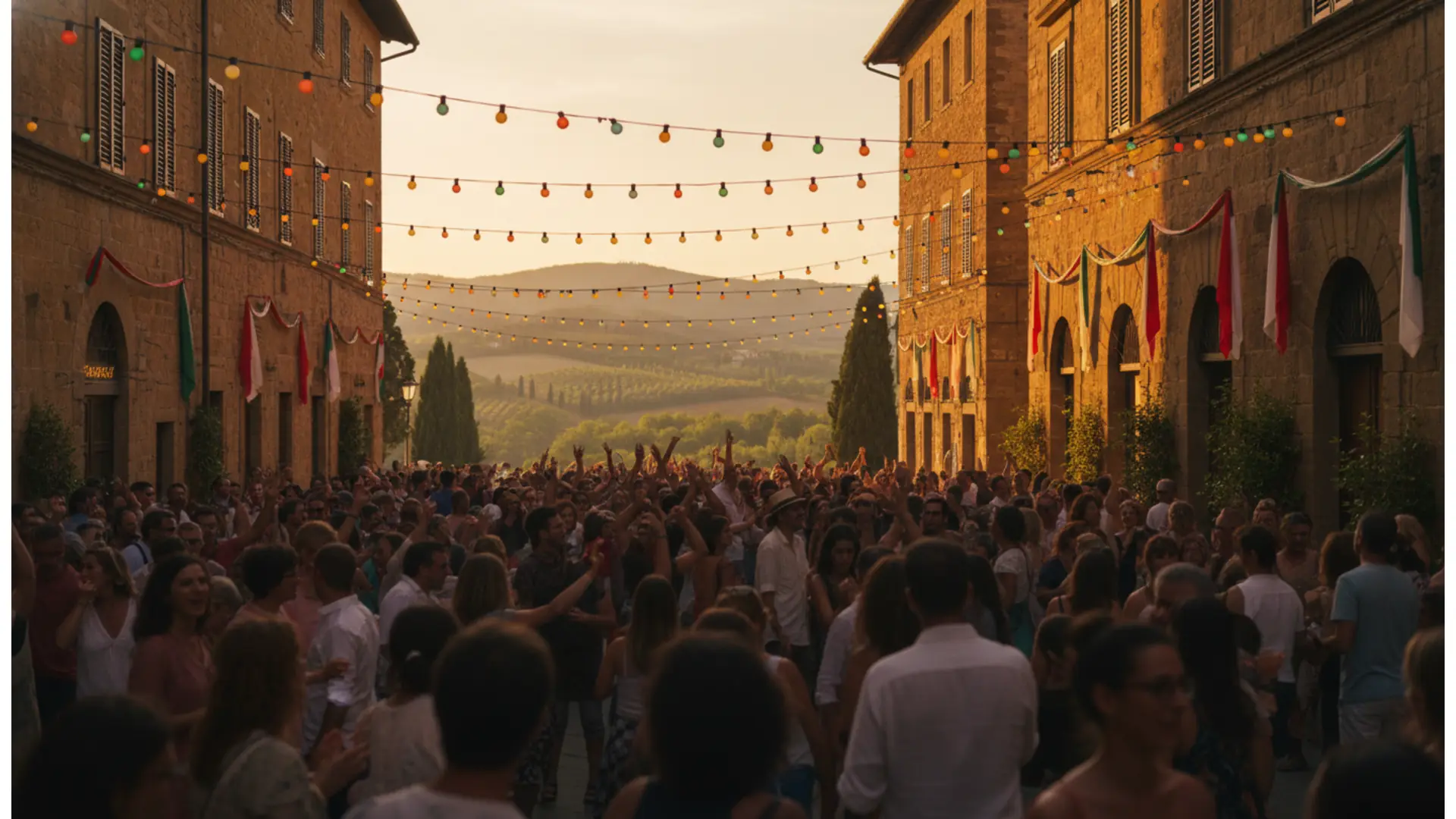
Nawrūz – Persian New Year at Villa Borghese
The Persian New Year celebrated at the foot of the Firdusi statue, in the green heart of Rome
About Nawrūz at Villa Borghese
The Persian New Year in the green heart of Rome
When the sun enters the sign of Aries and the spring equinox marks the beginning of the new year, the Italo-Iranian community of Rome gathers at Villa Borghese, in the city's second district, to celebrate Nawrūz (Nowruz), the Persian New Year. This ancient festival, of Zoroastrian origin, still unites approximately three hundred million people across the Middle East and Central Asia today and has been inscribed on the UNESCO Representative List of the Intangible Cultural Heritage of Humanity since 2010. In Rome, this ritual is renewed every spring in one of the city's most beloved parks, the green heart of the Lazio region.
At the foot of the Firdusi statue
The location of the gathering is no coincidence: the celebration takes place in Piazzale Firdusi, at the foot of the marble statue dedicated to Firdusi (Ferdowsi), the great Persian national poet and author of the Shāhnāmeh, or Book of Kings. The monument, a gift from the city of Tehran to the city of Rome, stands at the top of the staircase overlooking the National Gallery of Modern and Contemporary Art. Gathering before this figure, who represents the language and memory of an entire people, has become a ritual and identity-affirming gesture for the community.
The Haft-Sin table and the symbols of Nawrūz
The symbolic center of the festival is the Haft-Sin table, arranged with seven items whose names begin with the Persian letter "sin," each carrying a wish for the new year:
- Sabzeh — wheat sprouts, a symbol of rebirth;
- Samanu — sweet wheat pudding, a symbol of strength;
- Senjed — jujube fruit, a symbol of love and wisdom;
- Sib — apples, for health;
- Somaq — sumac, for patience;
- Serkeh — vinegar, for maturity;
- Sir — garlic, for remedy and protection.
Alongside these main elements, there are mirrors, candles, decorated eggs, and pots of sprouts, weaving together meanings that speak of life, light, and prosperity.
Poetry, music, and community
Around the table, poetry readings from the verses of Firdusi and Hafez blend with songs and traditional music performed live. It is an inclusive and open event where the Italo-Iranian community shares the celebration with the Afghan and Kurdish communities and with all Romans curious to explore a millenary tradition. Nawrūz thus becomes an opportunity for intercultural encounter and dialogue, where spring serves as a shared symbol of the desire for peace and renewal.
Sizdah Be Dar: the thirteenth day in nature
The celebrations do not end on the day of the equinox. Thirteen days after Nawrūz, Sizdah Be Dar is celebrated—a day dedicated to the deep bond between human beings and nature, traditionally spent outdoors in parks and green spaces. At Villa Borghese, the community gathers once again before the Firdusi statue for a final moment of outdoor sharing, featuring walks, picnics, and the "A Shot with Ferdowsi" photo initiative, which collects participants' images into a virtual album as a testament to solidarity and love for tradition.
A ritual that unites Rome and the East
Coordinated over the years by the Alefba cultural association and supported by the Cultural Institute of the Islamic Republic of Iran, the celebration of Nawrūz at Villa Borghese is now a staple of the Roman spring calendar. In one of the great capitals of the Mediterranean, the Metropolitan City of Rome and the Lazio region host one of the world's oldest festivals, bridging the memory of Persia with the daily life of modern-day Rome.
Nawrūz at Villa Borghese — edition 2026
The 2026 edition of Nawrūz at Villa Borghese opened with the Persian New Year on March 21st, coinciding with the spring equinox, and concluded on April 2nd with Sizdah Be Dar, the thirteenth day dedicated to nature. Before the Firdusi statue, the Italo-Iranian community set up the traditional Haft-Sin table with its seven symbols of rebirth, shared poetry and music, and promoted the "A Shot with Ferdowsi" photo initiative—a virtual album serving as a sign of peace and friendship between peoples. The Afghan and Kurdish communities and numerous Romans also participated in the festivities.
Programme Nawrūz at Villa Borghese 2026
2026 Program
- March 21 — Nawrūz, Persian New Year: gathering at Piazzale Firdusi for the spring equinox, setting up the Haft-Sin table, poetry readings, and traditional music.
- April 2 (Sizdah Be Dar) — Thirteenth day of the new year, dedicated to nature: outdoor gathering at Villa Borghese and the "A Shot with Ferdowsi" initiative, collecting participants' photos into a virtual album.
Highlights Nawrūz at Villa Borghese 2026
- The Haft-Sin table with the seven symbols of Nawrūz
- Readings from the verses of Firdusi and Hafez
- Sizdah Be Dar and the "A Shot with Ferdowsi" initiative
- The meeting between the Italo-Iranian, Afghan, and Kurdish communities
Prices Nawrūz at Villa Borghese 2026
Practical information — Nawrūz at Villa Borghese
Location
Piazzale Firdusi, inside Villa Borghese (Rome, 00197), in front of the Firdusi statue, at the top of the staircase leading to the National Gallery of Modern Art.
How to get there
Metro: Line A, Flaminio or Spagna stops, then access Villa Borghese on foot. Bus: Lines heading to the park and Piazzale Flaminio. We recommend reaching the area on foot, as parking inside the park is limited.
Admission and information
Free and open to the public, held outdoors. For information on cultural initiatives: Cultural Institute of the Islamic Republic of Iran in Rome, tel. +39 06 3052207.
Festival-goer photos
No photos yet. Share yours!
Share your photos
5 photos max, 5 MB per photo (JPG, PNG, WebP)
Noticed an error or missing information?
Help us keep this listing up to date. Every proposal is verified by our team before publication.
Festival-goer reviews
No rating yet — be the first!
No comments yet. Be the first!
Were you there?
Share your experience with the community.
Where does it take place — Nawrūz at Villa Borghese
Piazzale Firdusi (Villa Borghese)
Piazzale Firdusi, Villa Borghese, 00197 Roma