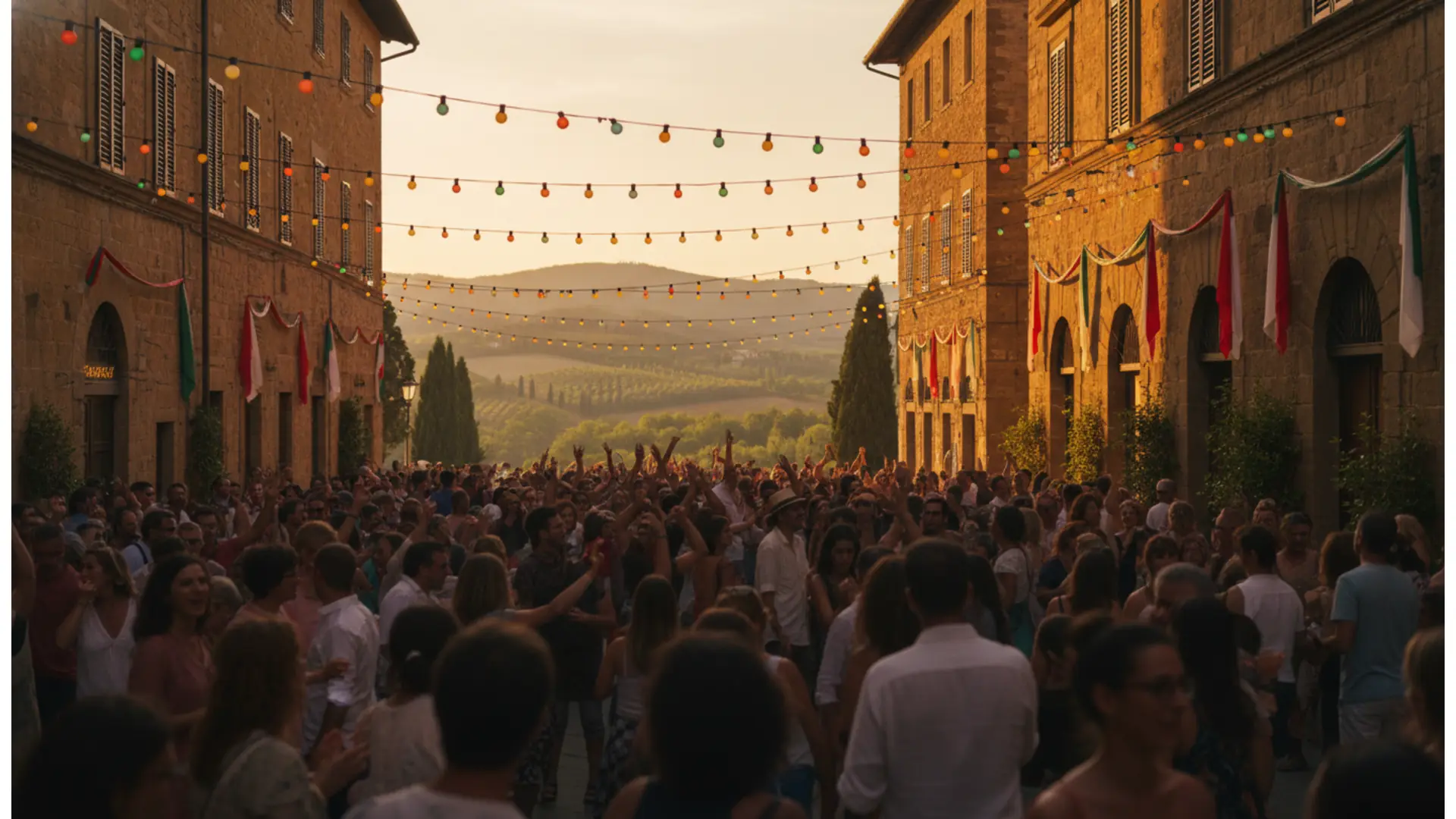
Madonna della Stella Festival in Dragoni
Marian devotion and rural traditions in Dragoni, a hamlet of Lequile
About Madonna della Stella in Dragoni
A Marian festival in the heart of Salento
The Madonna della Stella Festival is the most cherished event of the year for Dragoni, a small hamlet in the Municipality of Lequile, in the province of Lecce, in the heart of the Salento region of Puglia. Every spring, in the days immediately following Easter, the community gathers around the image of the Virgin, venerated as the guide and protector of the village, depicted with a star that symbolizes light, hope, and the journey.
The legend of the rain miracle
The tradition is rooted in an ancient episode linked to a period of severe drought that threatened to destroy the local farmers' crops. According to the story passed down by the inhabitants, as soon as the statue of the Madonna returned to the church, it began to rain, and the harvest was saved. From that miracle, an annual devotion was born that still today, every Wednesday and Thursday after Easter, unites the faith, memory, and identity of the village.
The Rectory of San Basilio Magno
The heart of the celebrations is the Church of San Basilio Magno, built in the early 17th century to replace the previous Church of Santa Maria della Stella. In 2009, with the establishment of the new Holy Spirit Parish, the building became a Rectory. This is where the festival's Holy Masses are celebrated and where the procession with the statue of the Madonna begins, winding through the streets of Dragoni accompanied by hymns, prayers, and the sound of the brass band.
'Lu purecinu' and traditional dining
Alongside the religious dimension, the festival retains a strong popular and convivial character. The most characteristic moment is the 'Festa te lu Purecinu': the traditional tasting of hard-boiled eggs with fresh cheese accompanied by local wine, a rural ritual that marks the end of the Easter period and brings families and visitors together in the village squares.
Music, brass bands, and fireworks
The two days alternate between liturgical celebrations and public events: the brass band parade through the village streets, the tribute to the fallen with the laying of a wreath, evening musical performances, and the traditional fireworks display that concludes the festivities. A mix of the sacred and the profane that makes the Madonna della Stella one of the most authentic spring festivals in the Lecce area, capable of attracting many faithful and curious visitors from neighboring towns.
Dragoni, Lequile, and Puglia
The festival is a precious opportunity to discover a lesser-known corner of Salento: Dragoni and the Municipality of Lequile preserve the slow rhythm of the Apulian countryside, amidst olive trees, dry-stone walls, and Marian devotion. Participating in the Madonna della Stella means immersing yourself in a living tradition, where the community continues to renew its bond with history and faith every year.
Madonna della Stella in Dragoni — edition 2026
The 2026 Madonna della Stella Festival brought the hamlet of Dragoni, in the municipality of Lequile (LE), to life on April 8 and 9. On Wednesday, April 8, the community experienced the procession with the statue of the Madonna through the village streets, the traditional distribution of 'lu purecinu', and a fireworks display. On Thursday, April 9, the solemn day of the feast, Holy Masses at the Rectory of San Basilio Magno accompanied the faithful, with a celebration presided over by Archbishop Msgr. Angelo Raffaele Panzetta, followed by a tribute to the fallen, a brass band parade, and evening shows in the square.
Programme Madonna della Stella in Dragoni 2026
Highlights Madonna della Stella in Dragoni 2026
Prices Madonna della Stella in Dragoni 2026
Practical information — Madonna della Stella in Dragoni
Where
Hamlet of Dragoni, Municipality of Lequile (LE), Puglia. The celebrations take place at the Rectory of San Basilio Magno and in the squares and streets of the village.
How to get there
By car from Lecce (approx. 10 km) via the SP4 towards Lequile and its hamlets. The nearest train station is in Lecce, on the Adriatic line; the reference airport is Brindisi-Salento.
When
Every year on the Wednesday and Thursday following Easter.
Costs
Free admission to all religious celebrations and public events.
Festival-goer photos
No photos yet. Share yours!
Share your photos
5 photos max, 5 MB per photo (JPG, PNG, WebP)
Noticed an error or missing information?
Help us keep this listing up to date. Every proposal is verified by our team before publication.
Festival-goer reviews
No rating yet — be the first!
No comments yet. Be the first!
Were you there?
Share your experience with the community.
Published by Valentin Contard, festival listings writer. Reviewed, corrected and approved by Christophe Contard, editor-in-chief. .
Where does it take place — Madonna della Stella in Dragoni
Rettoria di San Basilio Magno