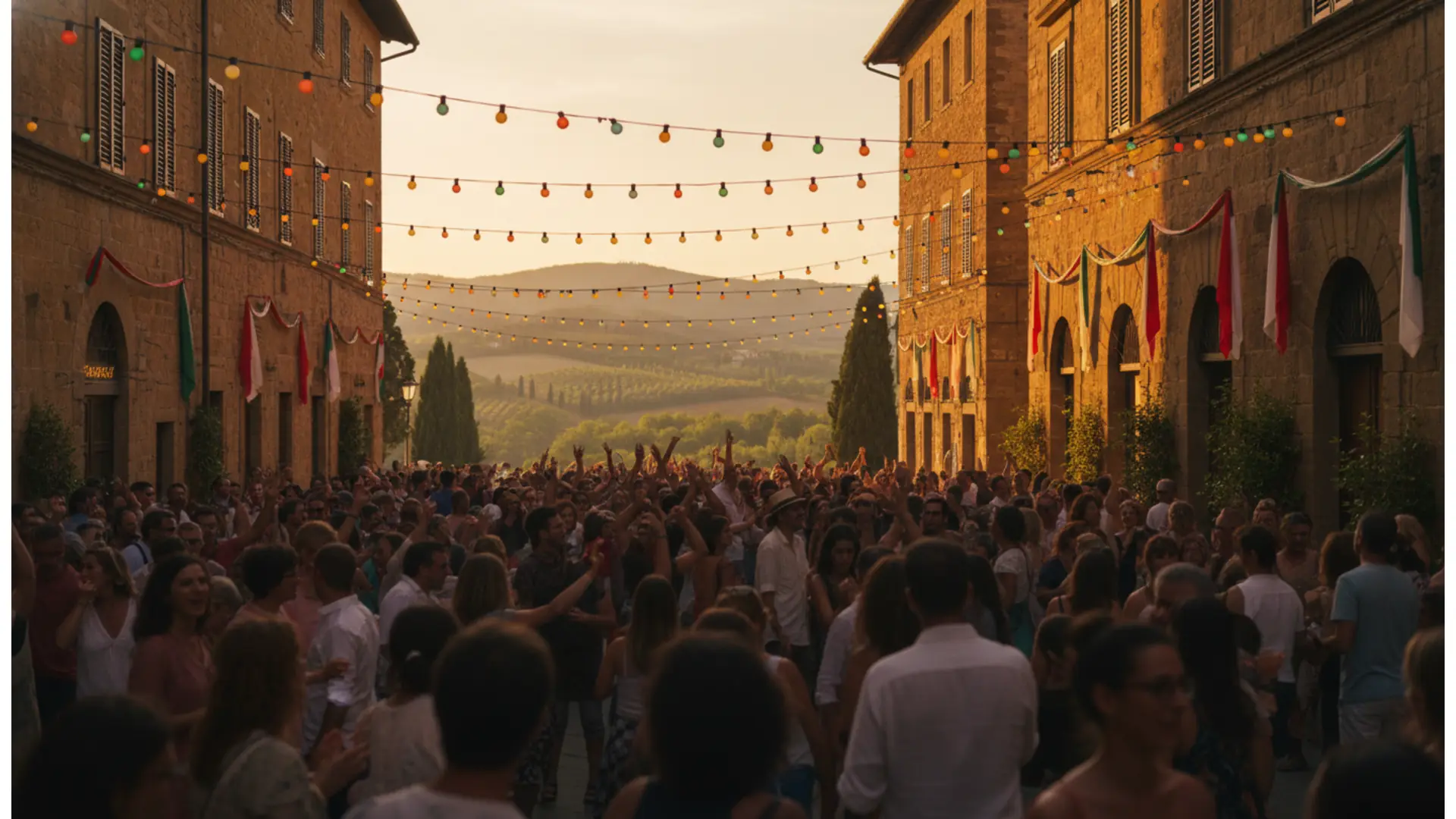
Living Via Crucis of Roccapalumba
The Passion of Christ comes to life in the streets of the 'Town of Stars'
About Living Via Crucis
The Living Via Crucis, the heart of Holy Week in Roccapalumba
In the heart of inland Sicily, in the province of Palermo, the small town of Roccapalumba brings to life one of the most intense and well-attended re-enactments of the Sicilian religious calendar every year: the Living Via Crucis. Known as the "Town of Stars" for its astronomical vocation and its connection to astrophysicist Margherita Hack, Roccapalumba also proves to be a guardian of a profound popular tradition that, on the eve of Easter, turns the village into a natural open-air stage.
A tradition born in 1977
The re-enactment has its roots in the ancient tradition of the "Martorio," but in its current form, it was born in 1977 from the initiative of a group of local youths who, with limited means and great enthusiasm, created the first costumes and sets. Since then, the event has grown to involve over a hundred people, including actors and organizers, managed by the San Filippo Neri Youth Center Association with the patronage of the Municipality of Roccapalumba, the Metropolitan City of Palermo, and the Parish of Saints Peter and Paul.
The spectacle: actors, torches, and sets
The performance retraces the fundamental stages of the Passion: the entry into Jerusalem, the trial before the Sanhedrin led by Caiaphas, the sentence of Pilate, and the journey toward Golgotha, set up at the Sanctuary of the Madonna della Luce at the foot of the Rocca. Among the characters are Roman soldiers, the Cyrenian, the thieves, the Madonna, and a long procession of people. The sets are handcrafted, and technical direction oversees the script, vocal narration, and the acting of every character. Hundreds of torches illuminate the final scene of Golgotha, lending the evening a solemn atmosphere of great emotional impact.
Inside Holy Week
The Living Via Crucis is the opening moment of a wider Holy Week, which continues with the traditional rites of Palm Sunday, Holy Thursday, and Good Friday, leading up to the Easter Meeting on Sunday, when the encounter between the Risen Christ and the Madonna is renewed. The festival is accompanied by the gastronomic specialties of the period: lamb cooked according to local tradition, "piecuri" made of almond paste, Martorana fruit, and Sicilian Easter sweets.
An event to experience
Firmly established as one of the area's hallmark events, the Living Via Crucis of Roccapalumba attracts visitors and devotees from neighboring towns in central-western Sicily every year. Admission is free, and the natural setting of the village, with its alleys and the profile of the Rocca, provides a unique backdrop for a re-enactment that continues to speak to new generations.
Living Via Crucis — edition 2026
The 42nd edition of the Living Via Crucis of Roccapalumba opened Holy Week 2026 on Saturday, March 28, at 8:30 PM, starting from the Social Center and winding through the streets of the historic center to the Golgotha set up at the Sanctuary of the Madonna della Luce.
Promoted by the San Filippo Neri Youth Center Association with the patronage of the Municipality of Roccapalumba, the Metropolitan City of Palermo, and the Parish of Saints Peter and Paul, the re-enactment involved over a hundred costumed actors, including Roman soldiers, the Sanhedrin, the Madonna, and the people. Admission was free.
Holy Week continued with traditional rites until the Easter Meeting on Sunday, April 5, 2026.
Programme Living Via Crucis 2026
- 8:30 PM – Departure from the Social Center
- Passion Procession through the streets of the historic center
- Final Golgotha scene at the Sanctuary of the Madonna della Luce
Highlights Living Via Crucis 2026
- 42nd edition of the re-enactment
- Over a hundred costumed actors
- Hundreds of torches illuminating Golgotha
- Free admission
Prices Living Via Crucis 2026
Practical information — Living Via Crucis
How to get there
Roccapalumba is located in the hinterland of the Metropolitan City of Palermo. By car, it can be reached via the SS121 Palermo-Agrigento road. The village has a train station (Roccapalumba-Alia) on the Palermo-Agrigento line.
When and where
The Living Via Crucis takes place in the evening in the historic center, starting from the Social Center and arriving at the Sanctuary of the Madonna della Luce. Other Holy Week celebrations are held in the following days until Easter Sunday.
Admission
Free. Comfortable clothing and a jacket for the evening are recommended.
Festival-goer photos
No photos yet. Share yours!
Share your photos
5 photos max, 5 MB per photo (JPG, PNG, WebP)
Noticed an error or missing information?
Help us keep this listing up to date. Every proposal is verified by our team before publication.
Festival-goer reviews
No rating yet — be the first!
No comments yet. Be the first!
Were you there?
Share your experience with the community.
Published by Valentin Contard, festival listings writer. Reviewed, corrected and approved by Christophe Contard, editor-in-chief. .
Where does it take place — Living Via Crucis
Centro storico e Santuario Madonna della Luce