International Mother Language Day at Asinitas
Bengali songs, dances, and memories in Torpignattara
About Mother Language Day at Asinitas
A celebration of languages in the heart of Torpignattara
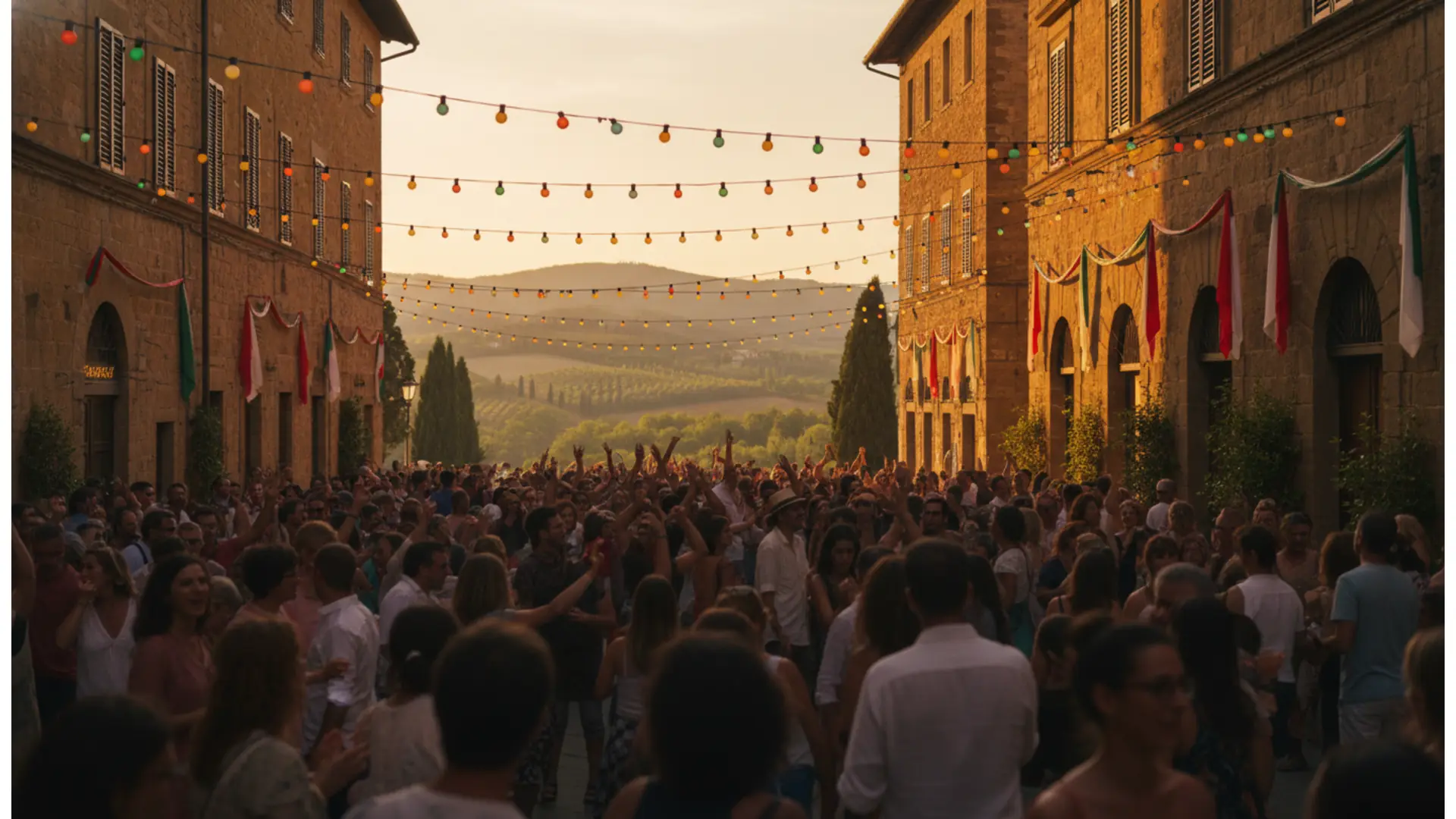
In the Torpignattara neighborhood, within Rome's Municipio V, International Mother Language Day is more than just a date on the UNESCO calendar: it is a true celebration, filled with voices, instruments, shared dishes, and children singing in their parents' native tongue. Since 2014, the Asinitas intercultural center, located at via Policastro 45, has hosted this event every late February, making it one of the most anticipated moments for the neighborhood's community life and, more broadly, for intercultural dialogue in the Lazio region.
Why February 21st?
The date chosen by UNESCO commemorates February 21, 1952, when university students in Dhaka were killed by police while demonstrating for the recognition of the Bengali language. From that movement—the Bhasha Andolan—a linguistic consciousness was born, which Bangladesh later proposed to UNESCO as a universal symbol. In 1999, February 21st became International Mother Language Day. At Asinitas, this memory remains vivid and concrete, as Torpignattara is home to one of the largest Bangladeshi communities in Italy.
Sushmita Sultana and the Sanchary Sangeetayan school
The heart of the festival is Sushmita Sultana, an intercultural mediator and former student of the Asinitas Italian school for women. For years, she has directed Sanchary Sangeetayan, a school for Bengali singing, art, and dance that involves dozens of second-generation children and teenagers every year. Her work acts as a bridge between Italy and Bangladesh: teaching the Bangla language, the harmonium, the tabla, and traditional dances means restoring to younger generations a cultural richness that the Italian school system alone could not preserve.
Choirs, poetry, and linguistic diversity
The Asinitas stage becomes a mosaic of voices. Alongside the Bengali choir, local groups from the neighborhood and Rome perform, such as the Coro Multietnico Romano Balzani, which grew within the Simonetta Salacone primary school, and the women's choir Le Coeur, which performs Italian folk songs and regional dialects. The repertoire ranges from Ekusher Gaan, the commemorative song of the Bengali language movement, to poetry readings and even Bella Ciao: a juxtaposition that perfectly captures the spirit of the day.
The shared Iftar
When the date falls during the month of Ramadan, the festival concludes at sunset with an Iftar, the breaking of the fast: everyone eats together, sitting on rugs, believers and non-believers alike. It is arguably the most beautiful moment, when the day stops being a performance and simply becomes a community sharing a meal.
A broader educational project
The festival is the visible part of a year-round effort. Asinitas runs mother-tongue courses—in Bengali and Arabic—aimed at neighborhood children, including support programs for exams recognized by diplomatic missions. These activities are part of the Torpignattara network projects, alongside local schools, libraries, and associations that enliven the area.
- Where: Asinitas intercultural center, via Policastro 45, Rome (Torpignattara)
- When: Late February, around the UNESCO date of February 21
- Who: Asinitas Onlus with the Sanchary Sangeetayan school of Sushmita Sultana
- For whom: Families, children, neighborhood residents, and curious visitors from all over Rome
Visiting as a guest
This is not a festival built for tourists and there is no ticket office: it is a neighborhood celebration open to anyone who wishes to participate. For this very reason, it is one of the most authentic opportunities to understand how contemporary Rome lives outside the historic center, in a neighborhood where dozens of languages coexist and where Italian is learned—and taught—every single day.
Mother Language Day at Asinitas — edition 2026
«Pride of My Language» — 2026 edition
On February 26 and 27, 2026, the Asinitas intercultural center hosted one of the most well-attended editions of the festival. The chosen title, Pride of My Language, perfectly summarized the intent: to reclaim without hesitation everyone's right to sing, pray, and tell their story in their own mother tongue.
The day was built around three choirs. The Bengali choir of Sanchary Sangeetayan, directed by Sushmita Sultana along with Mitu, brought together children, teenagers, and adults; the Coro Multietnico Romano Balzani, born in the Simonetta Salacone primary school and directed by Roxana Ene, showcased the repertoire of the neighborhood's many origins; the women's choir Le Coeur, directed by Daniela De Angelis, performed Italian folk songs and pieces in regional dialects.
Between performances, traditional Bengali dances, poetry readings, harmonium and tabla accompaniments, and the performance of Ekusher Gaan—the song commemorating the martyrs of the 1952 language movement—alternated. Bella Ciao was also sung together.
At sunset, the festival concluded with the Iftar: the breaking of the Ramadan fast, shared by everyone sitting on rugs, transformed the performance into a community meal.
Programme Mother Language Day at Asinitas 2026
Program of the 2026 edition — «Pride of My Language»
- Bengali choir Sanchary Sangeetayan directed by Sushmita Sultana and Mitu — mixed group of children, teenagers, and adults
- Coro Multietnico Romano Balzani directed by Roxana Ene, born in the Simonetta Salacone primary school
- Le Coeur, women's choir directed by Daniela De Angelis — Italian folk songs and regional dialects
- Traditional Bengali dances by the Sanchary Sangeetayan school
- Poetry readings and performance of Ekusher Gaan, the commemorative song of the 1952 language movement
- Live accompaniment with harmonium and tabla
- Bella Ciao sung together with the audience
- At sunset: shared Iftar, with a community meal sitting on rugs
Venue: Asinitas intercultural center, via Policastro 45 (2nd floor), Torpignattara, Rome.
Highlights Mother Language Day at Asinitas 2026
- Three choirs on the same stage: Bengali, multi-ethnic, and women's
- Ekusher Gaan, the song commemorating the martyrs of the Bangla language
- Traditional dances and music with harmonium and tabla
- Shared Iftar at sunset, sitting on rugs
- A free neighborhood festival open to all
Prices Mother Language Day at Asinitas 2026
Practical information — Mother Language Day at Asinitas
How to get there
The Asinitas center is located at via Policastro 45 (2nd floor), in the Torpignattara neighborhood, Municipio V of Rome. From Termini station, you can reach it by taking Metro A to Ponte Lungo or by bus lines 105 and 810 towards Casilina; the Roma Casilina and Roma Prenestina train stations are just a few minutes away. By car, the neighborhood is congested and parking is scarce: public transport is recommended.
Admission
Participation is free and open to all. As these are association spaces with limited capacity, it is advisable to write to [email protected] or follow the association's social media channels to check times and access methods.
Tips
If the festival concludes with an Iftar, you will be eating while sitting on rugs: wear comfortable clothing. Bringing a dessert or a dish to share is always a welcome gesture.
Festival-goer photos
No photos yet. Share yours!
Share your photos
5 photos max, 5 MB per photo (JPG, PNG, WebP)
Noticed an error or missing information?
Help us keep this listing up to date. Every proposal is verified by our team before publication.
Festival-goer reviews
No rating yet — be the first!
No comments yet. Be the first!
Were you there?
Share your experience with the community.
Published by Valentin Contard, festival listings writer. Reviewed, corrected and approved by Christophe Contard, editor-in-chief. .
Where does it take place — Mother Language Day at Asinitas
Centro interculturale Asinitas
Via Policastro 45, II piano, 00177 Roma