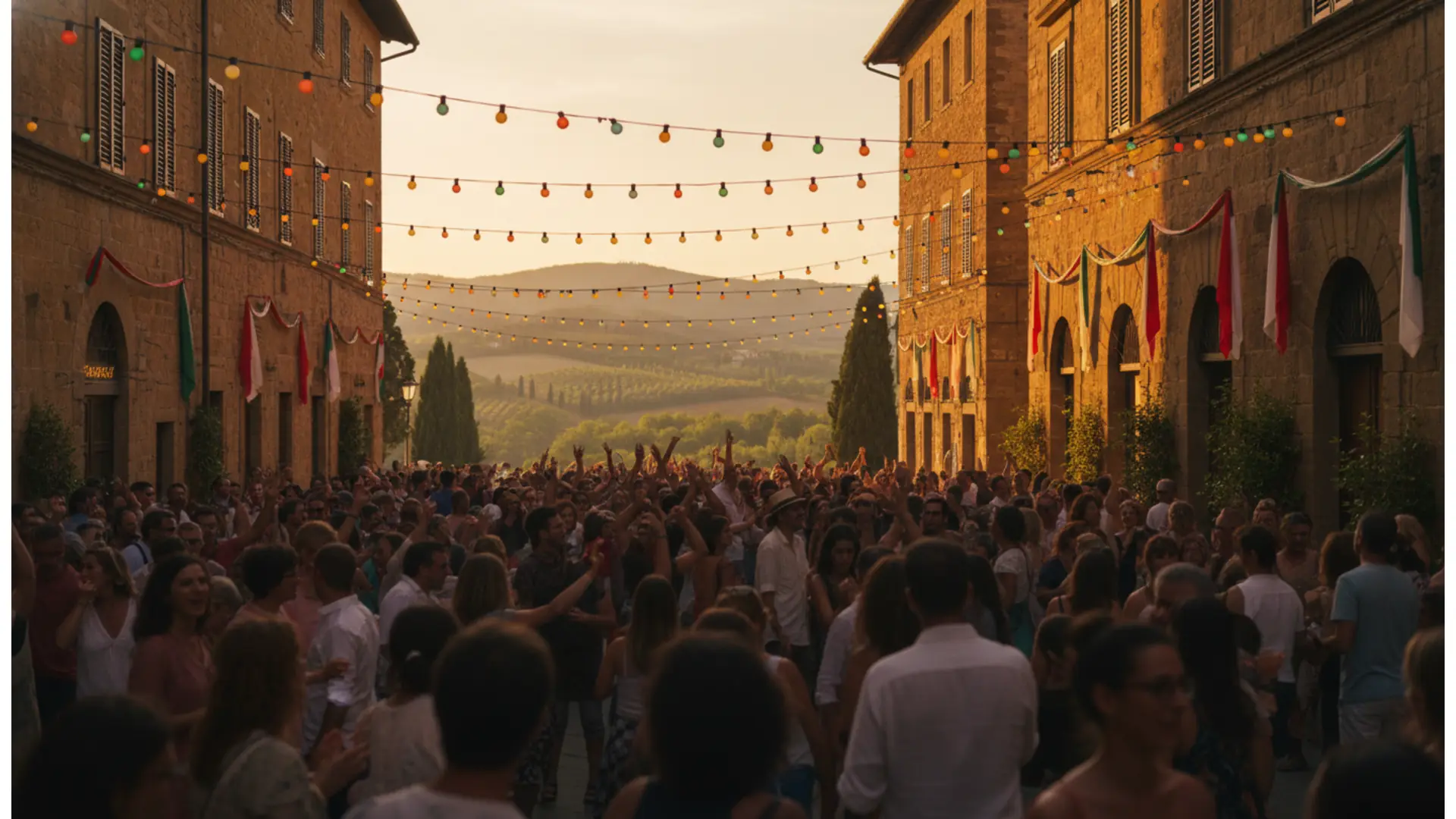
I Fucanoli (Saint Anthony Abbot Feast)
The Saint Anthony Abbot bonfires in the historic districts of Campagna
About I Fucanoli
The fire that illuminates the historic center of Campagna
When evening falls on January 17th, the historic center of Campagna, in the province of Salerno, completely transforms. In the narrow alleys, small squares, and intersections of the various districts, I Fucanoli are lit—the ritual bonfires that the city dedicates to Saint Anthony Abbot. This is not a single massive blaze, but a constellation of fires ignited simultaneously throughout the ancient part of the town: those walking through the alleys move from one flame to the next, guided by the crackling of wood, the scent of smoke, and the voices of singing locals.
The origins: Saint Anthony Abbot, fire, and the community
The festival originated as a religious rite linked to the cult of Saint Anthony Abbot, also known in the Campania region as Sant'Antuono: the protector of domestic animals and livestock, invoked against illness and traditionally associated with fire. In popular imagination, the flame is both a purification and a defense against evil, a gesture that marks the end of the heart of winter and opens the cycle of the agricultural year. Initially, the celebration was primarily liturgical, consisting of processions and blessings; over time, it has been enriched with a gastronomic, musical, and festive dimension, becoming the identity-defining event it is today.
The districts and the construction of the fucanoli
The true heart of the festival lies in the districts. Each neighborhood in the historic center sets up its own fucanolo, stacking wood collected throughout the year, often sourced from pruning and agricultural waste. It is a collective effort that lasts for weeks and involves entire families, from the elderly to children: the pile grows day by day, and with it, the anticipation. Each fucanolo is then lit upon the passing of the procession, as the Saint's effigy travels through the district before the religious pageant returns to the Basilica.
Between procession and folk festival
The moment devotion turns into celebration is what makes I Fucanoli so unique. Once the procession ends, the alleys become a continuous path of folk music, tarantellas, wandering groups, and nocturnal guided tours that recount the city's history. It is a widespread festival with no main stage: you walk, stop in front of a bonfire, drink a glass of wine, and head to the next district. The atmosphere is both intimate and collective, with stone walls reflecting the light of the flames.
Typical cuisine and the flavors of the Salerno hinterland
Around the fires, typical local cuisine takes center stage. Tasting points are set up in the districts where visitors can sample traditional peasant dishes from the Salerno hinterland, homemade desserts, cured meats, cheeses, and local wines. Food here is not just a side dish to the event: it is part of the ritual, as the fire was historically used to cook, warm, and bring people together. Over the years, the Pro Loco has structured actual food and wine trails through the alleys, allowing visitors to discover the historic center while tasting its delicacies.
Campagna, city of fire and water
Campagna is a municipality in the Campania Region nestled in a narrow valley at the foot of the Picentini Mountains, dominated by its convents and the Co-cathedral Basilica. The city is known for two opposing and complementary rituals: I Fucanoli, the winter fire festival, and the Chiena, the summer flooding of the streets with water from the Tenza River. Fire and water thus mark the symbolic calendar of a community that has made popular participation its hallmark. It is no coincidence that the event is organized jointly by the Municipality of Campagna and the Pro Loco Città di Campagna.
Visitor tips
- Arrive early: the historic center is closed to traffic, and nearby parking fills up quickly.
- Wear comfortable shoes: the route through the districts consists of alleys, stairs, and inclines.
- Dress in layers: in January, evenings in the valley are cold, but the temperature changes significantly near the bonfires.
- Consult the bonfire map published by the Pro Loco to plan your itinerary through the districts.
- Always maintain a safe distance from the lit piles and follow the volunteers' instructions.
I Fucanoli — edition 2026
Three days of fire in the historic center
The 2026 edition of I Fucanoli, organized by the Municipality of Campagna and the Pro Loco, spanned the entire weekend from Friday, January 16 to Sunday, January 18. The opening featured the exhibition 'Archive of Historical Posters of the Falò and the Chiena', curated by Cristian Viglione and set up at the Pro Loco headquarters at Corso Umberto I n. 20, a visual journey retracing decades of posters dedicated to the two symbolic rites of the city.
Saturday 17: the night of the bonfires
The heart of the event was Saturday, January 17, the day of Saint Anthony Abbot. From 6 PM, religious and gastronomic itineraries intertwined in the districts: the Saint's effigy traveled through the historic center, and as it passed, each neighborhood set fire to its pile. After the procession returned to the Basilica, the folk part of the festival took over, with traditional music and dishes from the Salerno hinterland served at food stalls in the alleys.
Sunday 18: the final fires
Sunday concluded the festival with free bonfire lighting during the morning and afternoon, until 4 PM, in a more intimate and family-friendly atmosphere.
Programme I Fucanoli 2026
Friday, January 16, 2026
- 6 PM — Corso Umberto I n. 20 (Pro Loco headquarters): inauguration of the exhibition 'Archive of Historical Posters of the Falò and the Chiena', curated by Cristian Viglione.
- 9 PM — Historic center: 'Waiting for the Fucanoli', with Corso Umberto I closed to traffic. No bonfires scheduled for this evening.
Saturday, January 17, 2026 — main day
- From 6 PM — Historic center districts: lighting of I Fucanoli as the Saint Anthony Abbot procession passes.
- Religious and gastronomic itineraries through the alleys, with nocturnal guided tours, folk songs, and typical local cuisine.
- Return of the procession to the Basilica and continuation of the folk festival in the districts.
Sunday, January 18, 2026
- Morning and afternoon, until 4 PM — Free bonfire lighting in the historic center.
Highlights I Fucanoli 2026
- Simultaneous lighting of bonfires in the historic center districts as the procession passes, Saturday, January 17 from 6 PM.
- 'Archive of Historical Posters of the Falò and the Chiena' exhibition curated by Cristian Viglione at the Pro Loco headquarters.
- Nocturnal guided tours through the flame-lit alleys.
- Folk songs and wandering traditional music in the districts.
- Tastings of typical cuisine from the Salerno hinterland.
- Free bonfire lighting also on Sunday the 18th.
Prices I Fucanoli 2026
Practical information — I Fucanoli
Getting there
By car: from the A2 del Mediterraneo motorway, take the Campagna exit, then follow signs for the center. By train: Campagna station on the Salerno-Potenza line, connected to the historic center. Nearest airport: Salerno-Costa d'Amalfi.
Access and tickets
The festival takes place in the alleys and squares of the historic center with free admission. Tastings at the district food stalls are paid, with affordable prices. During the event, the historic center is closed to traffic.
Tips
Comfortable shoes and winter clothing are essential. For updated schedules and the bonfire map, it is best to follow the channels of the Pro Loco Città di Campagna.
Festival-goer photos
No photos yet. Share yours!
Share your photos
5 photos max, 5 MB per photo (JPG, PNG, WebP)
Noticed an error or missing information?
Help us keep this listing up to date. Every proposal is verified by our team before publication.
Festival-goer reviews
No rating yet — be the first!
No comments yet. Be the first!
Were you there?
Share your experience with the community.
Published by Valentin Contard, festival listings writer. Reviewed, corrected and approved by Christophe Contard, editor-in-chief. .
Where does it take place — I Fucanoli
Rioni del centro storico di Campagna
Centro storico, 84022 Campagna