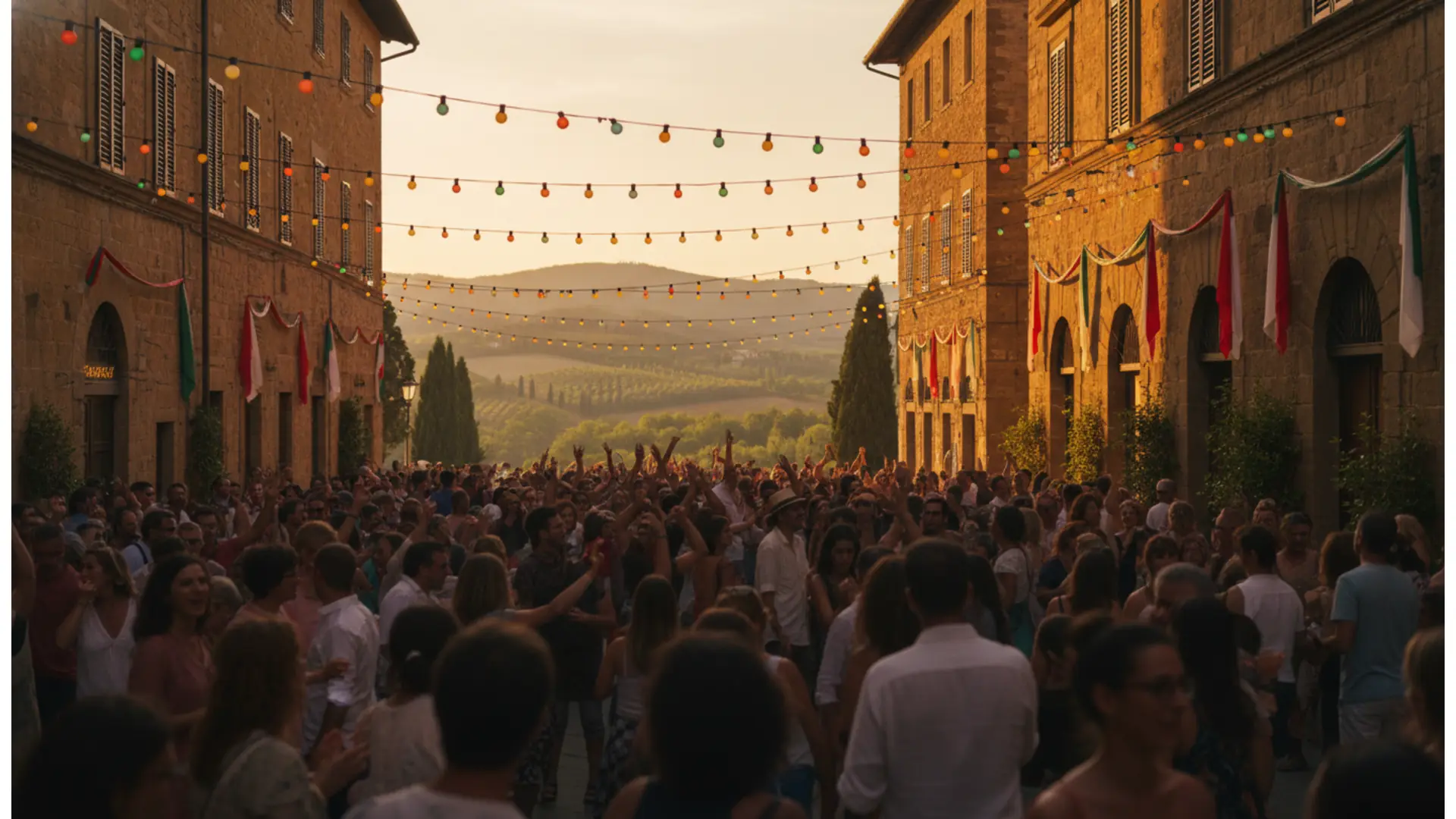
Holy Week: Passio Cristi, Procession of the Biancovestiti and San Teodoro
The rites of the Vallo di Lauro: Passio Cristi, the chants of the Biancovestiti and the pilgrimage to San Teodoro
About Holy Week in Quindici
A week of rituals in the heart of the Vallo di Lauro
For nine days, between Palm Sunday and Easter Monday, the town of Quindici — home to just over two thousand inhabitants nestled in the Vallo di Lauro, at the western edge of the Province of Avellino, in Campania — pauses its ordinary life. This is not a staged festival, but a cycle of rituals that the community has repeated for generations, now drawing visitors from Naples, Nola, and the surrounding area. The calendar revolves around three key moments: the Passio Cristi, the procession of the Biancovestiti on Good Friday, and the feast of San Teodoro on Easter Monday.
The Biancovestiti: the Good Friday ritual
This is the heart of the week. At dawn on Good Friday, groups of Biancovestiti emerge from the villages of the valley — Marzano di Nola, Pago del Vallo di Lauro, Taurano, Moschiano, Lauro, and naturally Quindici with its hamlets, including Bosagro and Beato — and walk across the valley to visit the Santi Sepolcri (Holy Sepulchres) set up in the churches. They wear long white tunics, their heads covered by a white cloth held in place by a crown of thorns, with a penitential cord at their waist; they carry wooden crosses adorned with the symbols of the Passion and a white banner inscribed with INRI.
However, it is not the attire that strikes the observer most, but the singing. The Via Crucis chants of the Biancovestiti are multi-part lamentations; while the lyrics are common to the entire valley, the melodies and performances vary from village to village, making each group instantly recognizable by ear. This singing tradition took shape in the mid-19th century — local research traces it back to Moschiano, where four singers first intoned the story of the Passion — but it is rooted in a much older devotion: as early as 1582, sacred performances like The Unnailing of Christ were held in Lauro, authorized by the Archbishop of Naples at the request of the Marquis Scipione II Pignatelli.
The processions converge on Lauro, entering the square one after another in a long-established order, and the day concludes in the evening with the procession of the Dead Christ and the Sorrowful Mother, with the Biancovestiti accompanying the statues while continuing to sing.
The Passio Cristi
Alongside the processional rites, the community of Quindici stages the Passio Cristi, a dramatic representation of the Passion of Christ involving the parish of Santa Maria delle Grazie and local Catholic Action groups. The church, originally a 14th-century confraternity and established as a parish in 1986, serves as the focal point for the Triduum celebrations and hosts the preparations and reflections leading up to Good Friday.
The pilgrimage to San Teodoro on Easter Monday
The week does not end with Easter. On Easter Monday, by ancient custom, the families of Quindici climb to the Sanctuary of San Teodoro, a 14th-century place of worship built on a hill overlooking the town and rebuilt several times over the centuries. The climb, which offers panoramic views of the entire valley, combines devotion with a traditional outing: it is the day the village gathers outdoors for shared lunches and long tables, where local culinary traditions — especially the soffritto — accompany the festivities.
A heritage recognized by the Campania Region
In August 2024, a regional decree officially added the chants of the Biancovestiti of the Vallo di Lauro during the Good Friday rites to the Inventory of Intangible Cultural Heritage of Campania. This recognition has strengthened the network between the groups of the various municipalities — from the Brotherhood of the Cross to the associations of Marzano di Nola, Moschiano, Pago del Vallo di Lauro, and Quindici — and led to the creation of a joint association for the preservation of these rites.
What to expect
- Free, open-participation rituals, held outdoors and moving between the villages of the valley.
- A solemn atmosphere: this is not a spectacle, but a popular liturgy lived by the community.
- Very early morning hours on Good Friday, with departures at dawn from each village.
- Walking routes between churches and sepulchres: comfortable shoes are essential.
Holy Week in Quindici — edition 2026
2026 Holy Week in Quindici
The 2026 program of the Pro Loco Quindici scheduled the Easter rites — Passio Cristi, Biancovestiti, and San Teodoro — between March 29 and April 6, from Palm Sunday to Easter Monday. A calendar that followed the liturgy of the Triduum and the customs of the Vallo di Lauro step by step.
Even before Good Friday, on Monday, March 30, at 6:30 PM, the decanal procession of the Biancovestiti was held in Moschiano, a choral moment that brought together the groups from Marzano di Nola, Pago del Vallo di Lauro, Taurano, Quindici, Bosagro and Beato, Moschiano, and Lauro: about one hundred and fifty singers in white tunics along the village streets.
On Good Friday, April 3, the groups set out at dawn from their respective municipalities to visit the Holy Sepulchres, then converged towards the Arco di Fellino and finally to Lauro, in Piazza Umberto Nobile. The Biancovestiti of Quindici made their entrance at 11:15 AM, in a schedule that marked the morning group by group. In the evening, as is tradition, the procession of the Dead Christ and the Sorrowful Mother closed the day.
The week concluded on Monday, April 6, with the feast of San Teodoro and the climb to the sanctuary on the hill above Quindici, a day of devotion and outdoor conviviality for the entire community.
Programme Holy Week in Quindici 2026
Monday, March 30, 2026 — Decanal Procession
- 6:30 PM, Moschiano — Decanal procession of the Biancovestiti with groups from Marzano di Nola, Pago del Vallo di Lauro, Taurano, Quindici, Bosagro and Beato, Moschiano, and Lauro (approx. 150 participants).
Friday, April 3, 2026 — The Walk of the Biancovestiti
At dawn, groups depart from their respective villages to visit the Holy Sepulchres of the Vallo di Lauro. Convergence at the Arco di Fellino and entry into Lauro in the following order:
- 9:45 AM — "Il Mondo Che Vorrei" Association
- 10:15 AM — Brotherhood of the Cross
- 10:30 AM — Biancovestiti and procession from Moschiano
- 11:00 AM — Biancovestiti from Marzano
- 11:15 AM — Biancovestiti and procession from Quindici
- 11:35 AM — Biancovestiti from Bosagro
- 12:00 PM — Biancovestiti and procession from Taurano
- 12:30 PM — Biancovestiti and procession from Pago del Vallo di Lauro
- 1:00 PM — Final arrival in Lauro, Piazza Umberto Nobile
In the evening, procession of the Dead Christ and the Sorrowful Mother accompanied by the chants of the Biancovestiti.
Holy Week in Quindici
- Passio Cristi — representation of the Passion of Christ by the parish community of Santa Maria delle Grazie and Catholic Action.
Monday, April 6, 2026 — Easter Monday
- Feast of San Teodoro — climb and pilgrimage to the Sanctuary of San Teodoro on the hill overlooking Quindici, with the traditional community day outdoors.
Highlights Holy Week in Quindici 2026
- The Via Crucis chants of the Biancovestiti, inscribed in the Inventory of Intangible Cultural Heritage of Campania in August 2024.
- The decanal procession on March 30 in Moschiano, with about 150 singers from the seven villages of the valley.
- The entrance of the Biancovestiti and the Quindici procession into Lauro at 11:15 AM on Good Friday.
- The convergence of all groups at the Arco di Fellino and the final arrival in Piazza Umberto Nobile at 1:00 PM.
- The Passio Cristi, a representation of the Passion promoted by the parish of Santa Maria delle Grazie.
- The climb to the Sanctuary of San Teodoro on Easter Monday, blending devotion and conviviality.
Prices Holy Week in Quindici 2026
Practical information — Holy Week in Quindici
How to get there
Quindici (83020, Province of Avellino) can be reached by car from the Nola exit of the A30 Caserta-Salerno motorway, continuing towards the Vallo di Lauro (about 15 km). From Naples, the journey takes just under an hour. By train, the nearest station is Nola on the Circumvesuviana line, with onward travel by bus or taxi to the valley.
Admission
All rites — processions, chants of the Biancovestiti, Passio Cristi, and the climb to the Sanctuary of San Teodoro — are free and open to everyone. No booking is required.
Tips
- On Good Friday, groups depart at dawn: it is advisable to arrive the night before or prepare for a very early start.
- Processions take place on roads and uphill paths: wear comfortable shoes and dress in layers (spring mornings in the valley can be cold).
- Respect the religious nature of the rite: maintain silence during the chants and be discreet with cameras and drones.
- For the Easter Monday climb to the Sanctuary of San Teodoro, the path is on foot and offers great views: bring water.
Information
Municipality of Quindici, tel. +39 081 5102499 — [email protected]. Annual program organized by the Pro Loco Quindici (Unpli Avellino network).
Festival-goer photos
No photos yet. Share yours!
Share your photos
5 photos max, 5 MB per photo (JPG, PNG, WebP)
Noticed an error or missing information?
Help us keep this listing up to date. Every proposal is verified by our team before publication.
Festival-goer reviews
No rating yet — be the first!
No comments yet. Be the first!
Were you there?
Share your experience with the community.
Published by Valentin Contard, festival listings writer. Reviewed, corrected and approved by Christophe Contard, editor-in-chief. .
Where does it take place — Holy Week in Quindici
Centro storico di Quindici, chiesa di Santa Maria delle Grazie e Santuario di San Teodoro