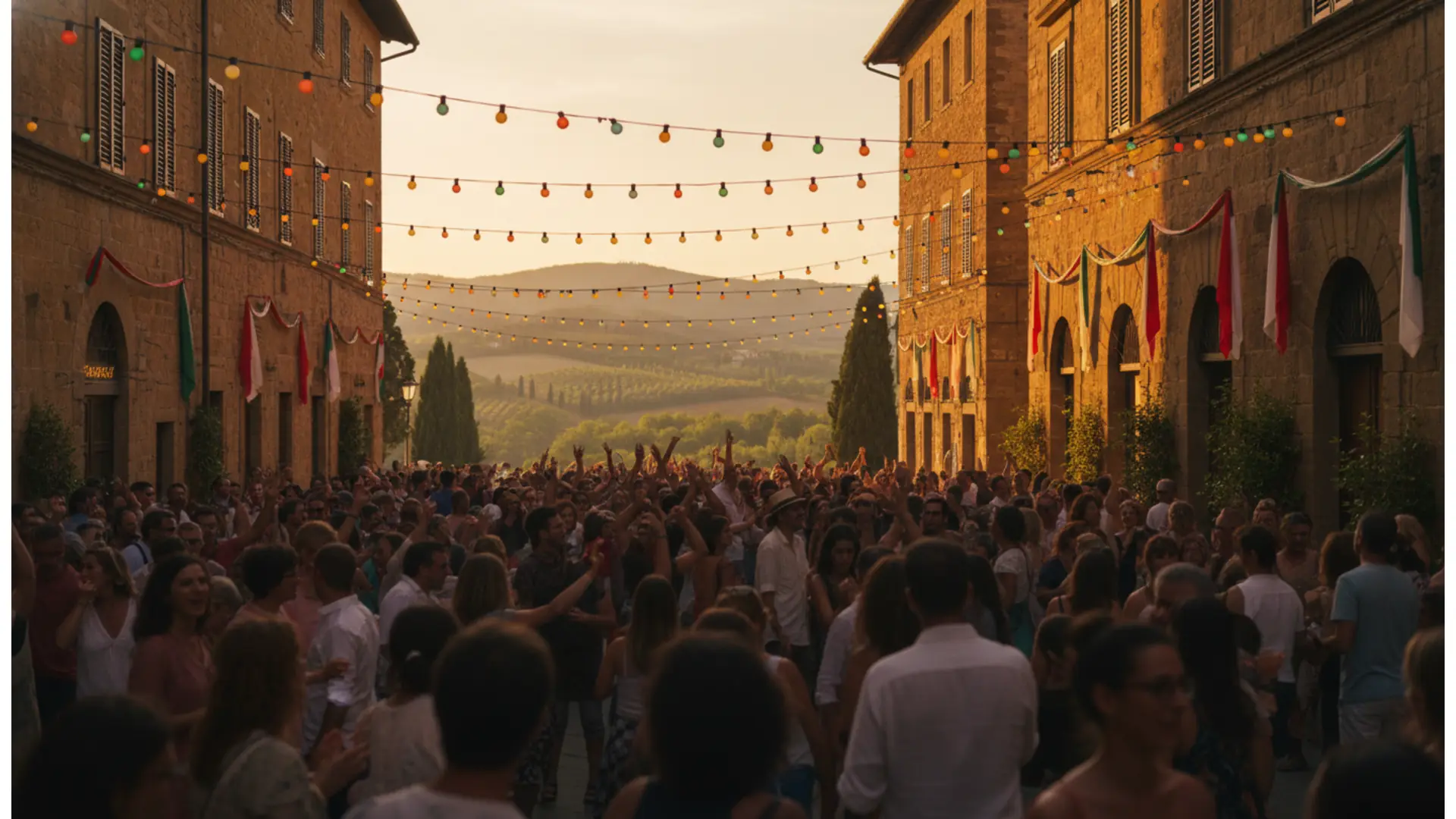
Historic Prenestino Carnival
Float parades, stilt walkers, and the burning of King Carnival in the historic center of Palestrina
About Prenestino Carnival
The carnival that lights up Palestrina
When February arrives, Palestrina transforms. The streets climbing the slopes of Mount Ginestro, shaped by the terraces of the ancient Sanctuary of Fortuna Primigenia, become the stage for the Historic Prenestino Carnival, one of the most popular carnival celebrations in the Roman province. This is no ordinary parade: it is an event the entire community prepares for months in advance, from the workshops where the allegorical floats are born to rehearsals for masked groups and costume making.
Allegorical floats, stilt walkers, and music
The heart of the event lies in the allegorical float parades, built from papier-mâché by local masters and accompanied by masked groups that fill the squares with color. A small world of street performers moves around the floats: stilt walkers, jugglers, entertainers, and mascots for the little ones. The soundtrack is provided by local folk groups and marching bands, from the Frustica of Faleria to the Giacomo Puccini Musical Band of Cave, as well as the samba rhythms of the Sbandati and DJs animating the afternoons in the square.
The burning of King Carnival
The most anticipated moment arrives on Shrove Tuesday, the final day of the festival. After the last parade, the effigy of King Carnival is set ablaze in an ancient ritual that symbolically marks the end of winter and the beginning of Lent. Immediately after, the sky above Palestrina lights up with the final fireworks display, closing the event before thousands of spectators.
A festival for families
The Prenestino Carnival has a deeply popular and family-oriented spirit. Fat Thursday is traditionally dedicated to children and schools, with the morning reserved for local institutes and the afternoon open to children's masked groups. On Saturday, the party moves indoors for the Grand Carnival Ball, a masked dance evening with dinner and entertainment that continues a deeply rooted tradition in the Lazio region.
- Afternoon parades of allegorical floats and masked groups
- Stilt walkers, street performers, and children's entertainment
- Folk groups, marching bands, and samba percussion
- Grand masked ball with dinner and show
- Burning of King Carnival and final fireworks
Palestrina, between archaeology and tradition
The setting makes a difference. Palestrina, the ancient Praeneste, is one of the most fascinating towns in Lazio: the National Archaeological Museum housed in Palazzo Colonna Barberini preserves the famous Nile mosaic, while the terraces of the late-Republican sanctuary offer a panorama stretching to the Prenestini Mountains and the Roman countryside. The city is also the birthplace of Giovanni Pierluigi da Palestrina, the great 16th-century polyphonist. Seeing the papier-mâché floats glide beneath these monumental backdrops, between Piazza Regina Margherita and Piazza della Liberazione, is what makes the Prenestino Carnival unique.
A local event
The event is organized by the Carnevale Prenestino Association with the patronage of the Municipality of Palestrina and the support of the Lazio Regional Council, involving dozens of volunteers, local associations, and local youth every year. Access to the parades is free: just show up in the center during the festival afternoons, preferably in costume.
Prenestino Carnival — edition 2026
An edition with a new route
The 2026 Historic Prenestino Carnival brought a long-awaited organizational change to Palestrina: two simultaneous parades, entering from Viale della Vittoria and Via del Tempio respectively, which rejoined in the stretch between Piazza Regina Margherita and Piazza della Liberazione. A solution designed to expand the festival space and improve public safety, which is always high on peak days.
Ten days of celebration
The event opened on Sunday, February 8th, with the folk group La Frustica of Faleria and the first round of allegorical floats among stilt walkers and street performers. Fat Thursday was dedicated to children and schools, Saturday to the Grand Masked Ball, and the following Sunday to the parade with the Sbandati - Bateria de Samba and the Giacomo Puccini Musical Band of Cave. Shrove Tuesday closed the program with the burning of King Carnival and the fireworks display.
The event was organized by the Carnevale Prenestino Association with the patronage of the Municipality of Palestrina and the support of the Lazio Regional Council. Access to the parades was free.
Programme Prenestino Carnival 2026
Sunday, February 8 - Opening (3:00 PM - 7:00 PM)
- Inauguration with the folk group La Frustica of Faleria
- First round of allegorical floats, stilt walkers, and street performers
- Two processions from Viale della Vittoria and Via del Tempio, meeting between Piazza Regina Margherita and Piazza della Liberazione
Thursday, February 12 - Fat Thursday
- Morning (9:00 AM - 1:00 PM): Children's Carnival with schools, music by Paolo Dj
- Afternoon (from 3:00 PM): Mascot and masked group parade
Saturday, February 14
- Grand Carnival Ball (from 8:00 PM) at the I Casali di San Pastore farmhouse, with dinner and show
Sunday, February 15 (3:00 PM - 7:00 PM)
- Grand parade of allegorical floats and masked groups
- Sbandati - Bateria de Samba
- Giacomo Puccini Musical Band of Cave
Tuesday, February 17 - Shrove Tuesday (3:00 PM - 8:00 PM)
- Final parade of allegorical floats and stilt walkers
- Burning of King Carnival
- Final fireworks display
Highlights Prenestino Carnival 2026
- The new two-procession route, a 2026 edition novelty
- The burning of King Carnival on Shrove Tuesday, followed by fireworks
- The February 15th parade with the Sbandati - Bateria de Samba
- Fat Thursday dedicated to children and schools in Palestrina
- The Grand Masked Ball on Saturday night
Prices Prenestino Carnival 2026
Practical information — Prenestino Carnival
How to get there
Palestrina is about 40 km from Rome. By car: A24 motorway, Tivoli exit, or via Casilina (SS6) until the junction for Palestrina. By train and bus: Zagarolo station on the FL6 Rome Termini-Cassino line, then take a Cotral bus; alternatively, take a Cotral bus from the Anagnina station of Rome's Metro A.
Hours and prices
The parades take place in the afternoon, generally from 3:00 PM to 7:00 PM (until 8:00 PM on Shrove Tuesday). Access to the parades in the center is free. The Grand Carnival Ball is a ticketed event requiring reservations at the host venue.
Tips
The historic center is closed to traffic during parade days: it is best to leave your car in the parking lots at the base of the town and walk up. Warm clothing and comfortable shoes are essential, as the streets of Palestrina are steep and evening temperatures in February drop. For the burning of King Carnival and the fireworks, it is best to arrive early to secure a spot in the central squares.
Festival-goer photos
No photos yet. Share yours!
Share your photos
5 photos max, 5 MB per photo (JPG, PNG, WebP)
Noticed an error or missing information?
Help us keep this listing up to date. Every proposal is verified by our team before publication.
Festival-goer reviews
No rating yet — be the first!
No comments yet. Be the first!
Were you there?
Share your experience with the community.
Published by Valentin Contard, festival listings writer. Reviewed, corrected and approved by Christophe Contard, editor-in-chief. .
Where does it take place — Prenestino Carnival
Centro storico di Palestrina