Frittello Festival
The medieval village of Roccantica celebrates Saint Joseph with cauliflower fritters fried in Sabina olive oil
About Frittello Festival
A tradition spanning over half a century
The Frittello Festival in Roccantica, located in the province of Rieti in the heart of the Lazio Sabina region, began in the 1970s as a village feast tied to the cult of Saint Joseph, affectionately known here as "San Giuseppe frittellaro" (Saint Joseph the fritter-maker). Since then, the event has never stopped: 2025 marked the 51st edition, and 2026 the 52nd. Today, it is recognized far beyond the borders of the Lazio Region as one of the most authentic festivals in Central Italy.
What is a frittello?
A frittello is not a dessert, as the name might suggest to those unfamiliar with the area: it is a savory dish made from cauliflower florets. The florets are cleaned, cut, washed, and salted, then dipped in a simple batter of eggs, flour, water, and salt, and finally fried in large pans filled with extra virgin olive oil from the Sabina region, one of Italy's oldest olive-growing territories. They are eaten piping hot, straight from the pan, accompanied by a glass of local red wine: this is the ritual that, generation after generation, binds the community of Roccantica together.
The village, the heart of the festival
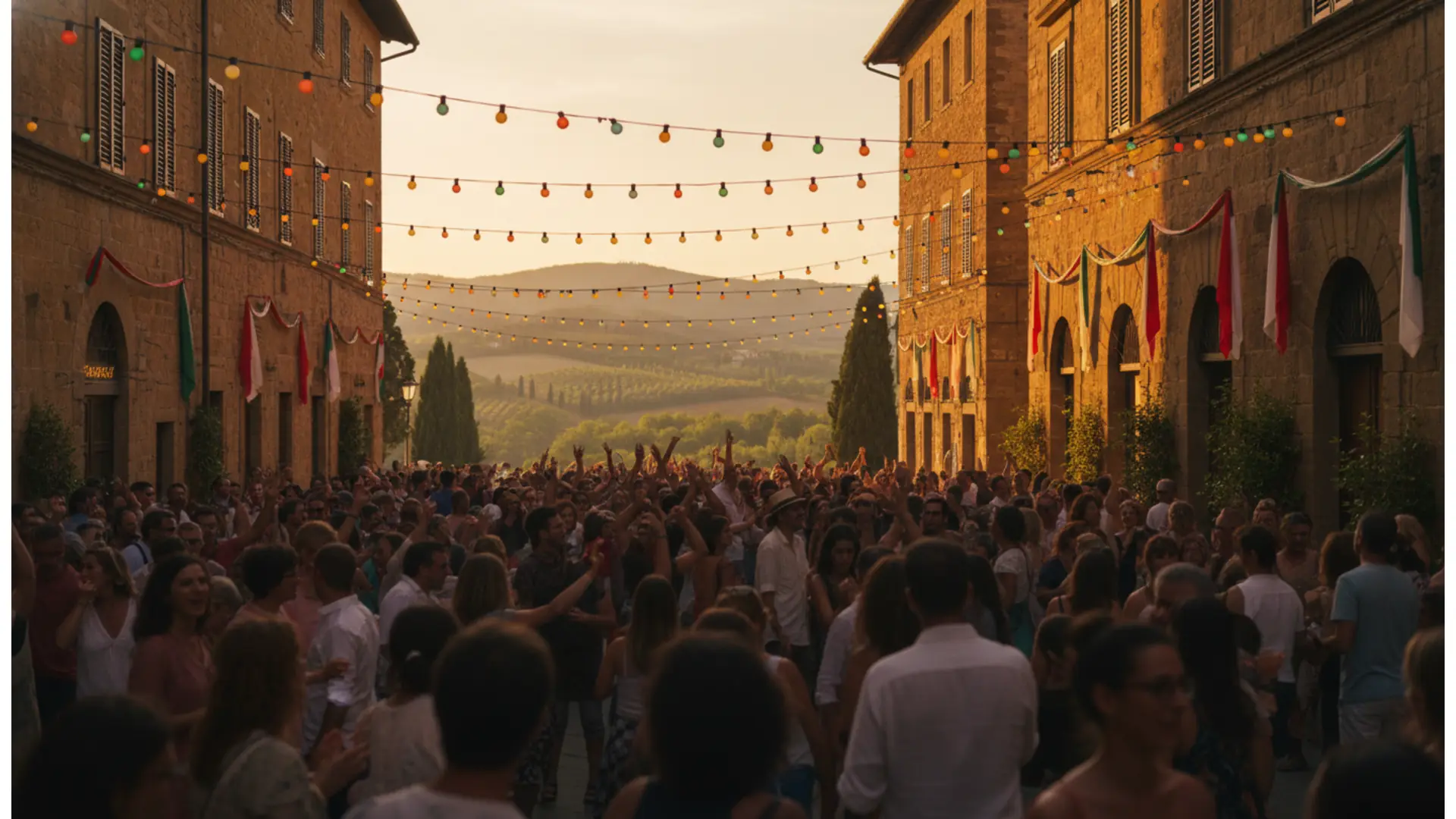
Roccantica is a medieval village perched on the slopes of Monte Pizzuto, characterized by paved alleys, arches, and stone houses that climb up to a panoramic tower overlooking the Tiber Valley. During the festival, the entire historic center becomes a stage: the streets fill with stalls, cellars open their doors, and the squares transform into open-air dining rooms. It is the best time of year to discover a village that, during other months, retains the quiet, secluded charm of small Sabina towns.
Excursions and nature
The day is not just about food. In the morning, guided hikes are organized to the Benedictine hermitage of San Leonardo, the "mola dei comunelli" mill, and especially the Revotano Sinkhole—one of the largest karst sinkholes in Central Italy, which appears like a true "gateway to the abyss" in the woods above the village. Returning to the village coincides, not coincidentally, with the opening of the frying pans.
Crafts, folklore, and music
Along the festival route, artisan workshops offer live demonstrations: wrought iron work, glass blowing, wood carving, and medieval tailoring. In the afternoon, folk groups arrive with traditional songs and dances, flag-wavers, and performers in costume, while a dance orchestra enlivens the square until the evening. Alongside the frittelli, stalls offer egg fettuccine, grilled meats, and other Sabina specialties, as well as direct sales of oil, wine, and pecorino cheese from local producers.
Why it's worth the trip
- Authenticity: A festival born from the community and still managed by the Pro Loco of Roccantica, without commercial dilution.
- Identity product: Sabina extra virgin olive oil, among the most prized in Italy, used here as a key ingredient rather than a mere side.
- Proximity to Rome: Just over an hour's drive from the capital, perfect for a spring Sunday outing.
- Village and nature: Medieval architecture, views over the Tiber Valley, and karst trekking all in one day.
When it takes place
The festival is traditionally held on the Sunday closest to March 19th, the feast day of Saint Joseph. The 2025 edition took place on Sunday, March 23rd, and the 2026 edition on Sunday, March 22nd, with free entry and activities running from morning until late evening.
Frittello Festival — edition 2026
Frittello Festival 2026: the 52nd edition
The 2026 edition of the Frittello Festival was held on Sunday, March 22 in Roccantica, in keeping with the tradition of holding the event on the Sunday closest to Saint Joseph's Day. The Sabina village, in the province of Rieti, welcomed visitors from all over Lazio and especially from Rome for the entire day.
The morning was dedicated to guided hikes in the surroundings: the Benedictine hermitage of San Leonardo, the "mola dei comunelli" mill, and the overlook of the Revotano sinkhole, with a return to the village in time for the opening of the frying pans. In the historic center, artisan workshops reopened with live demonstrations of wrought iron, glass, wood, and medieval tailoring, while food stalls offered, alongside the frittelli, egg fettuccine, grilled meats, oil, wine, and pecorino cheese from Sabina producers.
From the early afternoon, the frying of the frittelli—cauliflower florets in batter fried in local extra virgin olive oil—continued non-stop, served hot with local red wine. The afternoon was enlivened by folk groups, costumed performers, and flag-wavers, concluding with dancing in the square accompanied by an orchestra.
Programme Frittello Festival 2026
Program for the day — Sunday, March 22, 2026
- Morning: Guided hike to the hermitage of San Leonardo, the mola dei comunelli, and the overlook of the Revotano sinkhole (departure from the village, booking recommended).
- Morning: Opening of food stalls and artisan workshops in the historic center; guided tours of the medieval village and the panoramic tower overlooking the Tiber Valley.
- Around 12:30 PM: Lunch in the square with Sabina specialties — egg fettuccine, grilled meats, cheeses, and local wine.
- From 2:00 PM: Start of the frying of frittelli in large pans of extra virgin olive oil; continuous distribution throughout the afternoon.
- Afternoon: Performances by folk groups with traditional songs and dances, a procession of costumed figures, and flag-wavers.
- Until evening: Music and dancing in the square with the orchestra; direct sales of oil, wine, and pecorino from local producers.
The times indicated follow the usual schedule of the event; for any changes, the official communication from the Pro Loco of Roccantica prevails.
Highlights Frittello Festival 2026
- 52nd edition of one of the longest-running festivals in Lazio, born in the 1970s.
- The frittelli: cauliflower florets in batter fried in Sabina extra virgin olive oil.
- Morning hike to the hermitage of San Leonardo and the Revotano karst sinkhole.
- Artisan workshops with wrought iron, glass, wood carving, and medieval tailoring.
- Folk groups, flag-wavers, and dancing in the square with an orchestra.
- Free entry and entirely pedestrian medieval village.
Prices Frittello Festival 2026
Practical information — Frittello Festival
Getting there
By car: From Rome, take the A1 motorway, exit at Ponzano Romano-Soratte, or take the SS4 Salaria road to Poggio Mirteto, then follow provincial roads to Roccantica (approx. 70 km, 1h15). From Rieti, it is about 40 km. During the festival, the historic center is closed to traffic: park in the designated areas near the village and proceed on foot.
By train
Take the FL1 line to Poggio Mirteto Scalo station (Orte-Fiumicino line), then take a Cotral bus or taxi to Roccantica.
Entry and costs
Entry to the village and the event is free. You only pay for what you consume at the stalls, with popular prices; guided excursions may require booking and a small contribution to the guides.
Tips
Arrive in the morning to park easily and join the hike; comfortable shoes are mandatory for the stone alleys and trails. In March, temperatures in the Sabina region remain cool: layered clothing is recommended.
Contacts
Pro Loco di Roccantica — Municipality of Roccantica, tel. +39 0765 63020.
Festival-goer photos
No photos yet. Share yours!
Share your photos
5 photos max, 5 MB per photo (JPG, PNG, WebP)
Noticed an error or missing information?
Help us keep this listing up to date. Every proposal is verified by our team before publication.
Festival-goer reviews
No rating yet — be the first!
No comments yet. Be the first!
Were you there?
Share your experience with the community.
Published by Valentin Contard, festival listings writer. Reviewed, corrected and approved by Christophe Contard, editor-in-chief. .
Where does it take place — Frittello Festival
Centro storico di Roccantica
Piazza del Comune, 02040 Roccantica