Ferrara Palio
The oldest Palio in the world, with Renaissance pageants and Palio Races in Piazza Ariostea
About Ferrara Palio
The oldest Palio in the world
The Ferrara Palio claims the title of the oldest Palio in the world: local chronicles trace its origins back to 1259, when the people of Ferrara, to celebrate the victory obtained at Cassano d'Adda by Azzo VII d'Este over the tyrant Ezzelino III da Romano, organized races for footmen and maids, donkeys and horses. Since then, the tradition has been renewed over the centuries, intertwined with the splendor of the Este court, and today it represents the quintessential identity event of the Municipality of Ferrara, a UNESCO World Heritage city in the heart of Emilia-Romagna.
The eight Contrade
The city is divided into eight Contrade: the four districts enclosed within the medieval walls - San Benedetto, Santa Maria in Vado, San Paolo, and Santo Spirito - and the four external villages - San Giacomo, San Giorgio, San Giovanni, and San Luca. Each Contrada parades with its own colors and fields its own athletes, flag bearers, musicians, and re-enactors, creating a sporting and local rivalry that animates Ferrara throughout the spring.
A month of events
The event unfolds over more than a month of appointments. It begins with the Homages to the Duke in Piazza Castello, on Sundays between late March and April, where the Contrade pay homage to the lord of the city. This is followed by the Footmen's Tournament, the Blessing of the Palios with the offering of candles in the Cathedral, and the Este Flag Games - youth and senior - in Piazza Municipio, authentic flag-throwing competitions that test precision and spectacle.
The Magnificent Procession and the Palio Races
The most spectacular moment is the Magnificent Procession, with over a thousand re-enactors in Renaissance attire parading through the streets of the historic center. The climax is the day of the Palio Races in Piazza Ariostea, where four races are held: the race for the boys for the red Palio of San Romano, that for the girls for the green Palio of San Paolo, the donkey race for the white Palio of San Maurelio, and finally the horse race for the prestigious yellow Palio of San Giorgio.
Living tradition
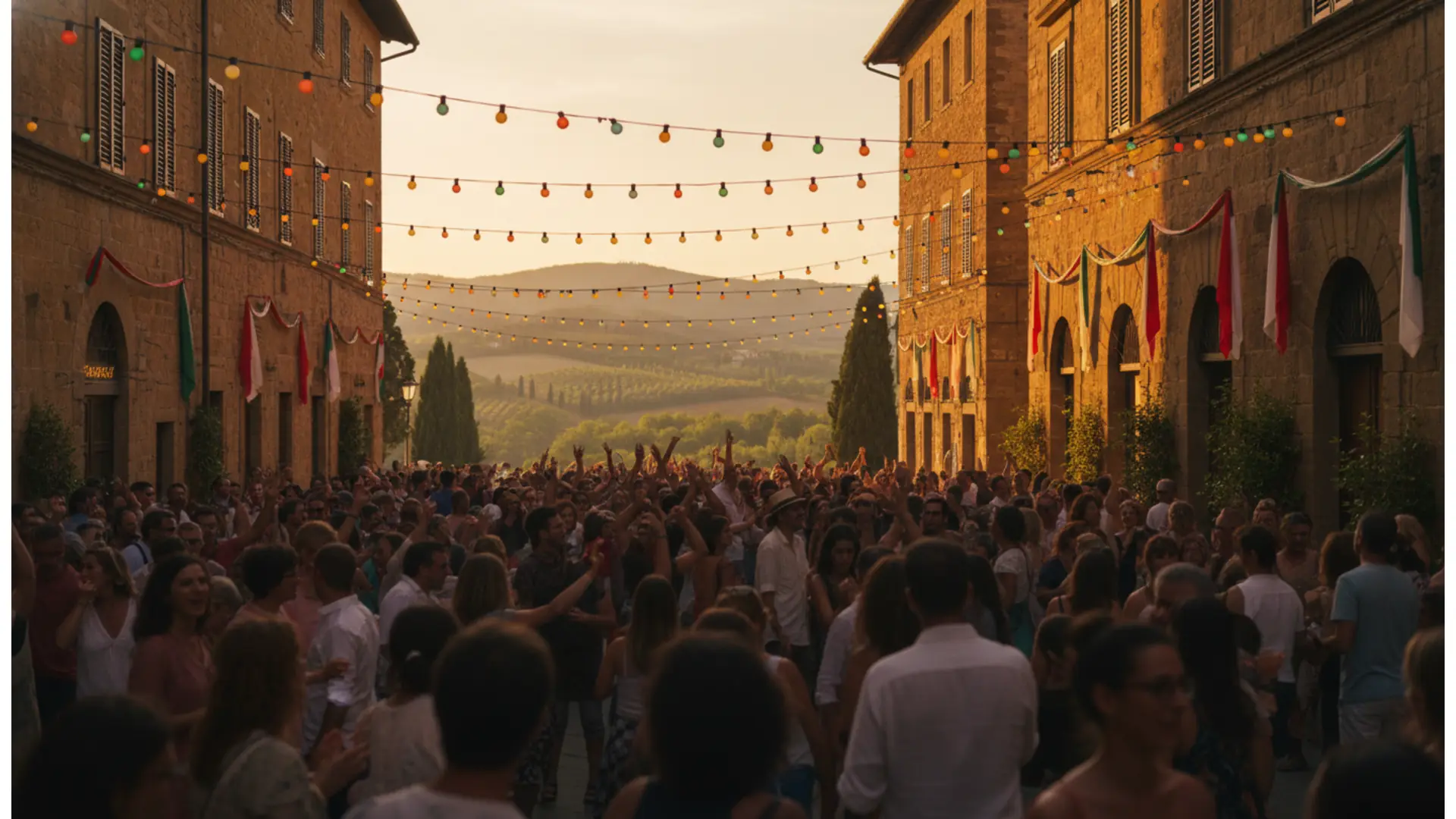
Amidst drum rolls, colorful banners, and packed stands, the Ferrara Palio combines competition, historical memory, and civic pride. It is an unmissable event for those who want to discover the Renaissance soul of Emilia-Romagna and experience the thrill of a tradition passed down for over seven centuries.
Ferrara Palio — edition 2026
Ferrara Palio 2026
The 2026 edition offered over a month of events. The Homages to the Duke took place in Piazza Castello on Sundays between March 29 and April 26; the Footmen's Tournament on April 18 in Piazza Municipale. The Blessing of the Palios took place on May 9 in the Ferrara Cathedral, followed by the Youth Flag Games (May 10) and the Ancient Este Flag Games (May 16-17) in Piazza Municipio.
The Magnificent Procession and the Races
The Magnificent Procession paraded on May 23. The Palio Races in Piazza Ariostea concluded the edition: in the horse race, the Santa Maria in Vado District won with jockey Alessio Migheli, bringing the yellow and purple Contrada the Palio of San Giorgio after a 44-year wait.
Programme Ferrara Palio 2026
Ferrara Palio 2026 Calendar
- Homages to the Duke (Piazza Castello): March 29, April 12, 19, and 26
- Footmen's Tournament: April 18, 3:00 PM, Piazza Municipale
- Blessing of the Palios: May 9, Ferrara Cathedral
- Youth Flag Games: May 10, Piazza Municipio
- Ancient Este Flag Games: May 16-17, Piazza Municipio
- Magnificent Procession: May 23
- Practice Runs: May 27 and 28
- Palio Races: May 30, from 8:00 PM, Piazza Ariostea
Highlights Ferrara Palio 2026
- Historic victory for the Santa Maria in Vado district in the horse race: it hadn't happened since 1982
- Jockey Alessio Migheli brings the yellow and purple Contrada the yellow Palio of San Giorgio
- Magnificent Procession with over a thousand re-enactors in Renaissance costume
- The four Palio Races: boys, girls, donkeys, and horses in Piazza Ariostea
Prices Ferrara Palio 2026
Practical information — Ferrara Palio
How to get there
Ferrara is well connected by train on the Bologna-Padova-Venice line; the station is about a 15-minute walk from the historic center. By car, it can be reached from the A13 Bologna-Padova motorway, exit Ferrara Sud or Nord. The center is largely pedestrianized and has restricted traffic zones (ZTL): it is advisable to use peripheral parking lots.
The Races in Piazza Ariostea
The Palio Races take place in Piazza Ariostea, where grandstands are set up. For schedules, access procedures, and any grandstand tickets, it is recommended to consult the official website of the Ente Palio Città di Ferrara and the channels of the Municipality of Ferrara.
Period
The events take place between late March and late May, with the Palio Races on the last Saturday of May.
Festival-goer photos
No photos yet. Share yours!
Share your photos
5 photos max, 5 MB per photo (JPG, PNG, WebP)
Noticed an error or missing information?
Help us keep this listing up to date. Every proposal is verified by our team before publication.
Festival-goer reviews
No rating yet — be the first!
No comments yet. Be the first!
Were you there?
Share your experience with the community.
Published by Valentin Contard, festival listings writer. Reviewed, corrected and approved by Christophe Contard, editor-in-chief. .
Where does it take place — Ferrara Palio
Piazza Ariostea