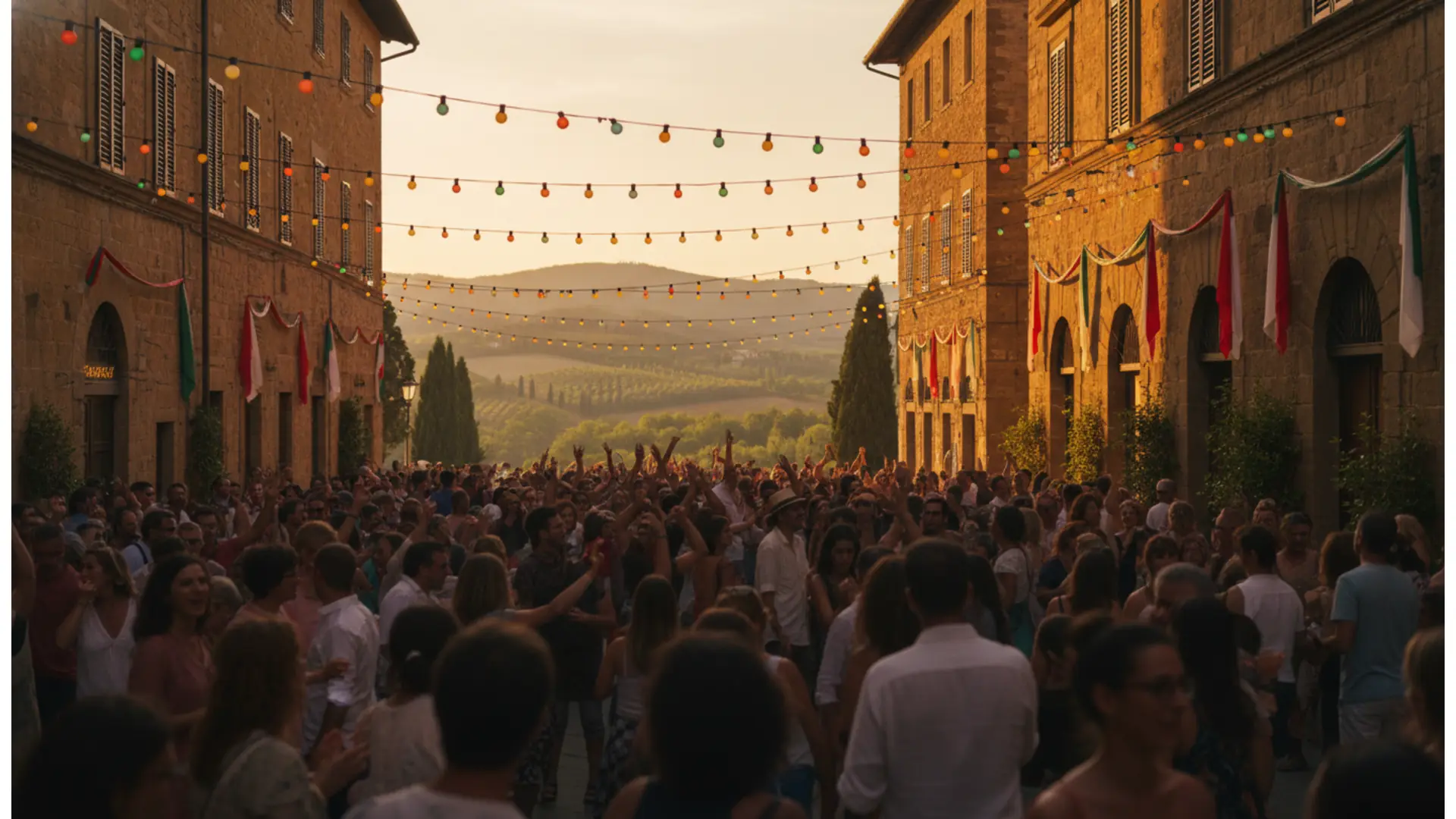
Feast of the Holy Crucifix (Pani e Paradisu)
The Madonie devotion of May 3rd in the village of Geraci Siculo
About Feast of the Holy Crucifix
A heart-felt festival in the Madonie village
The Feast of the Holy Crucifix, popularly known as "Pani e Paradisu", is the most significant religious event in Geraci Siculo, an ancient medieval village nestled in the Madonie mountains, in the Metropolitan City of Palermo, Sicily. Although the liturgical calendar marks it on September 14th, by ancient tradition, the festival is celebrated every year on May 3rd, the day locals call "u Tre Maggiu".
The 17th-century wooden Crucifix
At the center of the devotion is an extraordinary wooden sculpture of the Crucifix dating back to the 17th century, attributed to the school of Fra Umile da Petralia, and venerated in the Church of Santa Maria La Porta. The face of Christ, marked by an intense expression of pain and suffering, deeply moves the faithful and is considered by the community to be a miraculous image, a destination for vows and received graces.
The eight-day prayer period
The festival is preceded by an octave: for eight evenings, after the tolling of the Ave Maria, the people of Geraci and many emigrants who have returned to the village gather in the church for the recitation of the Rosary and the Chaplet, led by a preacher, concluding with a solemn Mass. It is a time of reflection that prepares the community for the day of May 3rd.
The May 3rd procession
On the morning of May 3rd, those who have made a vow during the year go to the Monastery of the Benedictine Nuns to collect the "torcia", the large votive candle that remains unlit throughout the procession, as a sign of a grace requested or received. Around noon, after Mass, the procession begins: the confraternities in colorful robes lead the parade, followed by the faithful with candles, many of whom are barefoot and wearing crowns of braided branches on their heads. The children walk ahead, shouting the ancient invocation "Pani e paradisu, misericordia Signuri".
The Vara and popular rites
The Crucifix is carried on the Vara, the heavy litter adorned with flowers and cases filled with precious objects donated in gratitude for graces received. Behind the simulacrum walk the Mayor, the municipal administration, the local police, and the Carabinieri in dress uniform. The procession moves slowly through the narrow streets of the historic center, punctuated by the sound of firecrackers, until it enters the Mother Church in Piazza del Popolo, before returning to Santa Maria La Porta.
Tradition and Madonie identity
"Pani e Paradisu" is not just a religious rite but the most authentic expression of the identity of Geraci Siculo, one of the Most Beautiful Villages in Italy. The festival unites the Geraci community and is part of the devotional path of the "Cities of the Holy Crucifix", a network of municipalities linked by the same veneration. For those visiting the Madonie in spring, it is an opportunity to discover a stone-built village and a popular faith that has remained intact over the centuries.
Feast of the Holy Crucifix — edition 2026
2026 Edition
On May 3rd, 2026, Geraci Siculo renewed its most cherished festival, the Feast of the Holy Crucifix "Pani e Paradisu". Preceded by the octave of prayer, the day saw the procession of the wooden Crucifix through the streets of the historic center, opened by the confraternities and accompanied by the faithful with votive torches, many of whom were barefoot.
Among the most significant moments of the year was the pastoral visit of the Archbishop of Monreale, Monsignor Gualtiero Isacchi, who met with the community and local authorities. On that occasion, he was presented with a volume created by the "Cities of the Holy Crucifix" Association, testifying to the bond between the municipalities united by the same devotion.
Programme Feast of the Holy Crucifix 2026
Traditional Rites
- Octave of prayer in the days leading up to May 3rd (Rosary, Chaplet, and solemn Mass)
- Collection of votive torches at the Monastery of the Benedictine Nuns
- Solemn Mass on the morning of May 3rd
- Procession of the Crucifix on the Vara through the village streets with confraternities, barefoot faithful, and firecrackers
- Entry into the Mother Church in Piazza del Popolo and return to Santa Maria La Porta
Highlights Feast of the Holy Crucifix 2026
- Pastoral visit of the Archbishop of Monreale, Monsignor Gualtiero Isacchi
- Procession of the 17th-century wooden Crucifix
- Barefoot faithful with crowns of branches and unlit votive candles
- The invocation "Pani e paradisu, misericordia Signuri"
Prices Feast of the Holy Crucifix 2026
Practical information — Feast of the Holy Crucifix
How to get there
Geraci Siculo is located in the heart of the Madonie, in the province of Palermo. By car, it can be reached from the A19 Palermo-Catania motorway (Tre Monzelli or Buonfornello exit), continuing inland along the Madonie provincial roads. The nearest train station is in Castelbuono, from where you can continue by bus or car.
When
The festival takes place every year on May 3rd, preceded by the octave in the days before. The procession leaves around noon from the Church of Santa Maria La Porta.
Tips
Admission to the rites and the procession is free. Comfortable clothing is recommended for walking along the cobblestone streets of the historic center. It is an ideal time to combine a visit to the medieval village, the Castle of the Ventimiglia family, and the trails of the Madonie.
Festival-goer photos
No photos yet. Share yours!
Share your photos
5 photos max, 5 MB per photo (JPG, PNG, WebP)
Noticed an error or missing information?
Help us keep this listing up to date. Every proposal is verified by our team before publication.
Festival-goer reviews
No rating yet — be the first!
No comments yet. Be the first!
Were you there?
Share your experience with the community.
Published by Valentin Contard, festival listings writer. Reviewed, corrected and approved by Christophe Contard, editor-in-chief. .
Where does it take place — Feast of the Holy Crucifix
Chiesa di Santa Maria La Porta e centro storico