Chinese New Year in Esquilino (Piazza Vittorio)
Dragons, dancing lions, and street food at the Nicola Calipari Gardens
About Chinese New Year in Esquilino
Chinese New Year in the heart of Esquilino
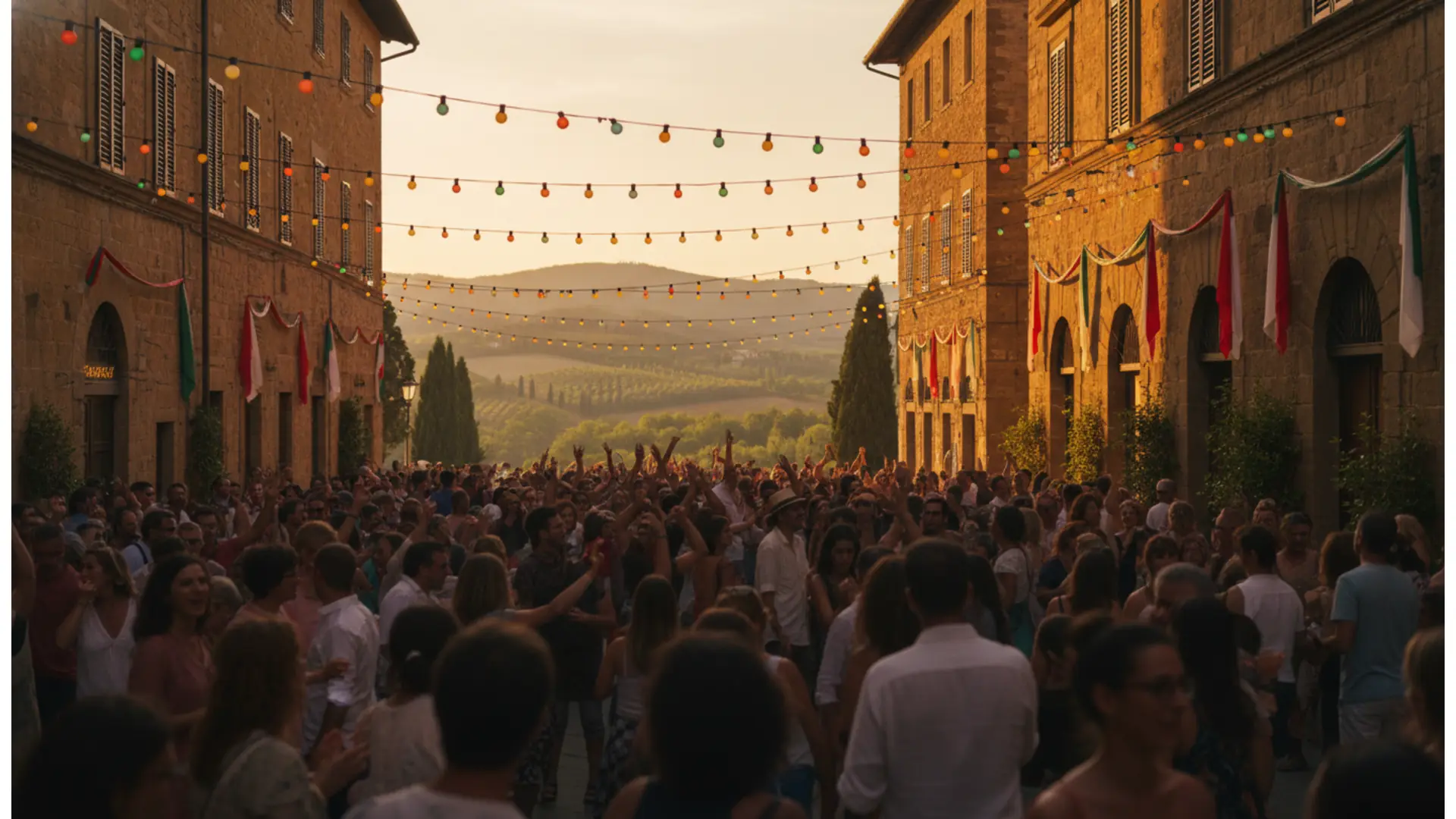
In Esquilino, the most multicultural district of Rome, the Lunar New Year is not an exotic interlude but a deeply rooted neighborhood tradition. Every year, between late January and late February, the Nicola Calipari Gardens — the large green space inside Piazza Vittorio Emanuele II — dress in red and gold to welcome thousands of visitors. Suspended lanterns, decorated booths, drums, and the scent of steamed dumplings transform the Umbertine-era square into an open-air oriental village for two days, right in the center of the capital of Lazio.
A festival born from the neighborhood
The initiative is promoted by the Polo Civico Esquilino together with associations from Rome's Chinese community, with the involvement of city institutions and the Chinese diplomatic representation. Esquilino has hosted the most significant concentration of Chinese businesses and families in the city for decades: the festival is therefore a grassroots event, a moment of encounter between Italian and Chinese residents, rather than a top-down affair. This gives it an unusually familiar atmosphere, very different from that of a large tourist event.
The dragon parade and the lion dance
The most anticipated moment is the dragon parade, which takes place on Sunday morning: dragons tens of meters long, held by teams of carriers, advance through the garden paths to the rhythm of drums, gongs, and cymbals. Accompanying them are dancing lions, pairs of dancers hidden under colorful costumes who, according to tradition, chase away negative spirits and bring prosperity for the coming year. It is the most photographed segment of the event and attracts even those who do not usually frequent the district.
Culture, workshops, and gastronomy
Alongside the performances, the two-day event offers a path of cultural booths where you can follow demonstrations and small workshops:
- Chinese calligraphy with brush and ink, writing auspicious characters
- Traditional martial arts, from kung fu to tai chi, with performances by Roman groups
- Classical dances and live music with traditional instruments
- Activities for children, games, and creative workshops linked to the year's zodiac sign
- Street food: steamed dumplings, skewers, stir-fried noodles, traditional sweets, and tea prepared on the spot
The gastronomic aspect is one of the main reasons for the influx: the stalls are largely managed by local restaurateurs, who cook in plain sight according to the recipes of their families' home regions.
When to go and what to expect
The event is held on the weekend closest to the Lunar New Year and remains open continuously, typically from 9 am to 9 pm, with completely free admission. Saturday is the quieter day, dedicated mainly to cultural activities and workshops; Sunday, with the morning parade and the official midday ceremony, is clearly the most crowded. Those who wish to visit the booths calmly and eat without queues would do well to arrive in the morning.
Esquilino beyond the festival
It is worth combining your visit with a walk through the district: the covered market on Via Principe Amedeo, the shops on Via Carlo Alberto, the Basilica of Santa Maria Maggiore just a few minutes' walk away, and the Magic Gate of the gardens themselves, a 17th-century alchemical curiosity little known even to Romans. In the same weeks, other initiatives linked to the Lunar New Year enliven the district and the nearby Mercato Centrale at Termini station, with themed dinners and cultural meetings.
Not to be confused with the Chinese New Year of Torpignattara, a separate celebration that takes place in another municipality of the city.
Chinese New Year in Esquilino — edition 2026
Year of the Fire Horse
The 2026 Chinese New Year in Esquilino took place on Saturday, February 21, and Sunday, February 22, at the Nicola Calipari Gardens, in Piazza Vittorio Emanuele II in Rome, with free admission from 9 am to 9 pm. The edition was dedicated to the sign of the Fire Horse, associated in Chinese tradition with dynamism, courage, and momentum.
Saturday was dedicated primarily to the Roman Chinese community and cultural activities: themed booths, calligraphy workshops, martial arts demonstrations, music, and traditional dances, as well as street food stalls with steamed dumplings, skewers, noodles, and traditional sweets. On Sunday, the program came alive at 10 am with the dragon parade and lion dance, amidst drums, choreography, and colorful costumes along the garden paths. At midday, the official ceremony was held with city authorities and the Chinese diplomatic representation, followed in the afternoon by other shows, children's activities, and visits to the cultural and gastronomic booths. During the same weeks, the Mercato Centrale at Termini station hosted a parallel program of dinners, cooking workshops, and meetings from February 18 to 28.
Programme Chinese New Year in Esquilino 2026
Saturday, February 21, 2026 — from 9 am to 9 pm
- Opening of the village: cultural and gastronomic booths at the Nicola Calipari Gardens
- Chinese calligraphy workshops
- Traditional martial arts demonstrations
- Music and traditional dances by Rome's Chinese community
- Street food: steamed dumplings, skewers, noodles, traditional sweets
Sunday, February 22, 2026 — from 9 am to 9 pm
- 10:00 am — Dragon parade and lion dances
- Midday — Official ceremony with authorities and the Chinese diplomatic representation
- Afternoon — Shows, children's activities, visits to cultural and gastronomic booths
Related program
- Mercato Centrale Rome (Termini station), February 18-28, 2026: themed dinners, cooking and martial arts workshops, cultural meetings (some by reservation)
Highlights Chinese New Year in Esquilino 2026
- Dragon parade and lion dance, Sunday at 10 am
- Nicola Calipari Gardens set up as an oriental village with red and gold lanterns
- Calligraphy workshops and martial arts demonstrations
- Chinese street food prepared in plain sight by local restaurateurs
- Free admission for both days
Prices Chinese New Year in Esquilino 2026
Practical information — Chinese New Year in Esquilino
How to get there
Metro A, Vittorio Emanuele stop, a stone's throw from the garden entrance. Metro B and regional/high-speed trains to Roma Termini, then about a 10-minute walk. Above ground, trams 5 and 14 and various bus lines serve Piazza Vittorio Emanuele II. Arriving by car is strongly discouraged: the area is congested and street parking is almost impossible during the festival days.
Admission and hours
Free and open admission, no reservation required. Continuous hours approximately from 9 am to 9 pm on both days. Food at the stalls is for purchase, with street food prices.
Tips
Go in the morning to avoid the Sunday afternoon crowds; bring cash, as not all stalls accept cards; be mindful of personal belongings during peak times. The event is suitable for families with children, with strollers manageable on the main paths of the gardens.
Festival-goer photos
No photos yet. Share yours!
Share your photos
5 photos max, 5 MB per photo (JPG, PNG, WebP)
Noticed an error or missing information?
Help us keep this listing up to date. Every proposal is verified by our team before publication.
Festival-goer reviews
No rating yet — be the first!
No comments yet. Be the first!
Were you there?
Share your experience with the community.
Published by Valentin Contard, festival listings writer. Reviewed, corrected and approved by Christophe Contard, editor-in-chief. .
Where does it take place — Chinese New Year in Esquilino
Giardini Nicola Calipari (Piazza Vittorio Emanuele II)
Giardini Nicola Calipari, Piazza Vittorio Emanuele II, 00185 Roma