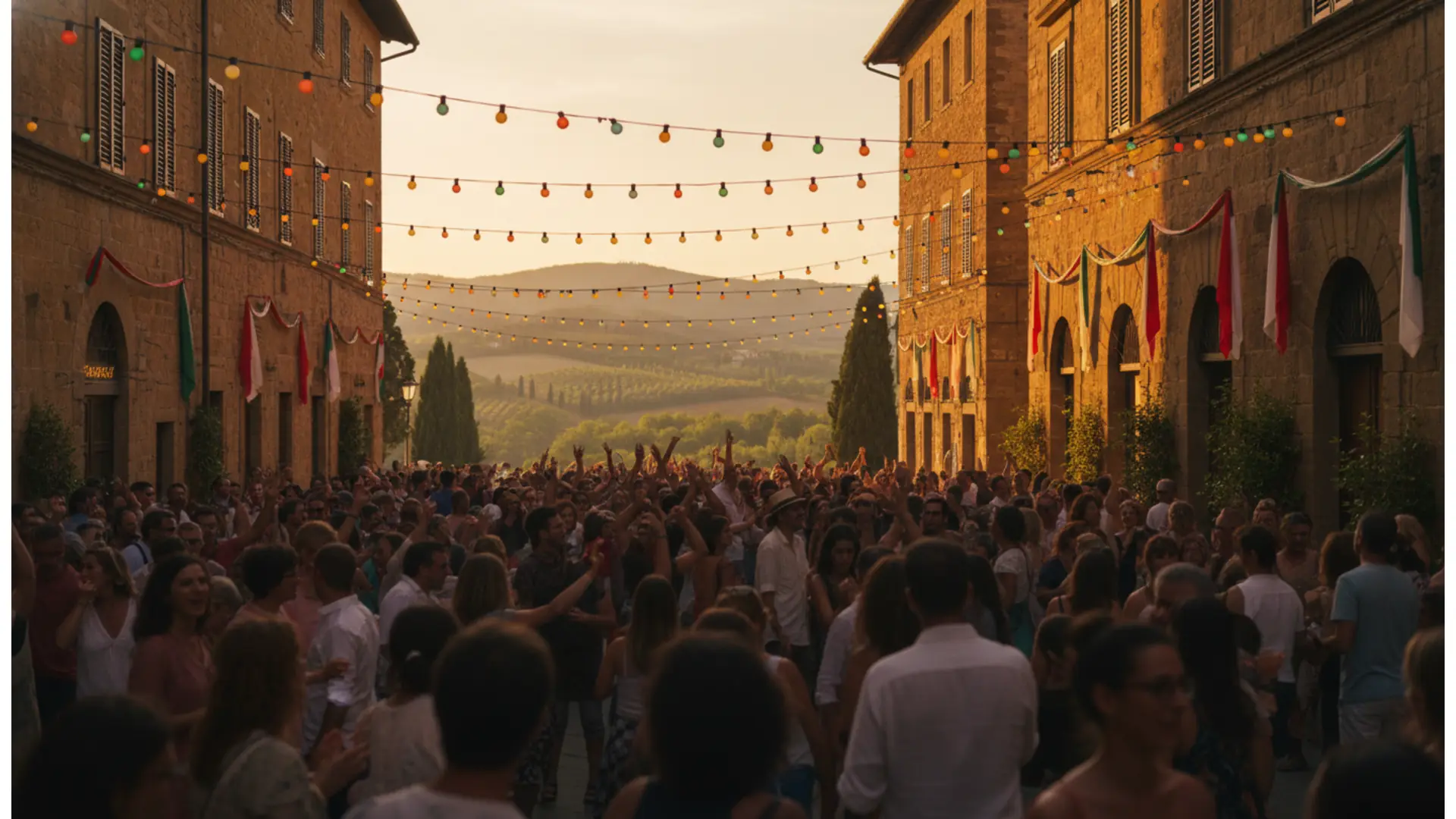
Capaccio Paestum Carnival
Papier-mâché floats, district competitions, and parades leading to the Greek temples of Paestum
About Capaccio Carnival
The most anticipated festival in Cilento
For over forty years, the Capaccio Paestum Carnival has been the popular event that defines winter in the Cilento region. It is not just a parade concentrated in a single afternoon; it is a widespread celebration that, over the course of ten days, moves from one village to another within the Municipality of Capaccio Paestum, in the province of Salerno, involving virtually every neighborhood in the area. In 2026, the event reached its 46th edition, with fourteen districts actively involved in preparations and twelve groups participating in the parades.
The district floats
The heart of the event lies in the papier-mâché floats, handcrafted in the preceding months by district committees working in warehouses and garages across the villages. Each float develops its own theme, often accompanied by a dance and group choreography that is judged during the performances. It is a friendly yet spirited competition that mobilizes entire families: some build the structures, others sew the costumes, and some rehearse the music.
In 2026, the districts of Torre di Mare, Licinella, Chiorbo, Cafasso/Borgonuovo, Vuccolo/Tempa San Paolo, Gromola, Scigliati/Sorvella, Laura/Capaccio Scalo, Rettifilo, Spinazzo, and Ponte Barizzo took their floats to the streets, while Capo di Fiume participated with a dance performance only. The titles chosen by the groups reflect the spirit of the festival, blending civic engagement with pure imagination: from bees and the fury of nature to the awakening of Poseidon, from Mary Poppins to the Land of Toys, and even the Wild West saloon and Napoleon's jewels.
The anthropological Carnival and «Le nozze di Zeza»
Alongside the spectacle, the Capaccio Carnival preserves a section dedicated to traditional Cilento rural culture. The town center hosts the so-called anthropological Carnival, featuring the itinerant theatrical performance «Le nozze di Zeza» (The Wedding of Zeza), an ancient Campanian popular farce that depicts, through songs and masks, the conflicted marriage of Pulcinella's daughter. It is the most identity-defining moment of the festival, linking Capaccio to the great family of rural carnivals in Campania.
The grand finale in front of the Paestum temples
The closing ceremony is what makes this carnival unique in Italy: the floats reach the Paestum archaeological site and are displayed in front of the UNESCO-listed Greek temples, with dances, masks, and music lasting all day. The backdrop of the Temple of Neptune and the Basilica behind the papier-mâché floats is the iconic image of the event, captured every year by local press and television.
An event for families
The Capaccio Paestum Carnival is first and foremost a children's festival: creative workshops, street performers, confetti, entertainment, and grandstands set up along the routes to comfortably watch the performances. The parades take place outdoors and are free to enter, making it one of the easiest ways to discover Cilento outside the beach season.
Organizers
The event is promoted by the Il Carnevale Storico di Capaccio Paestum association, coordinated by Maria Chiara Sica, together with the Municipality of Capaccio Paestum and the individual district committees. Every year, the official program is presented in January, usually at the Sala Erica in Piazza Santini.
Capaccio Paestum, between sea and archaeology
Capaccio Paestum is one of the largest and best-known municipalities in southern Campania: it includes the hilltop village of the main town, the agricultural plain famous for buffalo mozzarella, the seaside areas of Laura, Licinella, and Torre di Mare, and, above all, the Paestum Archaeological Park. The Carnival traverses all these settings in just a few days, offering visitors a journey that combines popular celebration, gastronomy, and heritage.
Capaccio Carnival — edition 2026
The 46th edition
The 2026 edition of the Capaccio Paestum Carnival, the forty-sixth, took place from February 7 to 17, 2026, with a program distributed across four locations in the municipality. Presented on January 24 at the Sala Erica in Piazza Santini in the presence of Mayor Gaetano Paolino and association coordinator Maria Chiara Sica, it saw the active participation of fourteen districts.
The first parade, on February 8 on the Laura seafront, drew hundreds of people to the grandstands set up along the route: eleven papier-mâché floats and twelve choreographed groups. On February 14, the town center hosted the anthropological Carnival with the itinerant performance «Le nozze di Zeza»; on February 15, the procession moved from Capaccio Scalo along Via Magna Grecia towards Paestum, with a large turnout of the public. On February 17, Shrove Tuesday, the floats were exhibited in the Paestum archaeological site, where dances and masks enlivened the entire day until the grand evening finale.
Programme Capaccio Carnival 2026
Saturday, February 7, 2026 – Next, former Tobacco Factory (Cafasso)
- 4:00 PM: Children's Carnival, with creative workshops and street performers.
- 6:30 PM: Official presentation of the 46th Carnival edition, with themes chosen by the districts.
Sunday, February 8, 2026 – Laura Seafront
- From 10:00 AM: Exhibition of floats, entertainment, and street performers.
- From 6:30 PM: Choreographic performances by the districts.
Saturday, February 14, 2026 – Capaccio Town Center
- 3:30 PM: Anthropological Carnival and itinerant theatrical performance «Le nozze di Zeza».
Sunday, February 15, 2026 – Capaccio Scalo towards Paestum
- From 10:00 AM: Parade of floats and choreographic performances along Via Magna Grecia, towards Paestum.
Tuesday, February 17, 2026 – Paestum Archaeological Site
- From 10:00 AM: Exhibition of floats in front of the temples.
- From 2:00 PM: Choreographic performances by the districts and grand finale of the event.
Districts and floats competing in 2026
- Torre di Mare – «Bees and the fury of nature – no bees, no life»
- Licinella – «Aliens and Egyptians, the future that awakens the past»
- Chiorbo – «The bitter awakening of Poseidon: the black wave»
- Cafasso/Borgonuovo – «Mary Poppins»
- Vuccolo/Tempa San Paolo – «To you who are all us women, do not remain silent»
- Gromola – «Le Gardien: we are the key»
- Scigliati/Sorvella – «Scigliati Sorvella Express… the craziest saloon in the West»
- Laura/Capaccio Scalo – «Lupin and Napoleon's jewels»
- Rettifilo – «He who laughs wins, at Carnival and in life»
- Spinazzo – «The Temple of Bacchus and the land of Flavors»
- Ponte Barizzo – «The Land of Toys»
- Capo di Fiume – «Carrà what a Carnival!» (dance only)
Highlights Capaccio Carnival 2026
- 46th edition of the event, spread across four locations in the municipality from February 7 to 17, 2026.
- Fourteen districts involved, eleven papier-mâché floats, and twelve choreographic groups.
- First parade on the Laura seafront on February 8, with grandstands for the public.
- Anthropological Carnival and «Le nozze di Zeza» in the town center on February 14.
- Procession along Via Magna Grecia from Capaccio Scalo towards Paestum on February 15.
- Grand finale on Shrove Tuesday, February 17, with floats displayed in front of the Greek temples of Paestum.
- Section dedicated to children with creative workshops and street performers at the Next venue.
Prices Capaccio Carnival 2026
Practical information — Capaccio Carnival
How to get there
By car: A2 del Mediterraneo motorway, Battipaglia exit, then SS18 towards Agropoli/Paestum. By train: Paestum or Capaccio station on the Salerno-Sapri line, both a short distance from the parade routes. Nearest airport: Salerno-Costa d'Amalfi.
Admission
Parades and street performances are free to enter. For the final event in the archaeological area, please check access procedures with the Paestum Archaeological Park.
Rules to follow
During the festival days, the Municipality prohibits the use of foam spray cans, sprays of any kind, eggs, flour, and any other material that may compromise public safety throughout the territory. Administrative fines range from 25 to 500 euros.
Tips
Arrive early to find parking on the days of the main parades and be aware of temporary road closures along the procession route. Wear comfortable, warm clothing: the performances take place outdoors and continue until evening.
Contacts
- Municipality of Capaccio Paestum, Via Vittorio Emanuele 1, 84047 Capaccio Paestum (SA)
- Phone: +39 0828 812111
- Website: comune.capaccio.sa.it
Festival-goer photos
No photos yet. Share yours!
Share your photos
5 photos max, 5 MB per photo (JPG, PNG, WebP)
Noticed an error or missing information?
Help us keep this listing up to date. Every proposal is verified by our team before publication.
Festival-goer reviews
No rating yet — be the first!
No comments yet. Be the first!
Were you there?
Share your experience with the community.
Published by Valentin Contard, festival listings writer. Reviewed, corrected and approved by Christophe Contard, editor-in-chief. .
Where does it take place — Capaccio Carnival
Lungomare Laura, Capaccio capoluogo, Capaccio Scalo e area archeologica di Paestum