Wheat Wagon Festival (Madonna del Carmine)
Votive wagons woven from wheat stalks parade in honor of the Madonna del Carmine on the second Sunday of August.
Edition 2026 not confirmed to date
This edition has not been confirmed by the organiser to date. We recommend checking before going.
About Wheat Wagons of San Marco dei Cavoti
A wheat procession in the heart of Sannio
Every year, on the second Sunday of August, the town of San Marco dei Cavoti (Province of Benevento, Campania) renews one of the most original traditions of the Southern Apennines: the Wheat Wagon Festival in honor of the Madonna del Carmine. This is no mere folk parade, but an act of collective devotion: the wagons are genuine ex-voto offerings presented to the Virgin by the town's neighborhoods, crafted from the fruits of the recently completed harvest.
The origins: July rains and a vow to the Virgin
Passed down for over three centuries, the tradition is said to have begun in the early 18th century. A July of relentless rain prevented farmers from threshing their wheat; the statue of the Madonna del Carmine was carried in procession to pray for clear skies, and when the rain ceased, the harvesters promised to donate a portion of their crop every year as a sign of gratitude. From those first offerings of wheat stalks, the ritual of the wagons that still traverses the historic center was born.
The wagons: rural art woven by hand
The heart of the festival is the parade of large wheat compositions, crafted entirely by hand by local masters in the weeks leading up to the event. It is not just the ear of wheat that is used: grains, stems, and leaves are combined with barley, oats, and rice, worked with various techniques to create volume, shading, and intricate detail.
- Braiding for structures, columns, and relief decorations
- Smoothing of stems to create sleek, shiny surfaces
- Mosaics of grains for faces, inscriptions, and figurative scenes
- Subjects inspired by sacred episodes, Marian symbols, churches, and ancient rural crafts
The theme of each wagon remains a jealously guarded secret until the day of the festival, revealed only when the compositions emerge from the neighborhood workshops. Among the neighborhoods historically most active in building the wagons are Franzese, Zenna, and Fontecanale.
How the festival unfolds
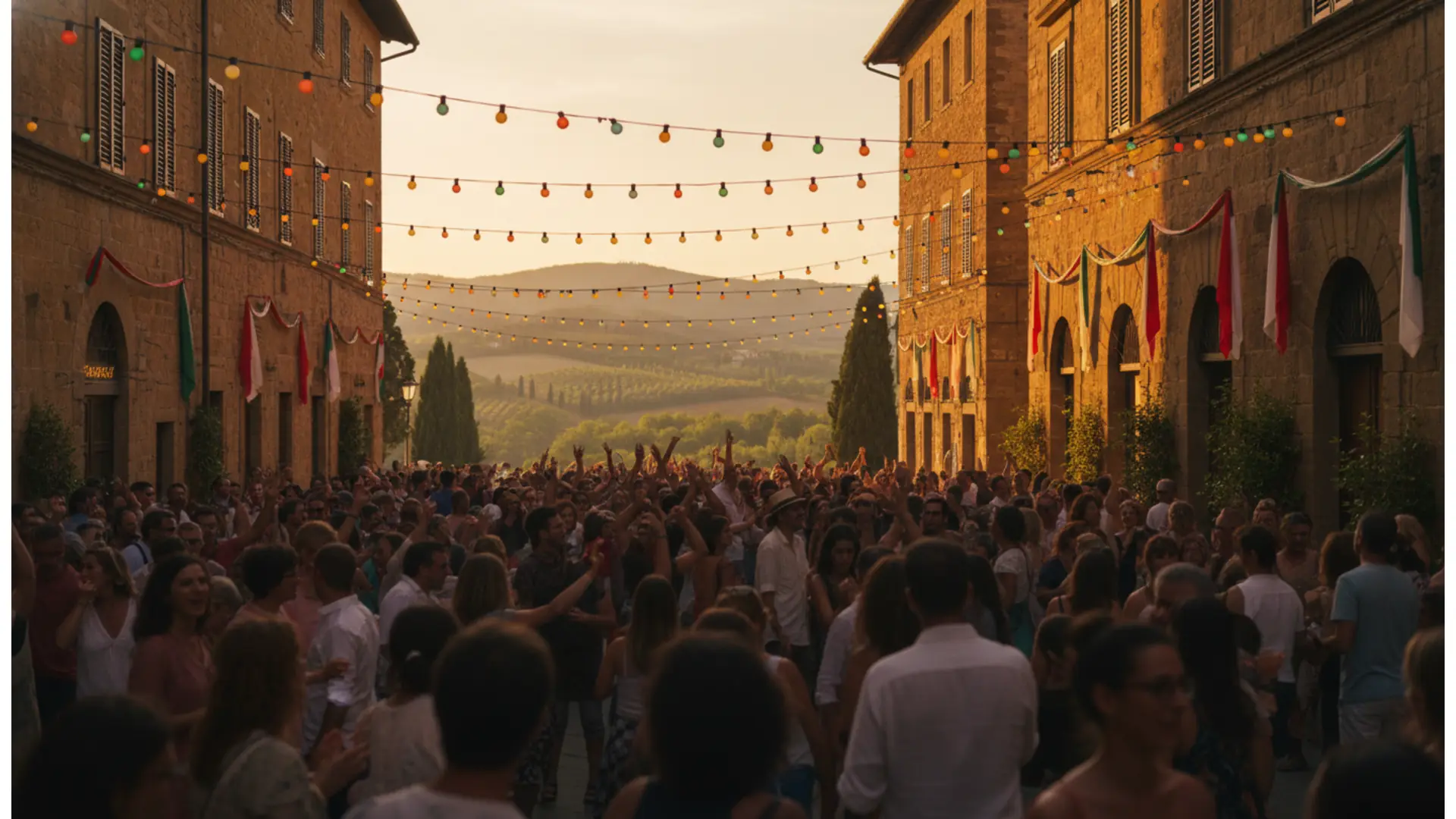
The ritual typically begins on Saturday evening with the procession of the statue of the Madonna del Carmine through the main streets, accompanied by fireworks and a brass band. Sunday is the day of the wagons: liturgical celebrations, the blessing of the compositions, a parade through the town, and an exhibition in Piazza Risorgimento and along via Roma, where visitors can admire the fine craftsmanship up close. In the most well-attended years, the procession has featured around twenty wagons, accompanied by flag-wavers, folk groups in costume, brass bands, vintage agricultural machinery, and traditional carts pulled by harnessed horses. The day concludes with an award for the most beautiful wagon and evening musical performances, while stalls offer local specialties and sweets.
Part of the Network of Wheat Rites and Festivals
San Marco dei Cavoti is part of the Network of Wheat Rites and Festivals along the Southern Apennines, which unites municipalities in the provinces of Benevento, Avellino, and Campobasso: Jelsi, Flumeri, Fontanarosa, Frigento, Foglianise, Mirabella Eclano, Villanova del Battista, Taurasi, and Torre Le Nocelle. Between late July and September, these towns showcase wagons, obelisks, and wheat 'gigli' that tell the story of a single, grand agricultural calendar. The network works toward the recognition of this intangible heritage, which is now among the most studied in southern anthropology.
San Marco dei Cavoti, the town of croccantino
The village sits at an altitude of about 700 meters, between the Fortore and Tammaro valleys, in an area of ridges and wheat fields that perfectly explains the origin of the festival. San Marco dei Cavoti is known throughout Italy for its croccantino brittle, celebrated in December by the Torrone and Croccantino Festival, and for its calendar of events that marks the year: Saint Mark the Evangelist in April, the Carmine on July 16th, Saint Diodorus the Martyr in September, and the Fire of the Rosary in October. Those arriving in August for the wheat wagons will find a town living traditions that are still practiced, not merely reconstructed for tourists.
The 2026 edition
At the time of writing, the official program for the 2026 edition has not yet been published by the parish and neighborhood committees. However, the festival is a fixed event on the second Sunday of August; it is advisable to check the dates on the San Marco Evangelista Parish channels, on posters displayed in town, and in the local Sannio press in the days leading up to Ferragosto.
Wheat Wagons of San Marco dei Cavoti — edition 2026
2026 Edition: what we know
The Wheat Wagon Festival in honor of the Madonna del Carmine is a fixed event on the calendar of San Marco dei Cavoti, in the Province of Benevento, traditionally held on the second Sunday of August. At the time of writing, however, neither the parish nor the neighborhood committees have released the detailed 2026 program online: dates and times remain to be confirmed.
When the poster is displayed in town, usually a few weeks before, the structure typically follows that of previous years: liturgical celebrations dedicated to the Madonna del Carmine, an evening procession with the statue, the blessing of the wheat wagons, a parade through the historic center, an exhibition of the compositions in Piazza Risorgimento and along via Roma, the awarding of the most beautiful wagon, and evening musical performances.
For updated information, it is advisable to follow the channels of the San Marco Evangelista Parish, the Municipality of San Marco dei Cavoti, and the calendar of the Network of Wheat Rites and Festivals along the Southern Apennines, which every summer collects the dates of all wheat festivals across Sannio, Irpinia, and Molise.
Highlights Wheat Wagons of San Marco dei Cavoti 2026
- Procession of the statue of the Madonna del Carmine with brass band and fireworks
- Parade of hand-crafted ex-voto wheat wagons from the town's neighborhoods
- Exhibition of the wagons in Piazza Risorgimento and along via Roma
- Award for the most beautiful wagon
- Folk groups in costume, flag-wavers, and vintage agricultural machinery
- Stalls with local specialties and sweets, including the croccantino of San Marco dei Cavoti
Prices Wheat Wagons of San Marco dei Cavoti 2026
Practical information — Wheat Wagons of San Marco dei Cavoti
Getting there
By car: from the A1 motorway, take the Caianello exit, or from the A16, take the Benevento exit, then follow the SS212 Val Fortore road towards San Marco dei Cavoti (about 35 km from Benevento). By train: arrive at Benevento Centrale station, then take extra-urban buses to Val Fortore; service is limited on holidays, so a car is recommended.
Admission and costs
Religious celebrations and the wheat wagon parade take place in the streets and are free to attend. Only food stalls and purchases are subject to payment.
Tips
- The town is at an altitude of about 700 meters: August evenings can be cool, so a light sweater is useful.
- Arrive early: the historic center is closed to traffic and nearby parking fills up quickly.
- After the parade, the wagons remain on display in Piazza Risorgimento and via Roma: this is the best time to photograph the details of the weaving.
- Souvenirs: the croccantino and torrone of San Marco dei Cavoti, available for purchase in the town's historic confectionery shops.
Festival-goer photos
No photos yet. Share yours!
Share your photos
5 photos max, 5 MB per photo (JPG, PNG, WebP)
Noticed an error or missing information?
Help us keep this listing up to date. Every proposal is verified by our team before publication.
Festival-goer reviews
No rating yet — be the first!
No comments yet. Be the first!
Were you there?
Share your experience with the community.
Published by Valentin Contard, festival listings writer. Reviewed, corrected and approved by Christophe Contard, editor-in-chief. .
Where does it take place — Wheat Wagons of San Marco dei Cavoti
Centro storico (Piazza Risorgimento e via Roma)