Volturara Carnival - The Zeza of I Tarantellanti
The sung comedy of the Zeza and the Children's Carnival, between tarantella dances and masks at the foot of the Terminio mountains
About Volturara Carnival
The Volturara Zeza, the Carnival of "I Tarantellanti"
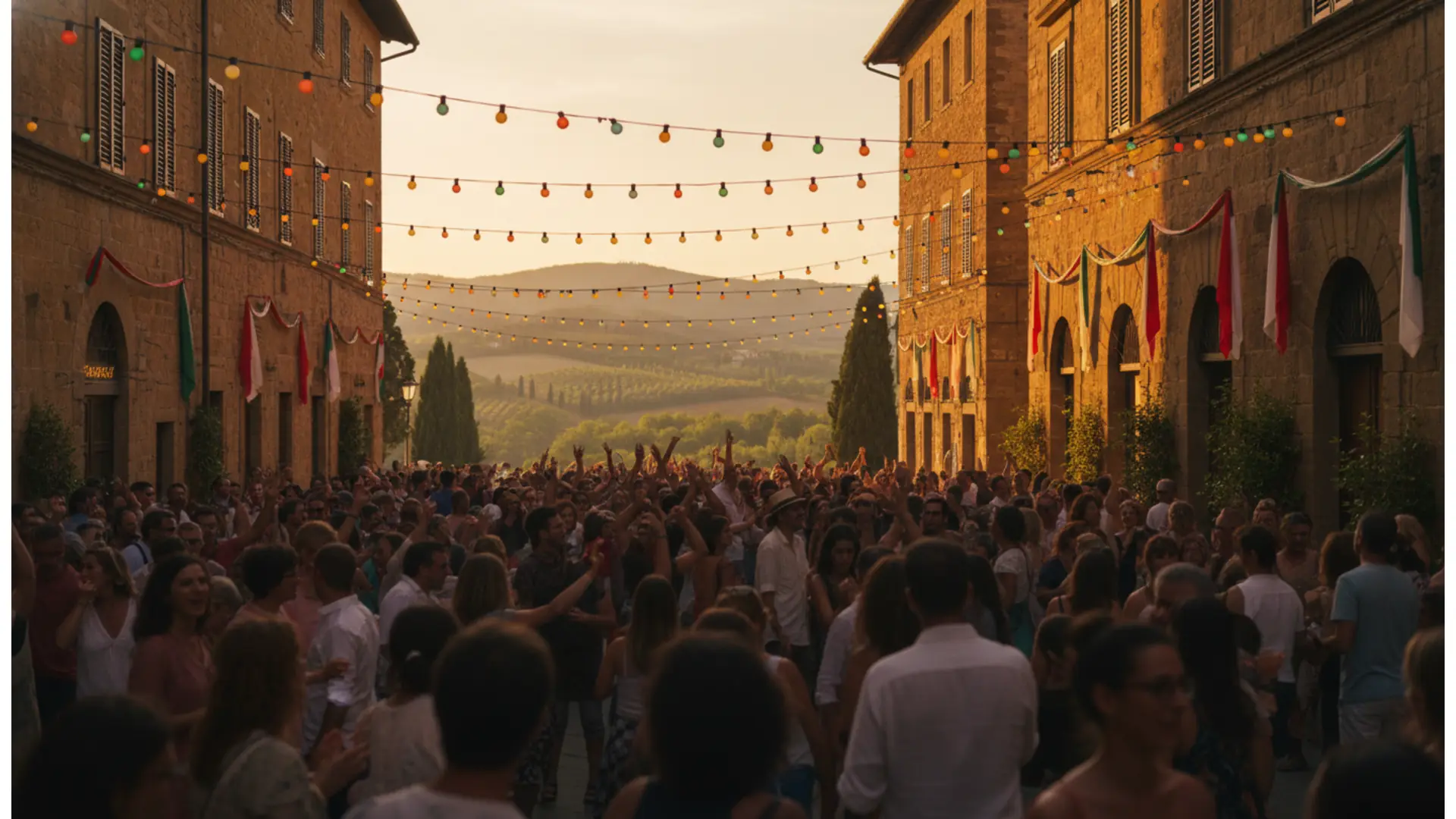
In Volturara Irpina, a town of just under three thousand inhabitants nestled 620 meters high in the Picentini Mountains, in the province of Avellino (Campania), Carnival is measured not in floats, but in steps of the tarantella. The heart of the festival is the Volturara Zeza, a sung comedy that the community has brought to the streets since 1865. Today, it is performed by the "I Tarantellanti" company: men and women of all ages who parade and dance through the streets of the town and the surrounding Irpinia villages.
What is a Zeza?
The Zeza descends from the Neapolitan Canzone di Zeza, a popular, grotesque farce that emerged in the mid-17th century and spread across the Campanian hinterland, where each community adapted it. The plot is almost always the same: Pulcinella, a jealous father, opposes his daughter Vincenzella's wedding; his wife Zeza, an enterprising and cunning woman, has already arranged the marriage with Don Nicola—a wealthy schoolmaster in the Volturara version—and wears her husband down until the final reconciliation. In the Volturara variant, the story becomes a portrait of a rural, pastoral town: the poverty of the past and marriage viewed as a hope for redemption. It is not stage theater, but a comedy in verse sung to tarantella music, accompanied by accordions, tambourines, castanets, and the triccheballacche, always concluding with a dance.
Two Zezas become one company
For decades, Volturara Irpina had two rival teams: the Zeza di Cannone and the Zeza di Campagna, which challenged each other every Carnival with costumes, songs, and choreography. In 2017, the two historic groups decided to merge into a single company, "I Tarantellanti," which has represented the entire town ever since. In a mountain town facing progressive depopulation, joining forces was the most practical way to keep the tradition alive in the streets.
The Children's Carnival
Alongside the adult Zeza, the Pro Loco of Volturara Irpina organizes the Children's Carnival, an afternoon dedicated to kids and families. It starts in Piazza Roma, where masked children dance and parade with the Tarantellati, and moves to the municipal gym on Viale Rimembranza—formerly the "Antonio Risoli" tent structure—where the party continues indoors with music, games, entertainment, and a buffet, amidst confetti and homemade costumes. It is the moment when tradition is passed down: children learn the steps by watching the adults.
When the Zeza leaves town
The Volturara Zeza does not stay within municipal borders. During the Carnival weeks, "I Tarantellanti" are guests in other Irpinia towns—such as Montoro, Atripalda, and Castelvetere sul Calore—and participate in the Irpinia Carnival Parade in Avellino, a festival in Piazza del Popolo that brings together the Zezas of Bellizzi, Capriglia Irpina, Cesinali, Mercogliano, and Monteforte Irpino, the ballo 'ntreccio of Petruro di Forino and Montoro, the laccio d'amore of Marzano di Nola, and the Scquaqualacchiun of Teora.
Volturara Irpina and the Piana del Dragone
The town overlooks the Piana del Dragone, a karst basin that floods and drains through sinkholes locally known as the "dragon's mouths." Above the town, on Mount Sant'Angelo, lie the ruins of the Norman-Aragonese castle of San Michele. In Piazza Roma, the heart of the festival, you will find the ancient linden tree, the historic fountain, and the church of San Nicola di Bari with its 1754 leaning bell tower. Visitors during Carnival can pair the parade with the products that make the town famous: the fagiolo quarantino (a Slow Food Presidium bean), local cheeses, honey, and chestnuts from the Terminio plateau.
What to expect
- A traditional folk Carnival, not one of floats: singing, tarantella, and costumes sewn in town.
- Free admission to all events, which take place in the streets and municipal facilities.
- Mobile dates, tied to the liturgical calendar: between February and March depending on the year.
- Winter mountain climate: at 620 meters, a heavy jacket and comfortable shoes are necessary.
- The detailed program is released by the Pro Loco and the Municipality in the days prior, via social media channels and the Sistema Irpinia portal of the Province of Avellino.
Volturara Carnival — edition 2026
The 2026 Children's Carnival
The 2026 edition of the Carnival in Volturara Irpina focused on children. On Sunday, February 15, at 4:00 PM, the gathering was in Piazza Roma: from there, the masked little ones paraded and danced with "I Tarantellati di Volturara Irpina", the company that performs the Volturara Zeza, heading up through the town to the municipal gym on Viale Rimembranza. Indoors, the party continued with music, a buffet, games, and entertainment: confetti, homemade costumes, and the first steps of the tarantella learned by watching the adults.
A Carnival passed from generation to generation
The event, organized by the Pro Loco of Volturara Irpina, is the gateway to the most iconic tradition of this town in the province of Avellino, Campania: the Zeza, a comedy sung to tarantella music performed since 1865, now entrusted to a single company born in 2017 from the union of the Zeza di Cannone and the Zeza di Campagna. During the Carnival weeks, the Tarantellati also perform outside the municipal borders and take part in the Irpinia Carnival Parade in Avellino, alongside other Zezas and folk groups of the province.
Programme Volturara Carnival 2026
Sunday, February 15, 2026 — Children's Carnival
- 4:00 PM — Piazza Roma: gathering of masked children and parade with "I Tarantellati di Volturara Irpina", who lead the procession dancing the tarantella
- Following: municipal gym, Viale Rimembranza: indoor Carnival party with music, buffet, games, and entertainment for children
During the Carnival weeks, "I Tarantellanti" brought the Volturara Zeza to other Irpinia towns and to the Irpinia Carnival Parade in Avellino. The complete calendar of 2026 outings was not published on the Sistema Irpinia portal of the Province of Avellino: for individual dates, refer to the channels of the Pro Loco Volturara Irpina.
Highlights Volturara Carnival 2026
- The Volturara Zeza, comedy sung to tarantella music performed since 1865
- "I Tarantellanti", the company born in 2017 from the union of the Zeza di Cannone and the Zeza di Campagna
- The Children's Carnival on Sunday, February 15, with gathering at 4:00 PM in Piazza Roma
- The masked procession to the municipal gym on Viale Rimembranza
- Music, buffet, games, and entertainment for children and families
- Piazza Roma with its ancient linden tree and the leaning bell tower of San Nicola di Bari as a backdrop
Prices Volturara Carnival 2026
Practical information — Volturara Carnival
Getting there
By car: from the A16 Naples-Canosa motorway, take the Avellino Est exit and continue for about 20 km towards Serino and the Terminio; from Salerno, drive up through Serino along the SS 574. By train, the nearest station is Avellino, connected by provincial bus lines; the closest airport is Naples-Capodichino, about 70 km away. During parade days, some town center streets are closed to traffic: it is best to leave your car on the outskirts and reach Piazza Roma on foot.
Admission and hours
All events have free admission. The "I Tarantellanti" parade takes place along the town streets, usually in the afternoon; the Children's Carnival starts from Piazza Roma and ends indoors at the municipal gym on Viale Rimembranza.
Information
Pro Loco Volturara Irpina, Via Piano Freddano 75 — phone +39 347 4334719, [email protected]. Updates are also available on the "Pro Loco Volturara" Facebook page and the Sistema Irpinia portal of the Province of Avellino.
Where to stay and eat
Accommodation in town is limited to a few bed and breakfasts and farmhouses; for a wider selection, you can choose Avellino or the farmhouses on the Terminio plateau, between Serino, Montella, and Bagnoli Irpino. When dining, look for the fagiolo quarantino of Volturara, local cheeses, and the Picentini chestnut.
Tips
Bring warm clothing: in February, at 620 meters, the evening air is biting. For children, masks and confetti are a must and can be easily found in local shops.
Festival-goer photos
No photos yet. Share yours!
Share your photos
5 photos max, 5 MB per photo (JPG, PNG, WebP)
Noticed an error or missing information?
Help us keep this listing up to date. Every proposal is verified by our team before publication.
Festival-goer reviews
No rating yet — be the first!
No comments yet. Be the first!
Were you there?
Share your experience with the community.
Published by Valentin Contard, festival listings writer. Reviewed, corrected and approved by Christophe Contard, editor-in-chief. .
Where does it take place — Volturara Carnival
Piazza Roma
Piazza Roma, 2, 83050 Volturara Irpina