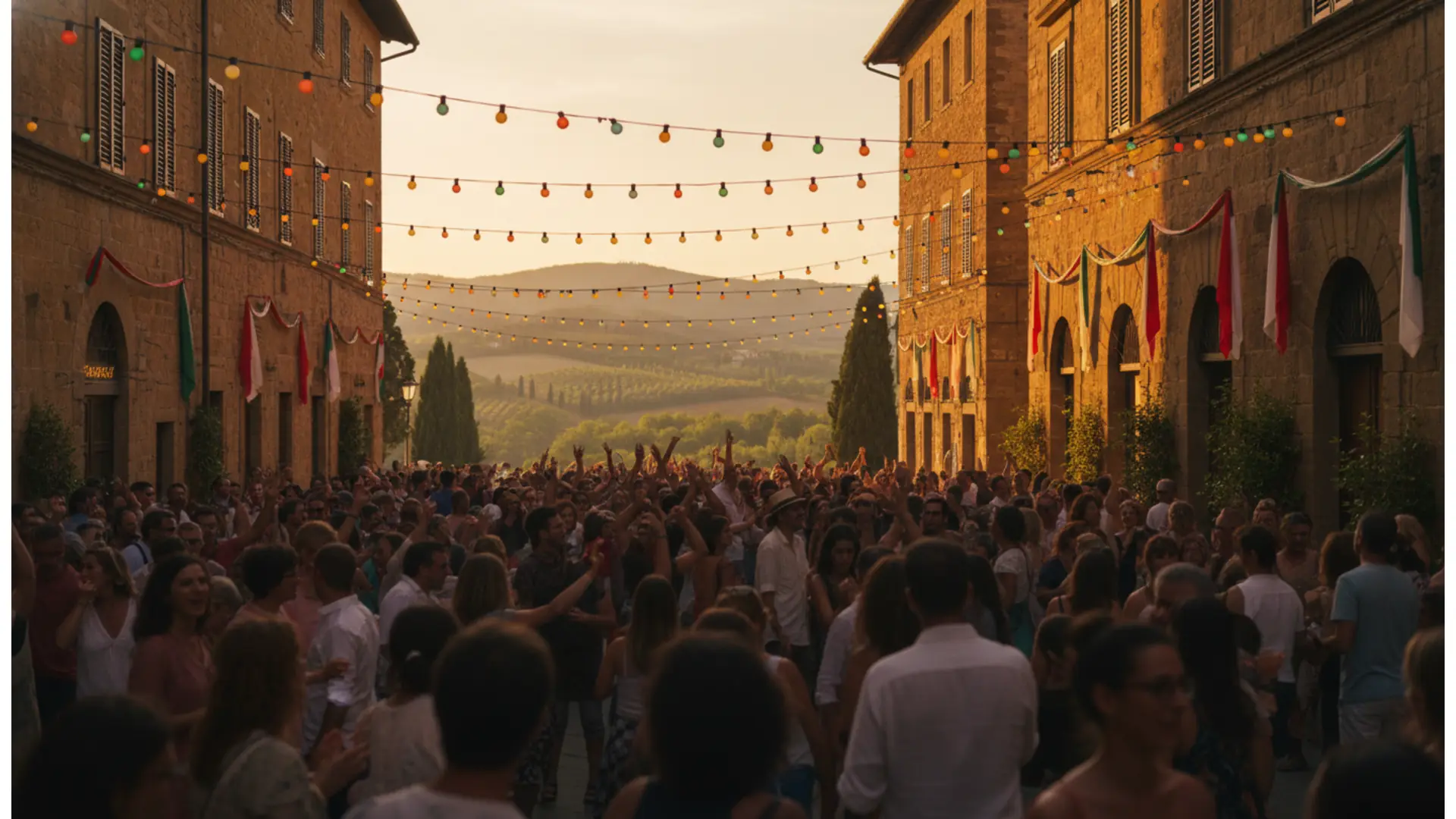
Viterbo Carnival
Floats and masks in the oldest documented carnival in Italy, set in the medieval heart of Viterbo
About Viterbo Carnival
The oldest documented carnival in Italy
The Viterbo Carnival holds a little-known record: it is considered the oldest documented carnival in Italy. The first archival evidence dates back to February 11, 1198, when the podestà Raniero di Pepone signed an agreement for an annual payment «during carnival time» to the Municipality of Viterbo. The medieval chronicles of Lanzillotto, the oldest Viterbo chronicler, also mention carnival celebrations as early as 1227 and 1244, confirming a tradition spanning over eight centuries in the City of Popes.
A revitalized tradition
After decades of neglect, the city's carnival was relaunched in the mid-2010s by the Viterbo Civica committee, led by Lucio Matteucci, with financial backing from the Municipality of Viterbo and support from the Rieti Viterbo Chamber of Commerce and ANCE Viterbo. The 2026 edition marked the tenth of this new era: approximately 385 participants, including allegorical floats and costumed groups, colored the streets of the center, with a steady growth in both the audience and the number of participating entities, from local schools to towns in the Tuscia region like Vitorchiano and Sutri.
The grand parade of allegorical floats
The highlight is the parade held on the Saturday (or Sunday) preceding Shrove Tuesday: floats and groups depart from Porta Romana in the early afternoon and traverse the medieval historic center—via Garibaldi, Piazza Fontana Grande, via Cavour, Piazza del Plebiscito, via Ascenzi, and via Marconi—ending in a grand finale at Piazza del Teatro (Piazza Verdi), featuring music, entertainment, and DJ sets from the stage. Leading the procession is Frisigello, the typical Viterbo mask on stilts, a jester who, according to ancient chronicles, performed «wondrous games». He is joined by the city marching band, majorettes, and the flag-wavers and musicians of the Pilastro district.
Shrove Tuesday, the children's party
On Shrove Tuesday, the carnival moves to Piazza del Teatro for an afternoon dedicated to the little ones: costumed groups, games, confetti, and music starting at 3:00 PM. In the evening, the party continues for adults with DJ sets and themed nights at local venues, such as the «La Giostra» night party.
In the heart of the Tuscia region
The carnival is also an opportunity to discover Viterbo, the capital of the province of the same name in northern Lazio: the City of Popes preserves one of the best-preserved medieval centers in Europe, featuring the San Pellegrino district, the Papal Palace, and thermal baths. The parade winding through the gray peperino stone of the historic center gives the Viterbo Carnival a unique setting, blending the lightheartedness of the festival with the depth of a nearly thousand-year-old history.
Essential information
- When: In the days leading up to Shrove Tuesday, between February and early March
- Where: Historic center of Viterbo, from Porta Romana to Piazza del Teatro
- Admission: Free and open to all
- Key features: Allegorical floats, costumed groups, Frisigello, bands, majorettes, and flag-wavers
Viterbo Carnival — edition 2026
The 2026 edition of the Viterbo Carnival, the tenth of the new era, was presented at Palazzo dei Priori on February 5 and took place between February 14 and 17. The allegorical float parade, originally scheduled for Saturday the 14th, was postponed to Sunday, February 15 due to bad weather, but the rain did not stop the party: thousands of people filled the streets of the historic center.
The procession, which started from Porta Romana around 3:00 PM, traveled along via Garibaldi and via Cavour to the Piazza del Comune, ending at Piazza del Teatro with music from the stage. Eight allegorical floats and numerous costumed groups enlivened the day, along with the Musichiamo Viterbo band, the Starlight Ferentum majorettes, and the flag-wavers and musicians of the Pilastro Cultural Association. The participation of the Sri Lankan community of Viterbo was also highly applauded, with decorated bicycles, traditional costumes, and dancers, a sign of an increasingly inclusive carnival.
On Shrove Tuesday, February 17, the grand finale took place at Piazza del Teatro: an afternoon dedicated to children with costumed groups and, in the evening, the «La Giostra» night party with DJ sets. A record-breaking edition for attendance and participation, organized by the Viterbo Civica committee with the patronage of the Municipality of Viterbo.
Programme Viterbo Carnival 2026
2026 Program
- Sunday, February 15, 3:00 PM (parade postponed from Saturday the 14th due to bad weather): grand parade of allegorical floats and costumed groups from Porta Romana to Piazza del Teatro, passing through via Garibaldi, Piazza Fontana Grande, via Cavour, Piazza del Plebiscito, via Ascenzi, and via Marconi; grand finale with music and DJ sets from the stage.
- Shrove Tuesday, February 17, 3:00 PM: costumed groups at Piazza del Teatro, afternoon dedicated to children with games, confetti, and music.
- Tuesday, February 17, 10:00 PM: «La Giostra» night party with DJ sets by Cuboni, Gian Marco Egidi, and William Tallevi.
In the parade: the Frisigello mask on stilts, 8 allegorical floats, and the groups Carica 101, Super Mario, Puffi and Pacman (Vitorchiano), Lo Studio Fotografico, Natale, Cuoricini, I Pavoni (Pilastro Association), Tic Tac, Fuori di Stalla (La Fattoria di Alice), La Casa degli Orrori, Gli Egizi (Orioli Institute), I Cicisbei (Sutri), and L'Olimpo, with dance groups Lady Gaga (Mauro Dance) and Thalìa Ru Dance Group, the Musichiamo Viterbo band, the Starlight Ferentum majorettes, and the Pilastro flag-wavers.
Highlights Viterbo Carnival 2026
- Tenth edition of the revitalized carnival, approximately 385 participants
- Parade of 8 allegorical floats and 15 costumed groups in the medieval center
- Frisigello, the typical Viterbo mask, leading the procession
- Participation of the Viterbo Sri Lankan community
- Shrove Tuesday dedicated to children at Piazza del Teatro
- «La Giostra» night party with DJ sets
Prices Viterbo Carnival 2026
Practical information — Viterbo Carnival
How to get there
By train: Viterbo is connected to Rome via regional trains on the FL3 line (Rome Ostiense–Viterbo Porta Romana/Porta Fiorentina); the Porta Romana station is just a short walk from the parade starting point.
By car: From Rome, take the Via Cassia (SS2) or the Orte–Viterbo expressway from the A1 motorway (Orte exit). During the parade days, the historic center is closed to traffic: please park outside the walls (Sacrario, Valle Faul) and continue on foot.
Admission
The parade and events in the square are free and open to the public.
Tips
Arrive early to secure a spot along the route, especially between Piazza del Plebiscito and Piazza del Teatro. In case of bad weather, the parade may be postponed by one or more days: please check official channels before traveling.
Festival-goer photos
No photos yet. Share yours!
Share your photos
5 photos max, 5 MB per photo (JPG, PNG, WebP)
Noticed an error or missing information?
Help us keep this listing up to date. Every proposal is verified by our team before publication.
Festival-goer reviews
No rating yet — be the first!
No comments yet. Be the first!
Were you there?
Share your experience with the community.
Published by Valentin Contard, festival listings writer. Reviewed, corrected and approved by Christophe Contard, editor-in-chief. .
Where does it take place — Viterbo Carnival
Centro storico di Viterbo
Piazza del Plebiscito, 01100 Viterbo