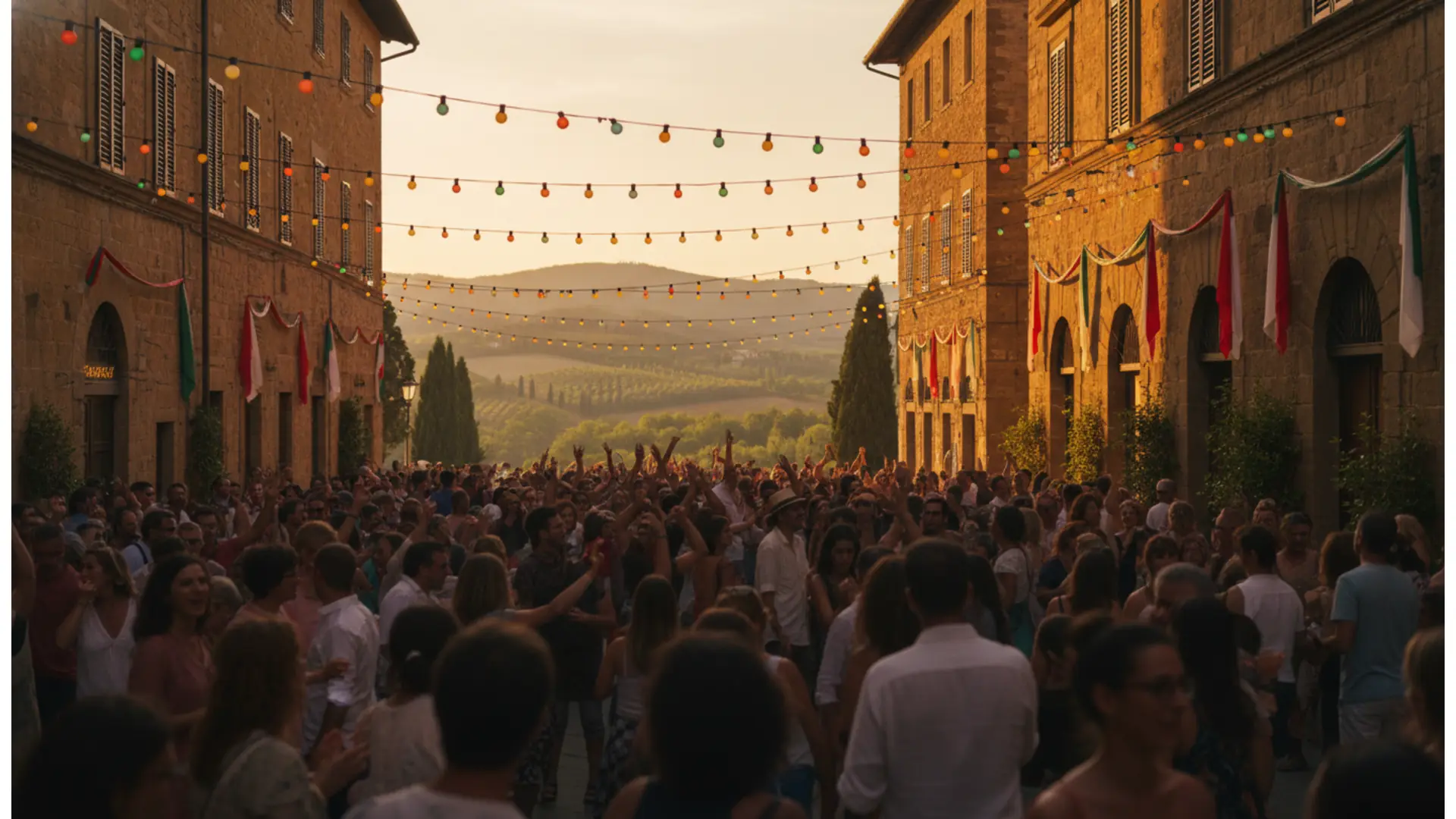
The Death of Carnival and the Twelve Months
The satirical funeral of Vicienzo 'e Carnavale and the traditional dialect chant of the twelve months
About The Death of Carnival
Shrove Tuesday in San Nicola la Strada
In San Nicola la Strada, a town in the province of Caserta, Campania, Shrove Tuesday doesn't end with confetti: it ends with a funeral. «The Death of Carnival and the Twelve Months» (La morte di Carnevale e i Rurece Mise) is the satirical ritual with which the town bids farewell to Vicienzo 'e Carnavale, the character who embodies every form of human excess, guiding the community from the noise and chaos of Carnival to the sobriety, penance, and fasting of Lent. It is an ancient ritual, as the organizers define it, «that our town continues to cherish».
The funeral procession through the city streets
Everything begins in the afternoon, when the coffin of Vicienzo 'e Carnavale leaves the courtyard on Via Appia, pushed by masked volunteers. The funeral procession, escorted by the Local Police and Civil Protection, travels through the city center amidst exaggerated wailing, professional mourners dressed in black, and laughter. In the past, the route has touched Via Le Taglie, Via Patturelli, Via Bronzetti, Viale Italia, and Viale Europa, gathering families, curious onlookers, and children along the way. The tone is intentionally parodic, because the mourning for Carnival is, in reality, a collective celebration.
«I Rurece Mise», the chant of the twelve months
The procession concludes in the courtyard of the Associazione Nostra Signora di Lourdes, at Via Appia 133, where «I Rurece Mise» is performed—a dialect chant of the twelve months of the year. Each month takes voice and form in a character who presents themselves to the public with verses in the Campanian dialect, blending rural irony with images from the agricultural calendar. It is a form of popular theater widespread throughout the Terra di Lavoro and the Mezzogiorno, linked to Carnival because, in the ancient Roman calendar, the new year began right around the end of February: singing the months meant warding off bad luck and wishing for a good harvest.
The farce, the lament, and the burning of the effigy
After the chant comes the most anticipated part: the actual performance of «The Death of Carnival». This includes the wake and the lament, the comic duet between Signor Capitone and Pulcinella, and the reading of the will, entrusted to a lawyer who distributes improbable bequests among those present. The ending is always the same: the effigy is set on fire, and with it, the excesses of the past year are symbolically burned. The audience participates, responds to the jokes, and recognizes their neighbors beneath the makeup.
A heritage entrusted to children
The most striking feature of recent editions is the role of the youngest participants: it is the children of San Nicola la Strada who play the twelve months, learning the dialect and the vocabulary of the local farming culture. The organizers call them «guardians of the community memory», and it is precisely this generational transfer that ensures the tradition does not become a museum piece. Alongside them, adult actors from the town perform in a cast that mixes different ages, professions, and families.
Who organizes it
- Cultural Association «La Barca di Teseo», under the artistic direction of Germano Iacelli, who brought the performance back to life;
- Pro Loco Calatia, which grants its patronage to the event;
- Associazione Nostra Signora di Lourdes, which hosts the show in its courtyard and provides logistical support;
- the Municipality of San Nicola la Strada, with Local Police and Civil Protection overseeing the procession.
Why it's worth attending
This is not a carnival of allegorical floats nor a show built for tourists: it is a neighborhood festival that has become a city-wide appointment, free and open to everyone, where the Campanian dialect is the language of the stage and the street is the true theater. Those visiting Caserta and its Royal Palace during Carnival days will find here, just a few minutes away, one of the most vibrant examples of popular theater in the province: an evening of choral participation that holds together memory, local identity, and fun.
The Death of Carnival — edition 2026
An evening of popular participation
Shrove Tuesday 2026 in San Nicola la Strada began at 4:00 PM on Via Appia 102, in front of the headquarters of the cultural association La Barca di Teseo, from where the satirical funeral procession with the coffin of Vicienzo 'e Carnavale departed. Under the supervision of the Local Police and Civil Protection, the procession crossed the city streets to the courtyard of the Associazione Nostra Signora di Lourdes, at Via Appia 133.
Children as protagonists of the twelve months
In the courtyard, the chant «I Rurece Mise» was performed, interpreted by the local children who, for the occasion, learned the dialect and the vocabulary of the local farming culture: the organizers defined them as «guardians of the community memory». This was followed by the performance of «The Death of Carnival», with the wake and the lament of the professional mourners, the comic duet between Signor Capitone and Pulcinella, and the reading of the will entrusted to the lawyer.
The cast and the finale
Bruno Carnevale took the stage in the role of the «deceased» Vincenzo Carnevale; the widow was played by Paolo Nicolella, the gossip by Eufemia Sparaco, while Loredana Iacelli, Elena Mingione, and Sofia Di Nuzzo performed as the professional mourners. The evening, with free admission, concluded as tradition dictates with the burning of the effigy, under the artistic direction of Germano Iacelli and with the patronage of Pro Loco Calatia.
Programme The Death of Carnival 2026
- 4:00 PM — Departure of the satirical funeral procession from the headquarters of the La Barca di Teseo association, Via Appia 102, with the coffin of Vicienzo 'e Carnavale escorted by Local Police and Civil Protection.
- Following — Crossing of the city streets to the courtyard of the Associazione Nostra Signora di Lourdes, Via Appia 133.
- Courtyard of Via Appia 133 — «I Rurece Mise» chant: the twelve months of the year interpreted in the Campanian dialect by the children of San Nicola la Strada.
- Following — «The Death of Carnival» performance: wake and lament of the professional mourners, comic duet between Signor Capitone and Pulcinella, reading of the will with the lawyer.
- Finale — Burning of the Vicienzo 'e Carnavale effigy.
Highlights The Death of Carnival 2026
Prices The Death of Carnival 2026
Practical information — The Death of Carnival
Where it takes place
The procession starts from the association's headquarters on Via Appia and concludes in the courtyard of the Associazione Nostra Signora di Lourdes, at Via Appia 133, in San Nicola la Strada (CE). All phases take place outdoors, along the city streets and in the courtyard.
How to get there
- By train: Caserta station, served by regional connections from Naples and Rome; San Nicola la Strada borders the provincial capital and can be reached in a few minutes by city bus or taxi.
- By car: A1 Milan-Naples motorway, Caserta Sud exit, then follow signs for San Nicola la Strada; Via Appia runs through the town center.
- By plane: Naples-Capodichino airport, approximately 30 km away.
Admission and tips
- Free admission to both the procession and the performance.
- The show is performed in the Campanian dialect: some of the humor may be lost on those who do not know it, but the gestures remain understandable to everyone.
- The event is family-friendly; it is advisable to arrive a little early to follow the start of the procession.
- Wearing a mask is welcome, especially for those who want to join the procession.
Parking
Parking is available in the surrounding streets: during the passage of the procession, some roads may undergo temporary closures managed by the Local Police.
Festival-goer photos
No photos yet. Share yours!
Share your photos
5 photos max, 5 MB per photo (JPG, PNG, WebP)
Noticed an error or missing information?
Help us keep this listing up to date. Every proposal is verified by our team before publication.
Festival-goer reviews
No rating yet — be the first!
No comments yet. Be the first!
Were you there?
Share your experience with the community.
Published by Valentin Contard, festival listings writer. Reviewed, corrected and approved by Christophe Contard, editor-in-chief. .
Where does it take place — The Death of Carnival
Cortile dell'Associazione Nostra Signora di Lourdes
Via Appia 133, 81020 San Nicola la Strada