Salerno Dance Festival
Contemporary dance in the archaeological sites and villages of the Salerno province
About Salerno Dance
A festival that makes places dance
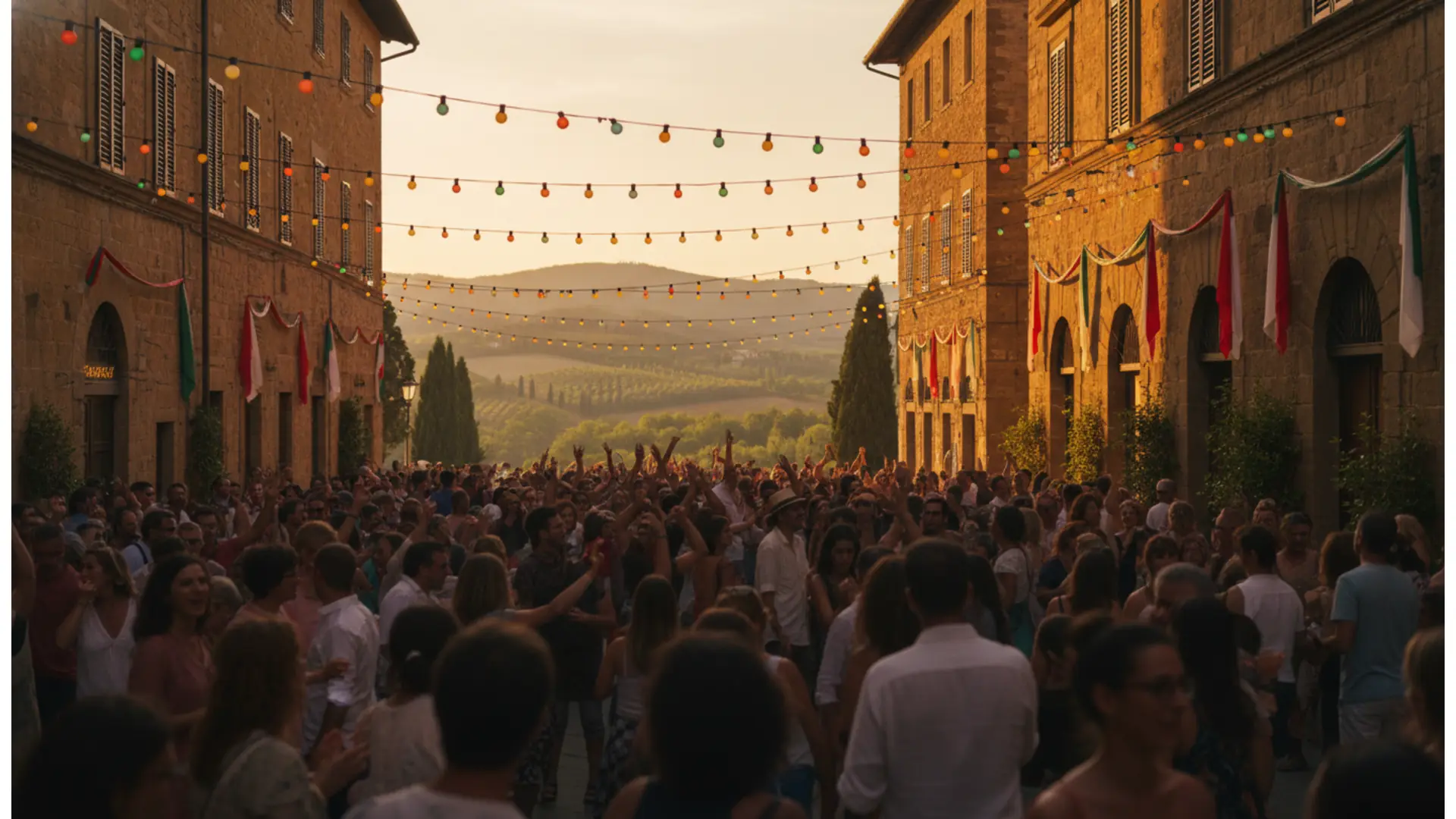
The Salerno Dance Festival is one of the most recognized contemporary dance festivals in Southern Italy. Its hallmark is simple yet radical: it almost entirely abandons the traditional theater stage to bring dancers' bodies into archaeological museums, monumental cloisters, olive groves, and village squares. The location is not just a backdrop, but a true interlocutor of the performance: the stone, the summer light, and the landscape enter the choreography and transform it.
The event is conceived and curated by CDTM — Circuito Danza Teatro e Musica, chaired by Claudio Malangone, with the recognition of the Ministry of Culture and the support of the Campania Region. Since 2025, the artistic direction has been entrusted to Luigi Aruta, an under-35 choreographer and curator who has established a new three-year programming cycle.
"De Rerum Natura": the common thread
The title chosen for this cycle, taken from Lucretius' poem, indicates a precise direction: to question the relationship between human beings and nature through movement. Hence the choice of venues that are themselves an encounter between history and landscape — the Etruscan-Campanian necropolis of Pontecagnano, the olive trees of Ascea a stone's throw from ancient Velia, the great Carthusian complex of Padula in the Vallo di Diano — and a program that alternates between renowned masters, international companies, and emerging authors.
Six stages between the coast, Cilento, and Vallo di Diano
The 2026 edition is divided into six stages that cross almost the entire province:
- Pontecagnano Faiano — National Archaeological Museum, host of the inauguration
- Gioi, in the heart of the Cilento hinterland — Piazza Andrea Maio
- Ascea — Olive Tree Garden, in the archaeological area of Velia
- Sala Consilina — Mario Scarpetta Theater and auditorium of the church of Santa Maria delle Grazie
- Camerota — Kamaraton Theater
- Padula — Charterhouse of San Lorenzo, a UNESCO World Heritage site, host of the grand finale
Companies from all over Europe
Every year, the lineup brings about twenty groups into dialogue. Alongside Italian companies — from Rome, Florence, Turin, Milan, Modena, Naples, and Caserta — groups arrive from France, Spain, Switzerland, Germany, and Albania, with national and world premieres. Ample space is also reserved for the emerging Campania scene, with residency projects and support for young choreography such as C.R.E.A.RE Campania.
The territory around the festival
The festival has its center of gravity in the capital, the Municipality of Salerno, but it lives in the province: it is an opportunity to discover in a single summer places that rarely appear on the same itinerary. The Cilento with its beaches and hill villages, the Vallo di Diano with the largest Charterhouse in Italy, the Sele Plain with its archaeological parks. Those who follow multiple stages cross southern Campania in all its forms, stopping in the evening in towns where the cuisine remains that of the home: white figs of Cilento, alici di menaica, buffalo mozzarella, and oil from the inland hills.
Why it's worth going
The Salerno Dance Festival is not a showcase of big commercial names: it is a curatorial project that asks the spectator for a bit of curiosity and returns experiences that are difficult to replicate elsewhere. Seeing a contemporary choreography at sunset among the olive trees of Velia, or in the cloister of a 17th-century charterhouse, is a different way of looking at both dance and heritage. And for many of the villages involved, it is one of the few international cultural events of the year.
Salerno Dance — edition 2026
Over a month of dance in the iconic places of the Salerno area
Presented in mid-June 2026, the "De Rerum Natura" edition confirmed the festival's itinerant formula: no single stage, but six different venues chosen from archaeological museums, historic squares, town theaters, and monuments. The artistic direction of Luigi Aruta built a lineup that alternates masters of the contemporary scene, international companies, and young authors, with the declared idea of making the places "true protagonists of the artistic experience" rather than simple containers.
The festival is a project of CDTM — Circuito Danza Teatro e Musica, recognized by the Ministry of Culture and supported by the Campania Region. Among the novelties of 2026 is the special project "L'Oltre. Danza, digitale e memoria nei luoghi di passaggio", created with the Regional Directorate of National Museums of Campania, which connected contemporary dance with digital technologies applied to heritage.
Programme Salerno Dance 2026
Pontecagnano — National Archaeological Museum
- June 21 — "Pre-giudizio", UDA Company (Rome), choreography by Ilenia Rossi; "Varco", Kidarte, urban dance training
- June 28 — "Corpi tra le nuvole", Cie Tiziana Arnaboldi (Switzerland); "Searching for Europa", Compagnia Menhir, choreography by Giulio De Leo; "Tigh Dress", by Jill Crovisier
Gioi Cilento — Piazza Andrea Maio
- June 27 — "Playfulness", Cie MF, choreography by Francesco Colaleo and Maxime Freixas
- June 28 — "Space Travellers", Compagnia Baal (Spain), choreography by Catalina Carrasco
- July 17 — C.R.E.A.RE Campania project: "Howl: dentro il muro" by Daniel Di Benedetto, "Cotidia" by Cristiana Maffei, "Anabasis" by Mara Noto and Rita Esposito
- July 18 — "K.I.T.S.C.H. — Karaoke Is The Supreme Challenge", Compagnia degli Istanti, choreography by Camilla Giani; "Void", Albanian Dance Theater Company, choreography by Gjergji Prevazi
Ascea — Olive Tree Garden
- July 10 — "Piano-forte", Opus Ballet, choreography by Roberto Tedesco; "Street Tale", Arb Dance Company, choreography by Marco Munno; "Varco", Kidarte
- July 12 — "I Love You, Schubert", Balletto Teatro di Torino, choreography by Manfredi Perego; "Studio per Aliseo"; "Genesi", Compagnia Arti Dinamiche, choreography by Arturo Minutilio
- July 13 — "My Body Is Made Out of Glass", Déjà Donné, choreography by Elisa Pangaro; "Micro-etnografie", Create Danza, choreography by Filippo Stabile
- July 17 — repeat of "Micro-etnografie"
Sala Consilina — Mario Scarpetta Theater and Santa Maria delle Grazie auditorium
- July 11 — "Femina", Compagnia Abbondanza/Bertoni
- July 21 — "Se Domani", Tir Danza; "Land_Scape_Osmosi", Collettivo SicilyMade/In Arte, choreography by Simona Miraglia
Camerota — Kamaraton Theater
- July 19 — "Scritto sul mio corpo", EgriBiancoDanza, choreography by Raphael Bianco
- July 20 — "Sogno", Twain Physical Dance Theatre, choreography by Loredana Parrella
- July 24 — "Trittico d'autore", Mandala Dance Company, choreography by Paola Sorressa
- July 25 — "Eco — Anatomia di un riflesso" and "Fabula Mala", Versiliadanza, choreographies by Valentina Sechi and Luca Tomao
Padula — Charterhouse of San Lorenzo
- July 25 and 26 — "Napoli | Corpo | Vita", ArtGarage Dance Company, choreography by Emma Cianchi: the festival's grand finale
The calendar underwent some adjustments during the process with the addition of new appointments between Camerota and Sala Consilina.
Highlights Salerno Dance 2026
- The inauguration on June 21 at the National Archaeological Museum of Pontecagnano, among the showcases of the Etruscan-Campanian necropolis.
- The international presence of Cie MF (France/Spain), Compagnia Baal (Spain), Cie Tiziana Arnaboldi (Switzerland), and the Albanian Dance Theater Company.
- The evenings in the Olive Tree Garden of Ascea, a stone's throw from the Velia archaeological area, where dance dialogues with the Cilento landscape.
- The C.R.E.A.RE Campania project on July 17 in Gioi, dedicated to young regional choreography.
- The grand finale on July 25 and 26 in the Charterhouse of San Lorenzo in Padula with "Napoli | Corpo | Vita" by Emma Cianchi.
- The special project "L'Oltre", which combined contemporary dance, digital, and memory of places with the Regional Directorate of National Museums of Campania.
Prices Salerno Dance 2026
Practical information — Salerno Dance
Where it takes place
The festival is itinerant throughout the province of Salerno: National Archaeological Museum of Pontecagnano, Piazza Andrea Maio in Gioi, Olive Tree Garden in Ascea, Mario Scarpetta Theater and auditorium of Santa Maria delle Grazie in Sala Consilina, Kamaraton Theater in Camerota, Charterhouse of San Lorenzo in Padula.
How to get there
- By train: Salerno station is served by High-Speed rail; the Tyrrhenian line continues towards Ascea and Pisciotta-Palinuro for the Cilento stages.
- By car: the A2 del Mediterraneo motorway serves all inland stages (exits Sala Consilina and Padula-Buonabitacolo for the Vallo di Diano); for the coastal Cilento, use the SS18 and the SP of Palinuro.
- By plane: Salerno-Costa d'Amalfi airport, or Naples-Capodichino with bus connections to Salerno.
Hours and tickets
Times vary from venue to venue and there is no single central box office: it is best to check the updated program on the CDTM channels and on the festival's Facebook and Instagram pages, or inquire at the host municipalities.
Tips
Many performances are held outdoors on natural or paved ground: comfortable shoes and a light sweater are useful for evenings in the inland Cilento. The venues are tens of kilometers apart, so a car is almost essential to follow multiple stages.
Festival-goer photos
No photos yet. Share yours!
Share your photos
5 photos max, 5 MB per photo (JPG, PNG, WebP)
Noticed an error or missing information?
Help us keep this listing up to date. Every proposal is verified by our team before publication.
Festival-goer reviews
No rating yet — be the first!
No comments yet. Be the first!
Were you there?
Share your experience with the community.
Published by Valentin Contard, festival listings writer. Reviewed, corrected and approved by Christophe Contard, editor-in-chief. .
Where does it take place — Salerno Dance
Sedi diffuse in provincia di Salerno