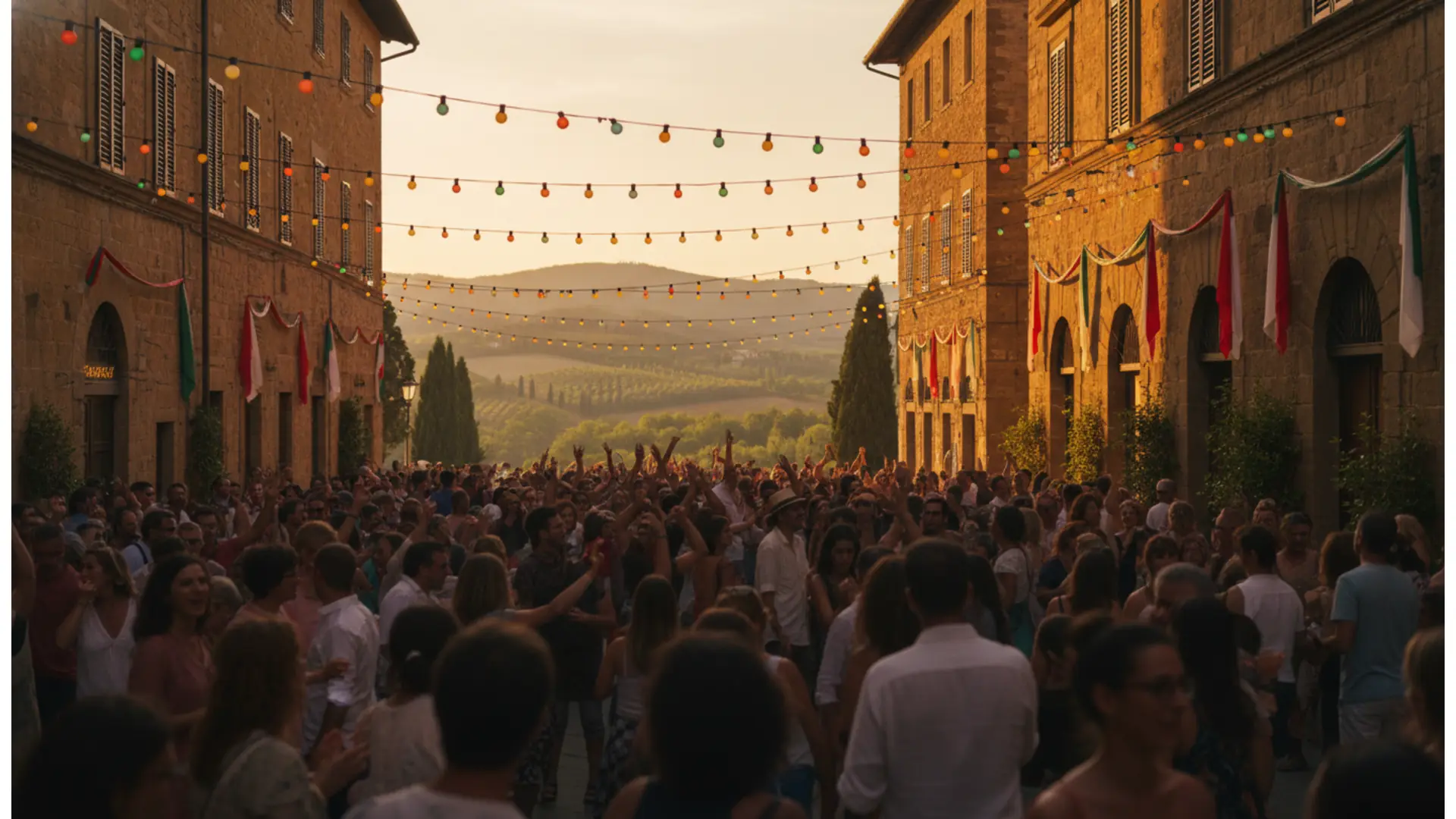
Saint Sebastian Patronal Feast
The band's dawn wake-up call on January 20th in the Sabina village
About Saint Sebastian in Forano
A celebration that begins before dawn
In Forano, a small town in the Sabina region of the Rieti province, in Lazio, January 20th is no ordinary date. It is the feast day of Saint Sebastian, the town's patron saint, and the festivities do not wait for the sun: at six in the morning, the marching band takes to the streets to wake the inhabitants with a lively march. This is the famous Sveglia, the ritual that kicks off the celebrations and which every local recognizes as the true start of the patronal day.
Why a military march?
The choice of a march is no coincidence. Saint Sebastian, a 3rd-century martyr, was an officer in the Roman Imperial Guard before being condemned for his faith; the band opening the day with a military beat is a direct tribute to the saint's biography. It is one of those details that explains, better than any plaque, how Italian patronal feasts preserve a precise historical memory beneath the surface of a village celebration.
A breakfast for the whole town
Once the band finishes its rounds, tradition dictates that everyone gathers for breakfast: a collective, simple, and warm moment that, in the January chill, is worth as much as a procession. This is where the feast reveals its deepest purpose: to mend and strengthen the community at the start of a new year.
The religious aspect
The day continues with liturgical celebrations in honor of the patron saint and a procession through the historic center, accompanied by the band. In Forano, the cult of the saint has a precise architectural landmark: the Church of Saint Sebastian, a 15th-century building, which stands as one of the town's historic places of worship alongside the 17th-century Church of the Most Holy Trinity, the parish seat. Saint Sebastian is also the patron saint of the Local Police, and in Forano, the occasion is also used to celebrate the local officers.
The village that hosts the feast
Forano is a village of just over three thousand inhabitants, nestled 218 meters above sea level among the olive groves of the Lower Sabina. Its origins date back to Roman times, when the area was occupied by the Forum Jani, and by 1262 the town was already a free commune; the medieval castle and the Palazzo Savelli-Strozzi tell the story of the centuries during which the fiefdom passed from the Savelli family, who held it until 1599, to the Strozzi family. Walking through the historic center on the patronal feast day means experiencing this historical layering accompanied by the brass of the band.
Flavors of Sabina
The winter feast is also an opportunity to explore local cuisine. The area is home to Sabina PDO extra virgin olive oil, one of the oldest in Italy, and preserves traditional recipes like acquacotta and nociata, a honey and walnut sweet linked to the Christmas period and therefore still found on tables in January. Those visiting Forano in the summer will instead find the community gathered around the historic Pasta Festival (Sagra della Pastasciutta) held in mid-August, the other major event on the local calendar.
Tips for visitors
To witness the 'Sveglia', you must be in town very early: it is the most characteristic part and it doesn't last long. January in Sabina is cold and often damp, so heavy clothing and comfortable shoes for the steep streets of the historic center are essential. The event is free to attend and takes place entirely in the town's public spaces.
Saint Sebastian in Forano — edition 2026
Saint Sebastian 2026 in Forano
On January 20, 2026, the Municipality of Forano, in the province of Rieti, renewed the celebration of its patron saint. At the first light of day, the marching band paraded through the streets with the 'Sveglia' march, the ritual that recalls Saint Sebastian's military past and calls the locals to gather. After the communal breakfast, the day continued with a solemn mass and a procession along the historic center, between the Church of the Most Holy Trinity and the Church of Saint Sebastian.
Once again this year, the occasion held a dual significance: Saint Sebastian is indeed the patron saint of the Local Police, celebrated alongside the saint in the municipalities of the Lower Sabina.
Programme Saint Sebastian in Forano 2026
Highlights Saint Sebastian in Forano 2026
Prices Saint Sebastian in Forano 2026
Practical information — Saint Sebastian in Forano
How to get there
Forano is located in the Lower Sabina, in the province of Rieti, about 50 km from Rome. By car, it can be reached via the A1 motorway (Ponzano-Soratte exit) or the Via Salaria, following signs for Poggio Mirteto and Forano. By train, the Poggio Mirteto Scalo station, on the FL1 regional line (Rome-Orte), is the most convenient; from there, you can continue by car or local bus connections.
Hours and costs
The band's 'Sveglia' starts around 6:00 AM on January 20th; religious celebrations and the procession take place throughout the day. Admission to all parts of the festival is free.
Information
For detailed schedules, it is advisable to check the Municipality of Forano website or parish notice boards in the days leading up to the feast, as the program is distributed locally.
Festival-goer photos
No photos yet. Share yours!
Share your photos
5 photos max, 5 MB per photo (JPG, PNG, WebP)
Noticed an error or missing information?
Help us keep this listing up to date. Every proposal is verified by our team before publication.
Festival-goer reviews
No rating yet — be the first!
No comments yet. Be the first!
Were you there?
Share your experience with the community.
Published by Valentin Contard, festival listings writer. Reviewed, corrected and approved by Christophe Contard, editor-in-chief. .
Where does it take place — Saint Sebastian in Forano
Centro storico di Forano e Chiesa di San Sebastiano