Saint John the Baptist Patronal Feast
On June 24th, the patronal feast returns to bring Piazza della Torre to life, in the heart of the Franciscan village in the Rieti Holy Valley.
About Saint John the Baptist
A rediscovered patronal feast
The Saint John the Baptist Patronal Feast is celebrated every year on June 24th in Poggio Bustone, a small town in the province of Rieti, in the Lazio region. It marks the feast day of the saint to whom the local parish church is dedicated and, for generations, it has been the community's main summer event. After a long period of neglect, the festival was relaunched by the municipal administration led by Mayor Rovero Mostarda, together with the festival committee: an effort to reclaim local identity that has brought families, young people, and emigrants back to the village for the occasion.
Piazza della Torre, the heart of the festival
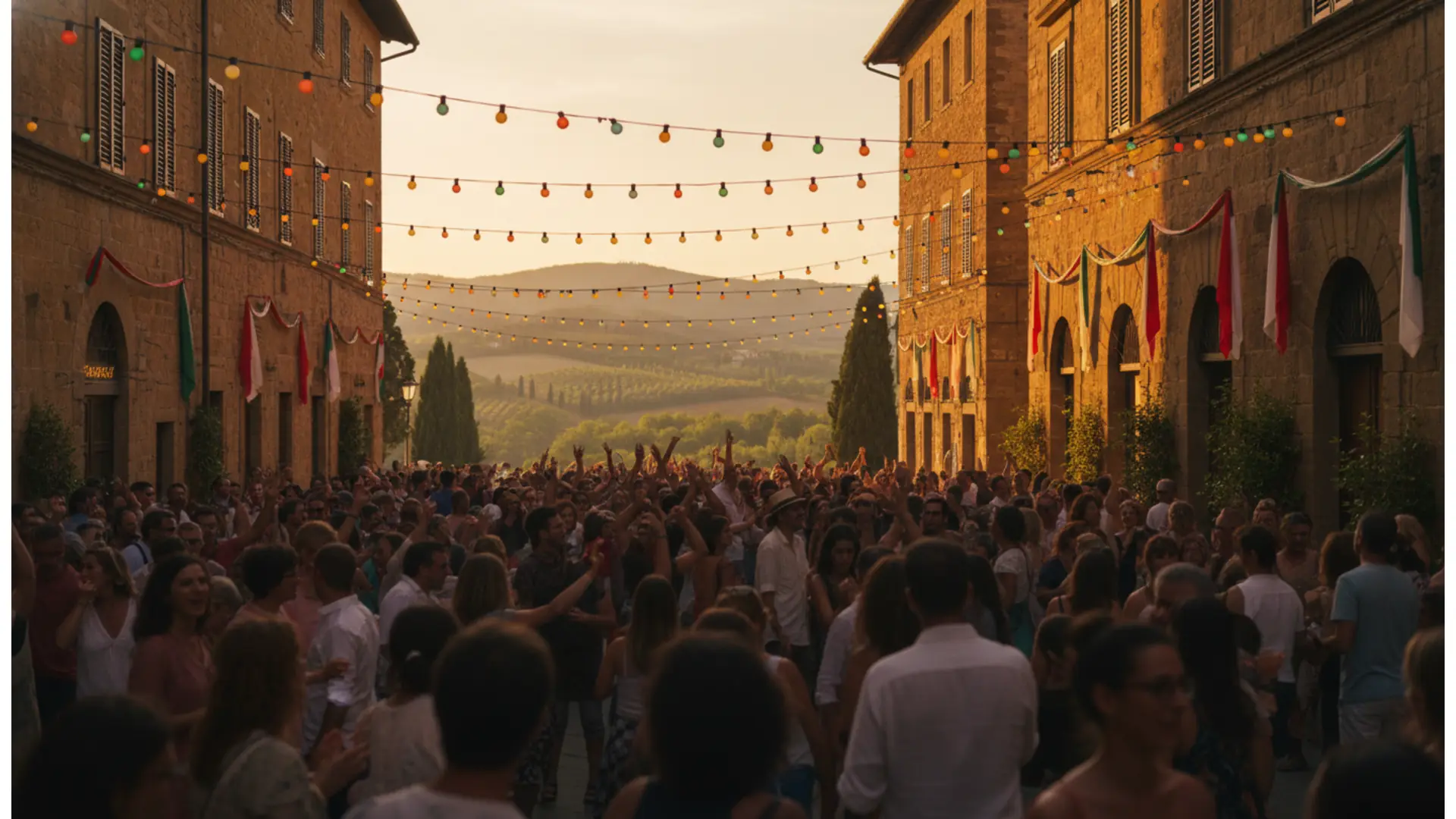
The natural stage for the event is Piazza della Torre, the village's central square, which also overlooks the town hall. This is where the stage for live music is set up, along with food and wine stalls run by volunteers. The evening of June 24th unfolds in a relaxed atmosphere: people eat at outdoor tables, listen to the band, and stop to chat in the medieval alleys that slope down toward the Rieti Plain. According to local reports, public participation has been particularly high since the first editions of the relaunch.
The porchetta of Poggio Bustone
The absolute star of the table is the porchetta of Poggio Bustone, a signature local product famous for its oven-roasting method and a flavor that residents consider inimitable. The local porchetta tradition is so deeply rooted that it has its own Porchetta Festival, one of the longest-running in the Rieti area, and it is a must-have at the patronal feast stalls, accompanied by wines from the Rieti Hills, cheeses, and homemade desserts. This gastronomic appeal is an explicit part of the municipality's tourism promotion strategy, which links its events to the theme of Franciscan hospitality.
The setting: the village of Saint Francis and Lucio Battisti
Poggio Bustone is no ordinary village. It is located in the so-called Rieti Holy Valley, the area that houses the four Franciscan sanctuaries in the province of Rieti. According to tradition, in 1208 Saint Francis of Assisi arrived here, greeting the inhabitants with a formula that has since become proverbial. Just above the village stands the Convent of San Giacomo, founded in 1235, a stop on the Cammino di Francesco (Way of St. Francis). The village is also the birthplace of Lucio Battisti, born here on March 5, 1943: a bronze statue at the Giardini di Marzo depicts him with his guitar and is a constant destination for fans.
The Church of Saint John the Baptist
The parish church of Saint John the Baptist, which gives the festival its name, is located in the heart of the historic center and is the town's main church. Inside, it preserves a 15th-century fresco depicting Saint Francis receiving the stigmata, a direct testimony to the bond between the village and the Franciscan story. The parish belongs to the Montepiano Reatino pastoral zone of the Diocese of Rieti and accompanies the patronal day with a solemn mass dedicated to the Baptist.
Why visit
Those looking for a massive, spectacular event will not find it here. Instead, the Saint John the Baptist festival is one of the best opportunities to understand how an Apennine village in Lazio truly lives: a few hundred people in the square, the scent of porchetta, music echoing off the stone walls, and, in the background, the view over the Laghi Lungo e Ripasottile Nature Reserve. An event that joins the other two major fixtures of the local calendar: the Passion of Christ in spring and the Saint Felice festival in early September.
Saint John the Baptist — edition 2026
2026 Edition
The Saint John the Baptist Patronal Feast was held in Poggio Bustone on June 24, 2026, the liturgical day of the patron saint. The center of the event was once again Piazza della Torre, enlivened throughout the evening by a live music stage and stalls managed by the festival committee volunteers.
Mayor Rovero Mostarda emphasized the importance of the recent recovery of this historic holiday, carried out alongside the local community in addition to the older Saint Felice celebration in early September. In interviews with the local press, the administration reiterated its desire to link the village's events to the tradition of Franciscan hospitality and the territory's food and wine excellence, primarily the porchetta of Poggio Bustone, defined as an inimitable product for its cooking method and flavor.
A few days later, on June 28, 2026, the Municipality proposed a further appointment dedicated to Franciscan hospitality and local typical products, in continuity with the patronal day.
Programme Saint John the Baptist 2026
Highlights Saint John the Baptist 2026
Prices Saint John the Baptist 2026
Practical information — Saint John the Baptist
How to get there
By car: from the A1 motorway, take the Orte exit, then the Rieti-Terni expressway to Rieti and the SP road to Poggio Bustone (about 12 km from the provincial capital). From Rome, the journey takes about 1 hour and 40 minutes.
By train: Rieti station (Terni-L'Aquila line), then Cotral bus to Poggio Bustone.
Where it takes place
Piazza della Torre, in the historic center. The village is pedestrian-only and quite steep: comfortable shoes are recommended. Parking is available at the edge of the town.
Costs
Admission is free. Food and drinks at the stalls are available for purchase at popular prices.
In the surroundings
Convent of San Giacomo and Sacro Speco, statue of Lucio Battisti at the Giardini di Marzo, Laghi Lungo e Ripasottile Nature Reserve.
Festival-goer photos
No photos yet. Share yours!
Share your photos
5 photos max, 5 MB per photo (JPG, PNG, WebP)
Noticed an error or missing information?
Help us keep this listing up to date. Every proposal is verified by our team before publication.
Festival-goer reviews
No rating yet — be the first!
No comments yet. Be the first!
Were you there?
Share your experience with the community.
Published by Valentin Contard, festival listings writer. Reviewed, corrected and approved by Christophe Contard, editor-in-chief. .
Where does it take place — Saint John the Baptist
Piazza della Torre
Piazza della Torre, 02018 Poggio Bustone