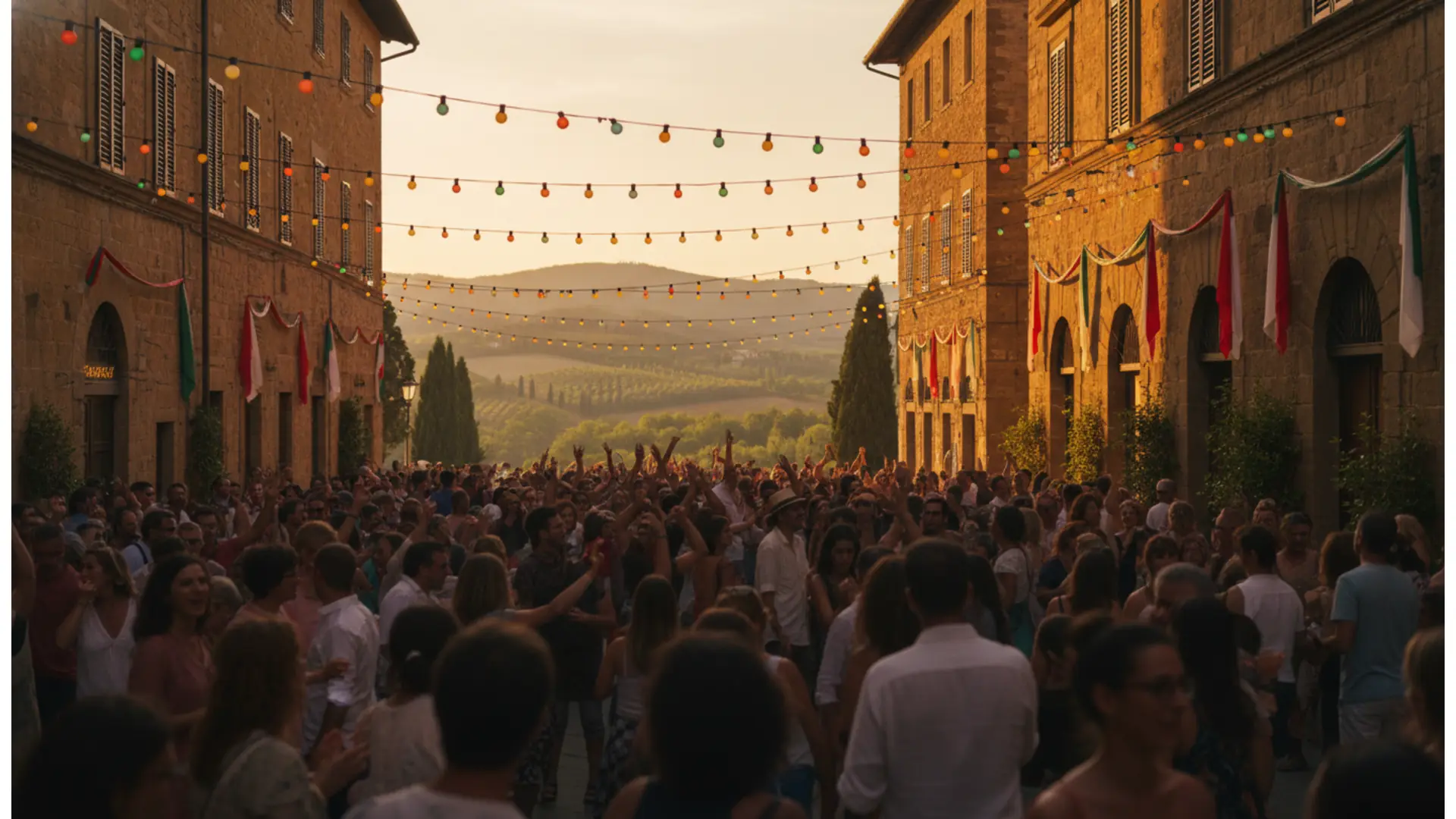
Saint Anthony of Padua Festival in Conca dei Marini
The patron saint of Conca dei Marini celebrated with the tredicina, bonfires, blessed lilies, and the procession of the miraculous statue
About Saint Anthony Festival
A devotion dating back to 1694
On June 13th, Conca dei Marini, in the province of Salerno, comes to a standstill to honor its patron saint: Saint Anthony of Padua. Named protector of the village in 1694, he has since remained at the heart of the community's religious and civic life. The saint is venerated in the mother church of San Giovanni Battista, which locals often simply call the "Church of Saint Anthony." On the Baroque facade, the image of the patron saint stands out with the Latin inscription Protegam civitatem istam — "I will protect this city" — a promise taken literally here, from generation to generation.
The festival is considered one of the most beautiful and well-attended on the entire Amalfi Coast. During these days, the small village fills with families arriving from Agerola, Amalfi, and neighboring towns, many of whom reach Conca by sea, just as they did before the coastal road existed.
The tredicina, lilies, and bread
The celebrations span more than just a single day. At the end of May, the solemn tredicina begins—a thirteen-day prayer journey leading up to the patron saint's day. Each evening features a mass, often accompanied by visiting choirs from other coastal villages, such as the "Pina Elefante" choir from Atrani.
Two specific traditions define these evenings and are eagerly awaited by all:
- The blessing of the lilies: Dried petals from the blessed lilies are distributed to the faithful, who keep them at home as a small amulet of protection for their families.
- The distribution of bread: Saint Anthony's bread, blessed and offered to everyone, recalls the saint's reputation as the "father of the poor" and the long tradition of charity linked to his name.
The bonfire, an ancient sign of devotion
Among the most evocative traditions is the lighting of the focariello, the bonfire lit in honor of the saint. It is no ordinary fire; it is an ancient symbol of devotion and celebration, around which the village gathers in the light, sharing stories, songs, and anticipation. It is the moment where the liturgical and the popular dimensions merge, and where the youngest learn about the festival by watching their elders.
The day of the patron saint
On June 13th, the day follows a traditional program that repeats with little variation from year to year:
- At dawn, the festive ringing of the bells of all the churches in Conca announces the patron saint's day.
- In the morning, holy masses follow one another in the mother church, welcoming the faithful who climb up from the sea and the surrounding hamlets.
- In the late morning, the award-winning "Città de Minori" brass band arrives for a matinée on the church square, featuring the operatic and band repertoire that is a hallmark of Campanian festivals.
- In the evening, the solemn mass animated by the "Corale S. Antonio" is followed by the procession of the miraculous statue of Saint Anthony through the village streets, accompanied by the band.
In the following days, a new solemn mass marks the repositioning of the statue, which returns to its altar, officially closing the festivities.
The Church of San Giovanni Battista
The heart of the festival is a building of ancient origins; documents from 1416 already mention its rector, and a 1693 notarial deed defines it as the "oldest" among the local parishes. Built on a high rocky ridge overlooking the sea—a position that once protected it from Saracen raids—the church today features three naves, barrel vaults, Baroque stucco decorations, and a bell tower with a majolica-tiled spire, one of the most photographed views in Conca. Inside, it houses a marble ambo with a Roman funerary urn, side altars with Neapolitan school paintings, and an organ donated in 1926.
A white village perched above the sea
With only a few hundred inhabitants, Conca dei Marini is one of the smallest municipalities in the province of Salerno and the Campania region, nestled between Amalfi and Praiano. It is the home of the Emerald Grotto, the Santa Rosa Monastery, and the sfogliatella pastry that takes its name from the village. Experiencing the Saint Anthony festival here means entering a close-knit community where the procession passes just a meter from people's doorsteps and where devotion is intertwined with the memory of a village of sailors. Visitors are welcomed without formality: just join the line for the blessed bread.
Saint Anthony Festival — edition 2026
The 2026 Edition
In 2026, Conca dei Marini once again celebrated its most anticipated event on June 13th, the fixed date for the feast of Saint Anthony of Padua. While celebrated throughout the Amalfi Coast, it holds a special place here as the village's patron saint since 1694.
The rhythm of the day followed established tradition: the bells of all Conca's churches ringing at dawn, a series of morning masses in the mother church of San Giovanni Battista, the arrival of the award-winning "Città di Minori" brass band with a matinée on the square, and in the late afternoon, the solemn mass animated by the "Corale S. Antonio," followed by the procession of the miraculous statue of the Saint along the village's narrow streets and stairways, with the sea always in the background.
As every year, the festival drew faithful from neighboring towns, from Agerola to Amalfi, and concluded in the following days with a solemn mass and the repositioning of the statue on its altar.
Programme Saint Anthony Festival 2026
Tredicina (from late May)
- Every evening, approx. 7:00 PM — Solemn mass of the tredicina in honor of Saint Anthony, animated by coastal choirs (including the "Pina Elefante" choir from Atrani).
- Blessing of the lilies and distribution of blessed bread to the faithful.
- Traditional lighting of the bonfire (focariello) in honor of the Saint.
Saturday, June 13, 2026 — Feast of the Patron Saint
- 6:00 AM — Festive ringing of the bells of all churches in Conca.
- 7:00, 8:00, 9:00, and 11:00 AM — Holy Masses in the mother church of San Giovanni Battista.
- 9:00 AM — Arrival of the award-winning "Città di Minori" brass band.
- 10:00 AM — Band matinée on the church square.
- 7:00 PM — Solemn Mass animated by the "Corale S. Antonio," followed by the procession of the miraculous statue of Saint Anthony of Padua through the village streets, accompanied by the band.
Closing of the festivities
- The following Sunday, 7:00 PM — Solemn Mass animated by the "Corale S. Antonio" and repositioning of the statue of Saint Anthony.
The times indicated correspond to the traditional festival program, confirmed annually by the parish; minor variations may occur. The official program is posted in the village and distributed by the parish in the preceding days.
Highlights Saint Anthony Festival 2026
- The procession of the miraculous statue of Saint Anthony, the most anticipated moment on the evening of June 13th.
- The "Città di Minori" brass band and the matinée on the mother church square.
- The blessing of the lilies: dried petals distributed to the faithful as a sign of protection.
- The distribution of Saint Anthony's bread, linked to the Saint's fame as the "father of the poor."
- The tredicina bonfire, an ancient sign of devotion around which the entire community gathers.
- The festive ringing of the bells at dawn from all of Conca's churches.
Prices Saint Anthony Festival 2026
Practical information — Saint Anthony Festival
When
The patron saint's festival always falls on June 13th. The preparatory tredicina begins at the end of May; the repositioning of the statue takes place in the days immediately following the 13th. The detailed program is released annually by the parish and posted throughout the village.
Where
Church of San Giovanni Battista (Church of Saint Anthony), Via Sant'Antonio, 84010 Conca dei Marini (SA). The procession winds through the narrow streets and stairways of the town center.
How to get there
- By car: Take the SS163 Amalfitana road, between Amalfi and Praiano. Note: parking is extremely limited, and traffic is difficult during the festival; it is advisable to arrive early or leave your car in Amalfi.
- By bus: SITA Sud lines from Amalfi and Positano, with a stop in Conca dei Marini along the main road.
- By train: Salerno or Vietri sul Mare station, then take a bus to Amalfi.
- By sea: In summer, there are maritime connections to Amalfi from Salerno, Positano, and Sorrento.
Costs
Celebrations, the band's matinée, and the procession are free and open to everyone.
Tips
The narrow streets are steep: comfortable shoes are essential. For the evening procession, it is best to arrive a little early. Modest attire is required for entering the church. Be sure to try the local Santa Rosa sfogliatella, a pastry created right here in Conca.
Festival-goer photos
No photos yet. Share yours!
Share your photos
5 photos max, 5 MB per photo (JPG, PNG, WebP)
Noticed an error or missing information?
Help us keep this listing up to date. Every proposal is verified by our team before publication.
Festival-goer reviews
No rating yet — be the first!
No comments yet. Be the first!
Were you there?
Share your experience with the community.
Published by Valentin Contard, festival listings writer. Reviewed, corrected and approved by Christophe Contard, editor-in-chief. .
Where does it take place — Saint Anthony Festival
Chiesa di San Giovanni Battista (chiesa di Sant'Antonio)
Via Sant'Antonio, 84010 Conca dei Marini