Positano Carnival
Float parades, costumes, and the Zeza farce between the village and Montepertuso
About Positano Carnival
The Carnival that brings Positano back to its locals
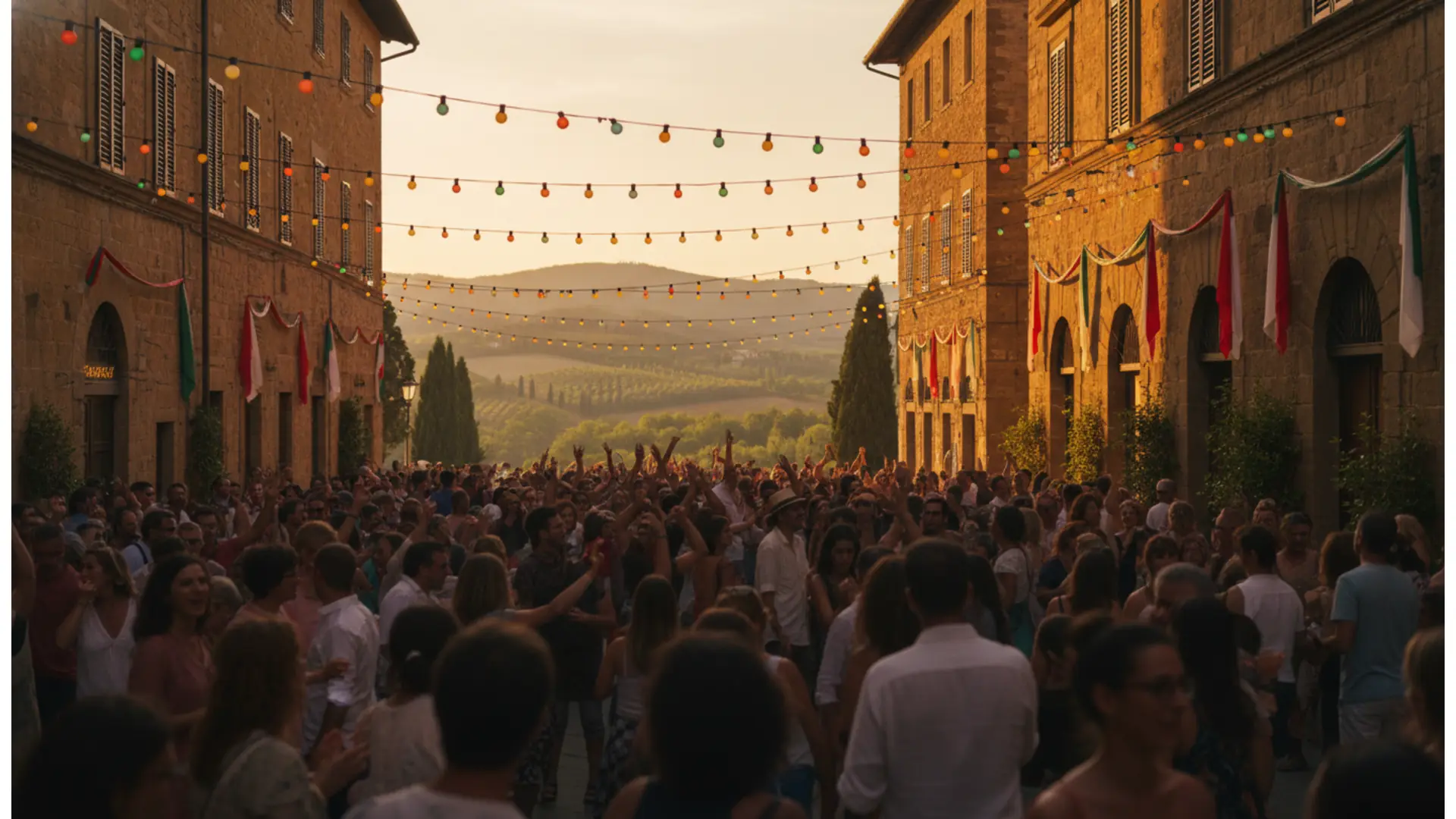
Known worldwide for its bustling summers, Positano returns in winter to what it has always been: a small, vertical village on the Amalfi Coast, in the province of Salerno, where everyone knows each other. The Positano Carnival is the moment when this village spirit shines brightest: allegorical floats built in the preceding months traverse the town's narrow streets, families head out with costumed children, and the squares fill with music.
The event is organized by the Positano Youth Forum, the town's youth participation body, in collaboration with volunteers from the Parish of Santa Maria delle Grazie in Montepertuso. It is a grassroots festival, free of charge and without barriers: passersby join in, and residents watch from their balconies along the route.
The allegorical float parades
The heart of the Positano Carnival is the float parade, which tackles a far from simple route: Positano has no long boulevards, only hairpin bends and stairways overlooking the sea. The floats usually start from the upper Chiesa Nuova area and descend toward the center, arriving in Piazza dei Racconti, the public space where the entertainment, music, and final social gathering take place.
- First parade from Chiesa Nuova toward Piazza dei Racconti, with lunch and entertainment provided by the Youth Forum
- Day dedicated to Montepertuso, with a parade through the hamlet's streets, inflatables, and games for children
- Grand finale on Shrove Tuesday, starting from the Sponda area and winding back up toward Piazza dei Racconti
Accompanying the floats are costumed groups, choreography, street bands, and a cloud of confetti that lingers on the village stairs. The participation of children is the true hallmark of the event: they are the real stars of the day, even more than the floats themselves.
The "Zeza" of Montepertuso, a precious piece of tradition
A few hundred meters above the sea, the hamlet of Montepertuso guards the most ancient soul of the Positano Carnival: the Zeza. This is a farce from the Neapolitan popular theater, with origins in Irpinia and ties to the Commedia dell'Arte. It tells, through verses and songs, the star-crossed love between Tolla, Pulcinella's daughter, and the young Don Nicola. Zeza, the mother, conspires in favor of the lovers against the father's wishes, until the story concludes with a wedding.
The performance takes place in Piazza Cappella, before the gathered community, and is carried out by the "Una storia positanese" group together with parish volunteers. A true village festival is built around the farce, with dishes prepared by local ladies, live folk music, and an audience that knows the lines and characters by heart. It is a tradition that has been interrupted and resumed several times over the years: every return of the Zeza to Montepertuso is celebrated as a significant identity-defining event.
A community Carnival
Compared to Italy's major carnivals, the Positano version does not focus on spectacle: its strength lies in participation. The floats are created by groups of young people and volunteers, the community lunch is provided for free, and themed evenings mix different generations to the tunes of the seventies, eighties, and nineties. Campania has a very strong carnival tradition, and the Amalfi Coast interprets it in its own unique way, between church courtyards, views of the Tyrrhenian Sea, and steep alleys.
Positano off-season
Visiting Positano in February means seeing it without the crowds: the colorful terraced houses, the semi-empty Spiaggia Grande, and the majolica-tiled dome of Santa Maria Assunta dominating the village. The Carnival is one of the few times of the year when the town comes alive as it does in mid-summer, but with an almost entirely local audience. For those visiting Campania in the low season, it is an authentic way to experience the Amalfi Coast, a UNESCO World Heritage site, far from the most beaten tourist paths.
Positano Carnival — edition 2026
A 2026 Carnival spread between village and hill
The 2026 Positano Carnival confirmed the formula that has revitalized the festival in recent years: not just a single day, but a long weekend involving both the center of Positano and the hamlet of Montepertuso. The opening on Saturday, February 14, saw the float parade depart at 11:00 AM from Chiesa Nuova to reach Piazza dei Racconti, where the Youth Forum offered lunch and entertainment.
On Sunday, February 15, the festival moved to the heights: from 10:00 AM, a parade through the streets of Montepertuso, inflatables, and games for children, followed in the evening by a show dedicated to the music of the seventies, eighties, and nineties, organized with volunteers from the Parish of Santa Maria delle Grazie.
The grand finale on Shrove Tuesday
On Tuesday, February 17, at 3:00 PM, the final parade departed from the Sponda area toward Piazza dei Racconti. The parade, also passing through the Chiesa Nuova area and toward Fornillo, was interrupted by a sudden downpour that forced organizers to shelter the floats, as happened in several locations on the Amalfi Coast and the Sorrento Peninsula. Despite the bad weather, dancing, costumes, and skits enlivened the village streets for much of the afternoon.
The return of the Zeza
The most anticipated moment arrived on February 13 at Piazza Cappella, in Montepertuso, with the staging of the Zeza: the Neapolitan popular farce telling the love story of Tolla and Don Nicola, performed by the "Una storia positanese" group under the supervision of Angelo Vito Marrone and directed by Gian Maria Talamo. The cast included Salvatore Barba as Zeza, Biagio Villano as Pulcinella, Angela Villano as Tolla, Michele Barba as Don Nicola, Giovanni Fusco as the doctor, and Sergio Amendola and Enzo De Lucia as the priest. The evening was completed by traditional dishes prepared by local ladies and the "Il Ritrovo" restaurant of Chef Carmine, followed by a folk music concert.
Programme Positano Carnival 2026
Friday, February 13, 2026 — Montepertuso
- Evening, at Piazza Cappella: performance of the "Zeza", a farce from the Neapolitan popular theater, by the "Una storia positanese" group and volunteers from the Parish of Santa Maria delle Grazie (supervised by Angelo Vito Marrone, directed by Gian Maria Talamo)
- Followed by: traditional dishes and a folk music concert
Saturday, February 14, 2026 — Positano
- 11:00 AM: departure of the Carnival float parade from Chiesa Nuova, arriving in Piazza dei Racconti
- Followed by: lunch and entertainment by the Youth Forum
Sunday, February 15, 2026 — Montepertuso
- From 10:00 AM: parade through the hamlet's streets
- Inflatables, games, and children's entertainment
- Evening: 70s, 80s, and 90s themed show
Tuesday, February 17, 2026 — Positano
- 3:00 PM: final float parade from the Sponda area toward Piazza dei Racconti, with music and entertainment
- Floats also passed through the Chiesa Nuova area and toward Fornillo
Highlights Positano Carnival 2026
- Three days of allegorical float parades between Positano and Montepertuso
- The return of the "Zeza", an ancient Neapolitan popular farce of Irpinian origin, at Piazza Cappella
- Community lunch offered by the Youth Forum in Piazza dei Racconti
- Inflatables, games, and workshops for children in Montepertuso
- Musical evening dedicated to the 70s, 80s, and 90s
- The most scenic route in Italy: floats winding up the stairways of the Amalfi Coast
Prices Positano Carnival 2026
Practical information — Positano Carnival
How to get there
Positano has no train station. By train, you arrive in Salerno or Sorrento (Circumvesuviana from Naples), then continue with SITA Sud buses along the Strada Statale 163 Amalfitana. By car, exit at Angri or Castellammare di Stabia from the A3 motorway, but be prepared for a long and winding road.
Parking and getting around
Parking spaces in the village are limited and paid, and some streets may be closed to traffic during parades. It is best to leave your car in the parking lots at the entrance to the town and continue on foot. To reach Montepertuso, there is a local bus service that runs up from the coast.
Tips
- Comfortable shoes: the parade route is almost entirely made of stairways and sloping streets
- Winter clothing: in February, it can be cold and rainy on the Coast
- Events are open-access and do not require reservations
- For updated information, follow the channels of the Positano Youth Forum and the Municipality
Festival-goer photos
No photos yet. Share yours!
Share your photos
5 photos max, 5 MB per photo (JPG, PNG, WebP)
Noticed an error or missing information?
Help us keep this listing up to date. Every proposal is verified by our team before publication.
Festival-goer reviews
No rating yet — be the first!
No comments yet. Be the first!
Were you there?
Share your experience with the community.
Published by Valentin Contard, festival listings writer. Reviewed, corrected and approved by Christophe Contard, editor-in-chief. .
Where does it take place — Positano Carnival
Centro storico di Positano e frazione di Montepertuso