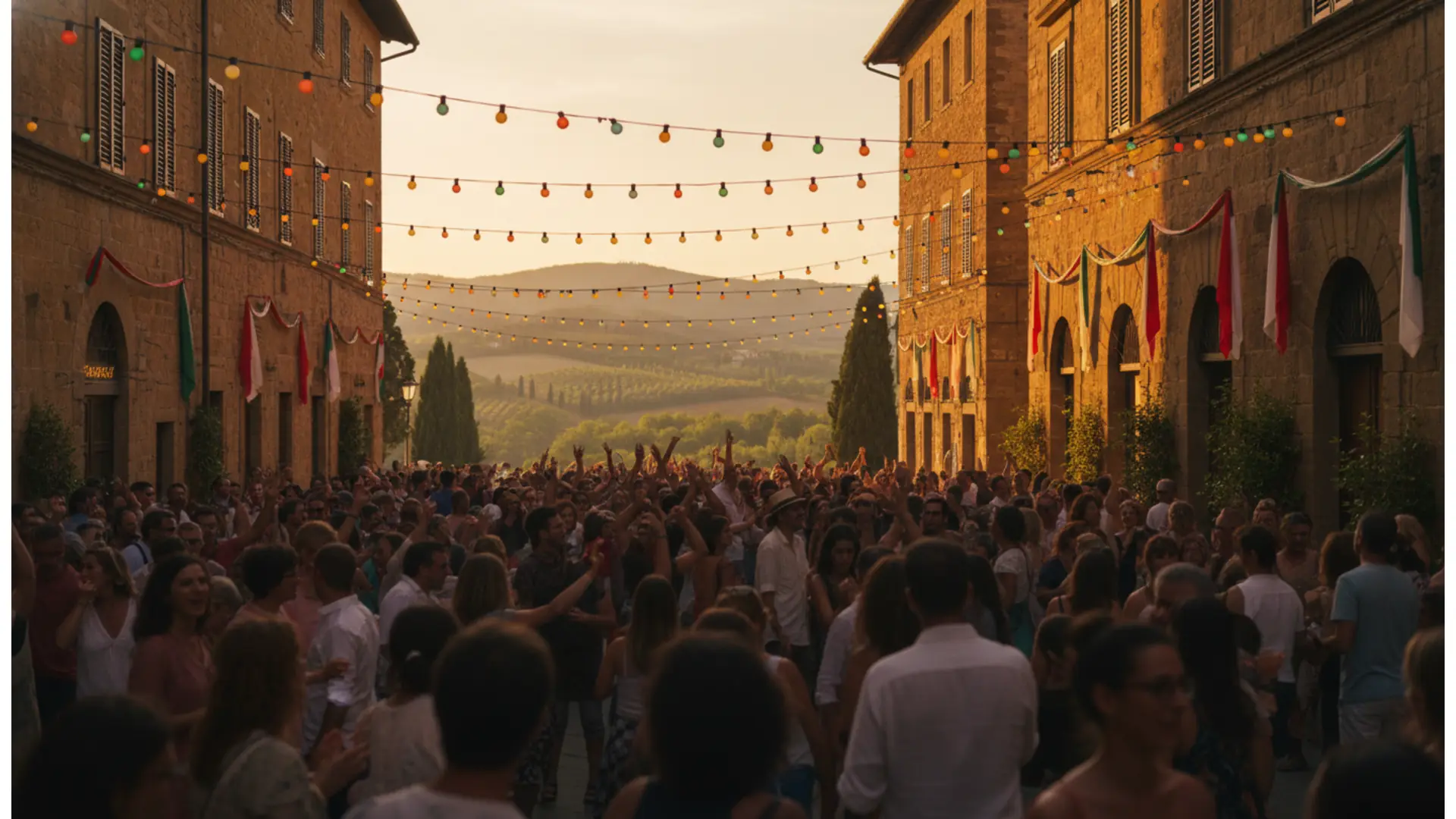
Patronal Feast of Saint Roch and Saint Sebastian
Two saints, one village: the devotion of Lauro through processions, myrtle branches, and folk traditions
Edition 2026 not confirmed to date
This edition has not been confirmed by the organiser to date. We recommend checking before going.
About Lauro Patron Saints Feast
The village's most cherished feast
In Lauro, a town of just over three thousand inhabitants nestled in the Vallo di Lauro, in the province of Avellino (Campania), the end of August has always coincided with the feast of the patron saints, Saint Roch and Saint Sebastian. Organized by the Festival Committee with the support of the Municipality of Lauro and local parishes, it is the celebration that brings the entire community together more than any other: for the occasion, many Lauro natives living elsewhere return to the town, and the streets of the historic center remain lively until late at night.
Two saints for one town
Lauro's case is unique: the village has not one patron saint, but two. Saint Sebastian, the Roman martyr pierced by arrows under Diocletian, was proclaimed patron of the town in 1653. Saint Roch, the pilgrim from Montpellier, a healer and protector against the plague, is invoked with equal fervor and is depicted with the dog that, according to tradition, brought him bread during his illness. The coexistence of these two cults has deeply marked local history, to the point that popular memory still recalls the so-called "War of the Saints" of 1964, when the rivalry between the two devotions inflamed the town's spirits. Today, that tension has dissolved into a shared celebration where the two statues walk together.
The tradition of the myrtle
Among the customs that make the Lauro feast recognizable is that of the mortella (myrtle): at the end of the festivities, the faithful collect the branches used for decorations and take them home as a devotional keepsake, keeping them throughout the year. It is a simple gesture, yet one that speaks volumes about the daily relationship between the town and its protectors, passed down from generation to generation.
How it works
The calendar of festivities alternates between religious and secular events, following the classic pattern of patronal feasts in the Campanian hinterland:
- Liturgical celebrations in the town's churches, with solemn masses dedicated to the two patrons;
- Procession of the statues of Saint Roch and Saint Sebastian along the streets of the historic center, accompanied by the participation of the faithful;
- Musical and public events organized by the Festival Committee, with illuminations lighting up the village streets;
- Popular conviviality, with stalls, traditional sweets, and the hospitality of Lauro families.
The character of the feast remains that of a community recurrence rather than a tourist event: those arriving from outside will find an authentic town, where devotion is not a performance but a daily fact.
Lauro, the village and its castle
The feast is also a great opportunity to discover Lauro. The town is dominated by Castello Lancellotti, a fortress of Lombard-Norman origin considered one of the most beautiful in the province of Avellino, which was set on fire in 1799 and later rebuilt. Also worth seeing is Palazzo Pignatelli, which houses the museum dedicated to Umberto Nobile and Italian airships, the Renaissance-style Palazzo Del Cappellano, and the remains of the Roman villa of San Giovanni in Palco. On the gastronomic front, the area offers the Noce Malizia walnut, Casomuscio cheese, and Caciocavallo Silano DOP.
Inside the Lauro Festival program
The patronal feast is part of the broader summer calendar of the Lauro Festival, promoted by the Municipality of Lauro together with associations and festival committees: from June to September, the village turns into an open-air stage featuring concerts, theatrical performances, exhibitions, and events linked to folk traditions. The August 2026 program includes, among other things, a concert by the State Police Fanfare and, on August 30th, the re-enactment of the 1799 burning of Castello Lancellotti, one of the symbolic events of the Lauro summer.
When it takes place
The Municipality of Lauro schedules the patronal feast of Saint Roch and Saint Sebastian for the latter part of August: in 2025, the festivities were concentrated on Monday, August 25th and Tuesday, August 26th, two days of intense devotion and widespread popular participation. The official dates for the 2026 edition have not yet been released: it is advisable to check for updates on the Municipality and Festival Committee channels in the weeks leading up to the event.
Lauro Patron Saints Feast — edition 2026
As every year, the patronal feast of Saint Roch and Saint Sebastian closes the summer in Lauro, in the Vallo di Lauro (Avellino province, Campania). The 2026 edition is expected in the latter part of August, according to the custom indicated by the Municipality, but as of the writing of this page, the official dates have not yet been published.
The detailed program - liturgical celebrations, the schedule of the procession of the two statues along the historic center, musical events, and public gatherings organized by the Festival Committee - is usually released a few weeks before the festivities. To be sure, it is best to follow the announcements of the Municipality of Lauro and local parishes.
The feast is part of the summer calendar of the Lauro Festival, which animates the village from June to September 2026 with concerts, theatrical performances, exhibitions, and re-enactments, culminating in the reconstruction of the 1799 burning of Castello Lancellotti scheduled for August 30th.
Highlights Lauro Patron Saints Feast 2026
Prices Lauro Patron Saints Feast 2026
Practical information — Lauro Patron Saints Feast
How to get there
By car: Lauro can be reached from the A30 Caserta-Salerno motorway, Nola exit, continuing towards the Vallo di Lauro; from the A16 Naples-Canosa motorway, take the Baiano or Avellino Ovest exit. The town is about 30 km from Avellino and just over 40 km from Naples.
By train and bus: the most convenient stations are those on the Circumvesuviana Naples-Baiano line (Nola, Baiano), connected to Lauro by local bus lines.
By plane: Naples-Capodichino airport is about 40 km away.
Parking
During the festivities, the historic center is largely closed to traffic to allow for the procession: it is advisable to leave your car in the outer parking areas and reach the village on foot.
Admission and costs
Religious celebrations, the procession, and public events in the square are free of charge.
Tips
The late August evenings are mild, but the village is hilly: comfortable shoes are recommended. Those who want to combine the feast with a visit to Castello Lancellotti should check the guided tour times in advance.
Festival-goer photos
No photos yet. Share yours!
Share your photos
5 photos max, 5 MB per photo (JPG, PNG, WebP)
Noticed an error or missing information?
Help us keep this listing up to date. Every proposal is verified by our team before publication.
Festival-goer reviews
No rating yet — be the first!
No comments yet. Be the first!
Were you there?
Share your experience with the community.
Published by Valentin Contard, festival listings writer. Reviewed, corrected and approved by Christophe Contard, editor-in-chief. .
Where does it take place — Lauro Patron Saints Feast
Centro storico di Lauro