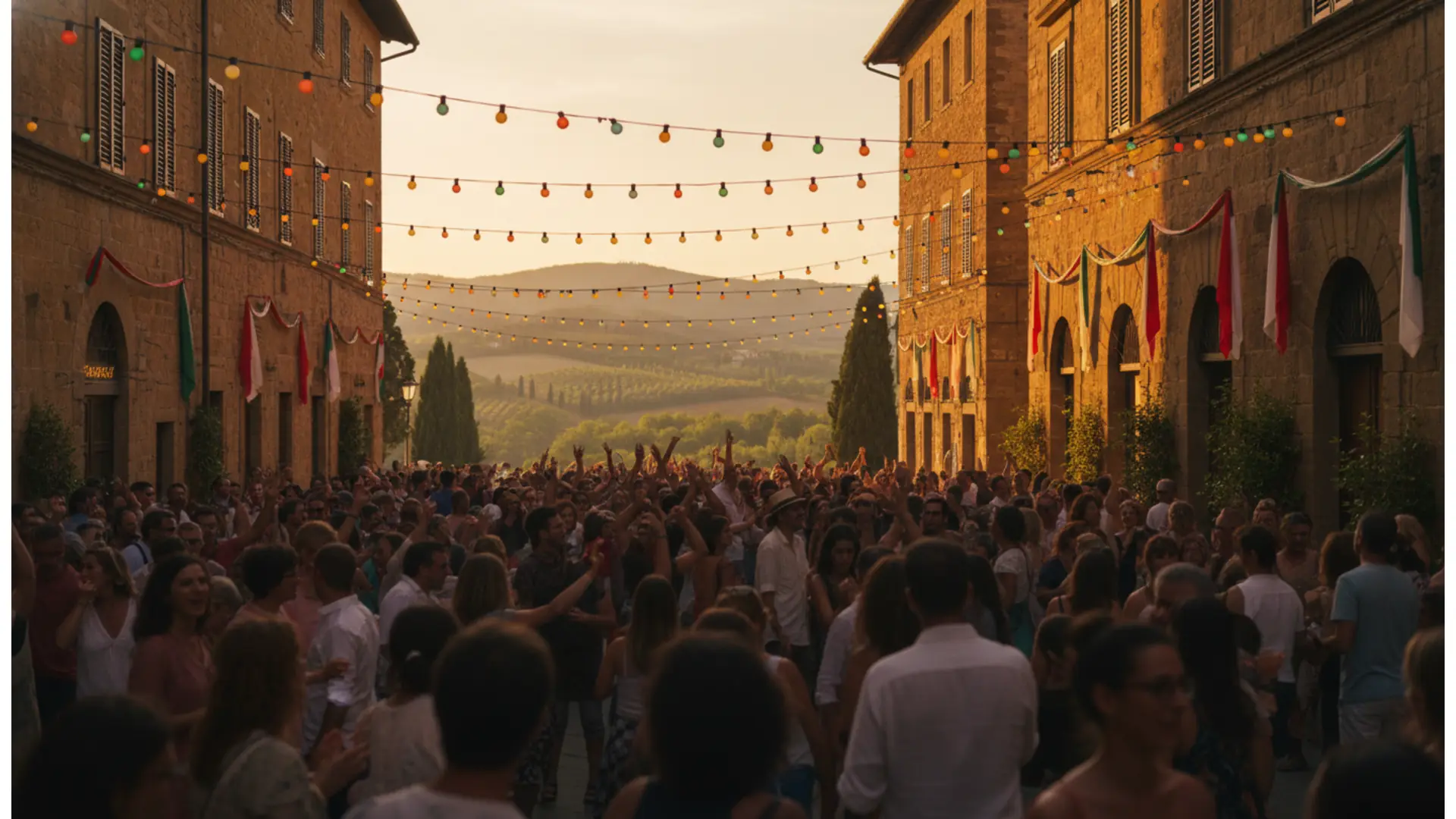
Patronal Feast of Saint Gemma the Virgin and Saint Vincent Ferrer
The archaic rite of blessed bread and the shepherdess, between faith and the cycles of the earth
About Saint Gemma in Goriano Sicoli
A festival that renews a six-century-old rite
The Patronal Feast of Saint Gemma the Virgin and Saint Vincent Ferrer is the beating heart of Goriano Sicoli, a small village in the Subequana Valley, in the province of L'Aquila, in the heart of the mountainous Abruzzo region. Every year, around May 11th, the entire community gathers around its patron saint in a celebration that unites faith, memory, and popular tradition, preserved and handed down from generation to generation for nearly six hundred years.
The figure of Saint Gemma and its origins
Tradition links the festival to Gemma, a young woman originally from San Sebastiano dei Marsi who settled in Goriano Sicoli, where, according to popular legend, she lived for over forty years in penance and seclusion in a cell near the church, watching Mass through a small window. Her death on May 11, 1426, marks the origin of the cult and the annual recurrence. Scholars and local sources highlight how the May ritual retains traces of ancient pre-Christian agrarian cults, evoking the myth of the earth's cycles and fertility, which has been layered over with Christian devotion throughout the centuries.
The bread of Saint Gemma
A central symbolic element of the festival is the Saint Gemma bread. In the nights leading up to the event, the women of the village knead and bake loaves marked with the initials “SG”: once baked, each loaf is blessed and kept to be shared. During the afternoon procession, the blessed bread is distributed door-to-door, carried in baskets adorned with flowers and ribbons by young women in traditional dress, preceded by the brass band. It is a gesture of sharing and prosperity that recalls the charity attributed to the saint.
The shepherdess and the procession
Among the most moving moments is the arrival of the young girl from San Sebastiano dei Marsi, who portrays Saint Gemma and is solemnly welcomed at the village gates. The celebration continues with a solemn Mass in the parish church and the procession that winds through the streets of the historic center, accompanied by songs, prayers, and the participation of elders, adults, youth, and children.
Why it is worth visiting
- An authentic and living rite of Abruzzo's popular culture, far from mass tourism
- The evocative door-to-door distribution of blessed bread
- The charm of the Subequana Valley and the village of Goriano Sicoli
- A unique blend of Christian devotion and ancient agrarian myths
The festivities take place in the territory of the Municipality of Goriano Sicoli, in the province of L'Aquila, and represent an unmissable appointment for those who wish to discover the deepest and most authentic soul of inland Abruzzo.
Saint Gemma in Goriano Sicoli — edition 2026
The 2026 edition of the Saint Gemma Festivities in Goriano Sicoli took place from May 11th to 13th, in a year of particular importance: the sixth centenary of the saint's death (1426-2026). The anniversary was preceded, on April 20, 2026, by the inauguration of a new statue dedicated to Saint Gemma the Virgin at the rock site of “Ginocchio”, blessed by the Bishop of Sulmona-Valva, Monsignor Michele Fusco.
The heart of the celebration was Tuesday, May 12th: not the usual procession with the statue, but the solemn exit of the urn containing the body of Saint Gemma, a rare gesture of deep spiritual significance. For the centenary, all historical votive candles from 1939 to 2026 were carried in procession, a “procession of light” that made the uninterrupted bond between generations visible. The distribution of blessed bread, the solemn Mass, and the participation of the entire community were also highlights of the event.
Programme Saint Gemma in Goriano Sicoli 2026
- Monday, May 11: Arrival of the young girl representing Saint Gemma from San Sebastiano dei Marsi; procession from the sheep track towards the chapel; door-to-door distribution of blessed bread
- Tuesday, May 12: Religious celebrations, solemn Mass, and solemn exit of the urn with the body of Saint Gemma; procession of light with historical votive candles (1939-2026)
- Wednesday, May 13: Conclusion of the festivities and return of the young girl to San Sebastiano dei Marsi
Highlights Saint Gemma in Goriano Sicoli 2026
Prices Saint Gemma in Goriano Sicoli 2026
Practical information — Saint Gemma in Goriano Sicoli
Getting there
Goriano Sicoli is located in the Subequana Valley, in the province of L'Aquila. By car, it can be reached via the A25 motorway (Pratola Peligna-Sulmona exit), continuing along local roads. The village also has a railway station on the Rome-Pescara line.
When
The festival takes place every year around May 11th-13th.
Tips
Admission to religious and popular events is free. We recommend comfortable clothing that is respectful of the religious context, as well as suitable shoes for following the procession through the historic center.
Festival-goer photos
No photos yet. Share yours!
Share your photos
5 photos max, 5 MB per photo (JPG, PNG, WebP)
Noticed an error or missing information?
Help us keep this listing up to date. Every proposal is verified by our team before publication.
Festival-goer reviews
No rating yet — be the first!
No comments yet. Be the first!
Were you there?
Share your experience with the community.
Published by Valentin Contard, festival listings writer. Reviewed, corrected and approved by Christophe Contard, editor-in-chief. .
Where does it take place — Saint Gemma in Goriano Sicoli
Santuario di Santa Gemma Vergine