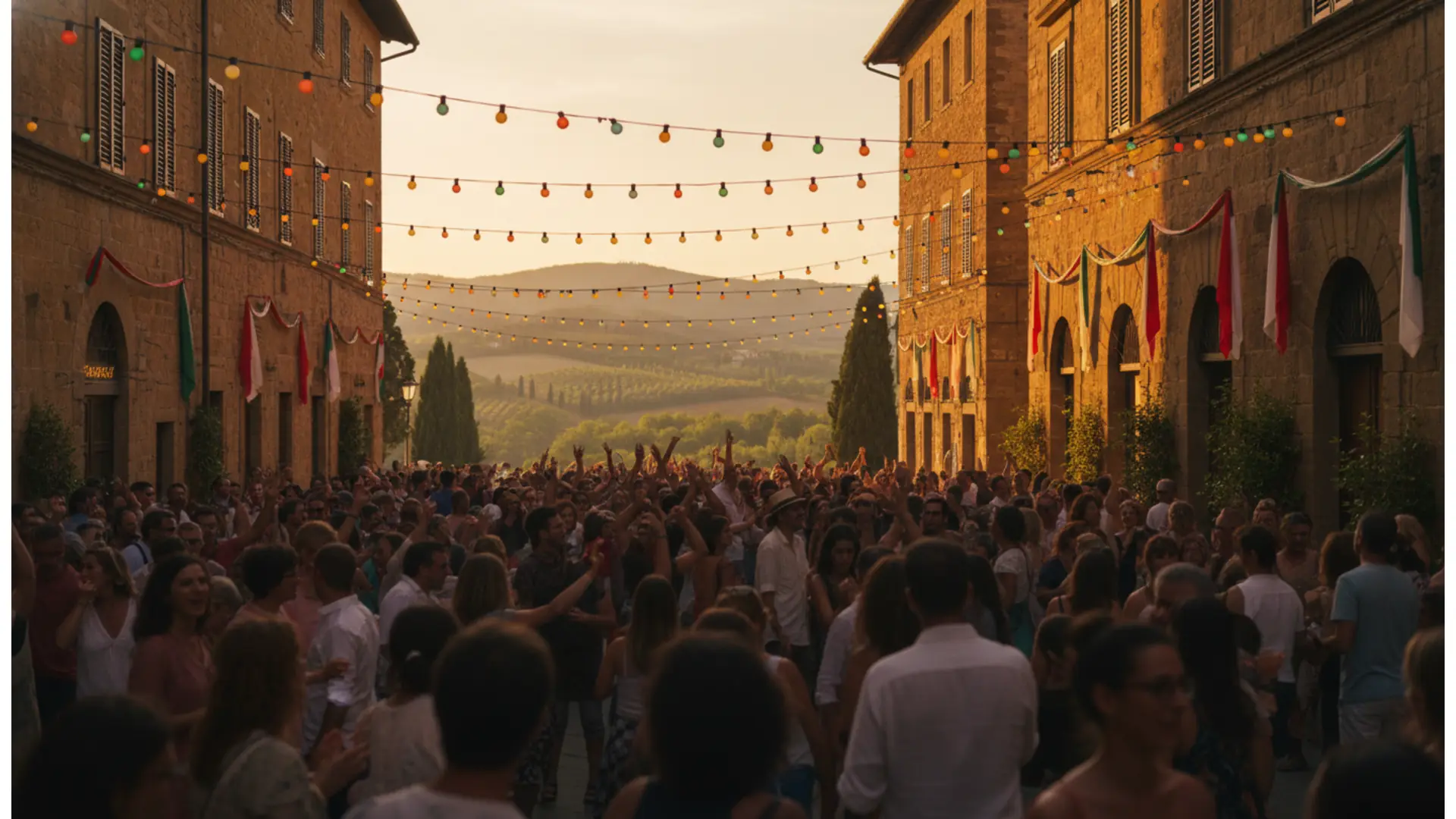
Patronal Feast of Saint Catald the Bishop
The patron saint of Roccaromana is celebrated twice a year with processions, Latin chants, and the flavors of the Alto Casertano region.
Edition 2026 not confirmed to date
This edition has not been confirmed by the organiser to date. We recommend checking before going.
About Feast of Saint Catald
A small village, a great patron
In Roccaromana, a village of just over a thousand inhabitants nestled in the mountains of the Alto Casertano, in the province of Caserta (Campania), the Patronal Feast of Saint Catald the Bishop is more than just a date on the calendar: it is the very identity of the town. The saint, an Irish-born bishop venerated primarily in Taranto, is the town's main protector, and his name is woven into the fabric of the central square, the mother church, and the memories of every local family.
According to historical studies of the Caserta region, the devotion was introduced to Roccaromana by the Arcamone family, the local feudal lords, and has remained unbroken ever since. Local tradition links the autumn celebration to the miraculous escape from a severe epidemic: historical sources in the village speak either of the plague that struck neighboring towns in the 15th century while sparing Roccaromana, or of the liberation from the cholera outbreak of 1836. The meaning remains the same: a pact of protection between the saint and the community, renewed every year.
Three moments in the year, two major feasts
The Cataldian calendar of Roccaromana is divided into three dates:
- March 8th — the transitus, the anniversary of the saint's death, marked by the traditional raising of the statue onto the altar;
- May 10th — the canonical feast, commemorating the discovery of the saint's body in Taranto, shared with all Cataldian communities in Italy;
- Last Sunday of September — the major feast, the most deeply felt and well-attended, featuring a solemn procession through the village.
The official website of the Municipality of Roccaromana designates May 10th and the last Sunday of September as the patronal dates for Saint Catald the Bishop, alongside the feasts of the hamlets (Santa Margherita in Statigliano, and Santa Croce).
The procession and folk rituals
The day of the feast begins very early: as early as four in the morning, prayers and Latin chants rise up, following a custom preserved in Roccaromana long after it disappeared elsewhere. Among the most characteristic forms is the rosary sung in alternating choirs.
In the afternoon, after Vespers, the statue of the patron saint leaves the Church of Saint Catald and travels in procession through the streets of Roccaromana and the hamlet of Santa Croce, accompanied by the brass band, the clergy, and civil authorities. One of the most moving moments is the kissing of the relic. The evening traditionally concludes with a brass band concert—in 2024, this was a lyrical-symphonic concert performed by a major band from Puglia—and tastings of local gastronomic products.
The Terre Cataldiane and the twinning with Corato
Roccaromana is part of the Terre Cataldiane network, which brings together Italian communities devoted to Saint Catald: Taranto, Corato, Supino, Cirò, San Cataldo, and others. On April 30th, 2025, a delegation from Roccaromana was in Taranto for the solemn opening of the saint's novena.
The bond with Corato, in Puglia, is particularly strong: on March 8th, 2024, a twinning pact in faith was signed between the two communities in the presence of the Mayor of Roccaromana, Nicola Pelosi, and the parish priest, Father Marcello Santagata. Since then, delegations have exchanged visits during their respective patronal feasts.
Dining with Saint Catald
As with every patronal feast in the South, the meal is part of the ritual. In the homes of Roccaromana, the feast menu includes baked pasta, stuffed peppers, and the so-called Saint Catald cake, a dessert exclusively linked to this occasion. During the feast evenings, there is no shortage of tastings of typical products from the Alto Casertano.
The village: church, frescoes, and the Norman Tower
The Church of Saint Catald, located in Piazza San Cataldo, began as a 15th-century chapel and was transformed into a mother church in the early decades of the 20th century, culminating in its inauguration in 1926. On the apse wall, one can admire a 1910 fresco by the Neapolitan artist Vincenzo Galloppi, depicting the saint saving fishermen during a storm.
Visitors arriving for the feast can climb to the Norman Tower, dating back to the 11th century, which was part of the ancient defensive system of the territory. The 2016 restoration brought to light, behind the altar of the nearby Church of the Madonna di Castello, two frescoes from the 15th and 16th centuries depicting the Virgin of Graces and Saint John the Baptist.
Why it is worth the trip
Those looking for a spectacular patronal feast with big-city illuminations will not find them here. Roccaromana offers something different and increasingly rare: a feast still created by the community for itself, with its ancient chants, the procession through the houses, and the traditional dishes. It is a great starting point for understanding popular devotion in Campania.
Feast of Saint Catald — edition 2026
The Patronal Feast of Saint Catald the Bishop in Roccaromana, in the province of Caserta, follows a fixed and consolidated calendar: the canonical feast on May 10th, shared with Taranto and other communities of the Terre Cataldiane, and the major feast on the last Sunday of September, the most well-attended, featuring the procession of the statue through the streets of the village and the hamlet of Santa Croce.
For 2026, no official dates or detailed programs have been published yet: this entry will be updated as soon as the Festivities Committee or the parish releases the official flyer. Those wishing to participate can follow the committee's channels or contact the parish of Saint Catald directly, located in Piazza San Cataldo in Roccaromana.
The elements that have characterized the feast for generations remain unchanged: the preparatory novena, the Latin chants from the early hours of the morning, the rosary sung in alternating choirs, the kissing of the relic, the brass band concert, and tastings of typical products from the Alto Casertano.
Highlights Feast of Saint Catald 2026
Prices Feast of Saint Catald 2026
Practical information — Feast of Saint Catald
Where it takes place
The celebrations are held at the Church of Saint Catald, in Piazza San Cataldo in Roccaromana (81051, province of Caserta), and along the streets of the historic center and the hamlet of Santa Croce.
How to get there
By car from the A1 Rome-Naples motorway, take the exits serving the Alto Casertano (such as Caianello) and continue on the provincial roads towards Pietramelara and Roccaromana. The village is not directly served by rail; those arriving by train must arrange for the final leg by car or local bus. During the feast days, it is advisable to leave your car on the outskirts of the center, as the streets of the old village are narrow and partially closed to traffic during the procession.
Costs
Access to the church, liturgical celebrations, and the procession is free of charge. Any tastings and food stalls are paid for and managed by the committee or local associations.
Tips
Wear comfortable shoes: the village is on a slope and the procession includes uphill sections. Respectful attire is required for celebrations inside the church. The exact dates and the program for the current year are usually announced by the parish and the Facebook page of the 'Comitato Festeggiamenti San Cataldo V. di Roccaromana' a few weeks in advance: it is advisable to check them before traveling.
Festival-goer photos
No photos yet. Share yours!
Share your photos
5 photos max, 5 MB per photo (JPG, PNG, WebP)
Noticed an error or missing information?
Help us keep this listing up to date. Every proposal is verified by our team before publication.
Festival-goer reviews
No rating yet — be the first!
No comments yet. Be the first!
Were you there?
Share your experience with the community.
Published by Valentin Contard, festival listings writer. Reviewed, corrected and approved by Christophe Contard, editor-in-chief. .
Where does it take place — Feast of Saint Catald
Chiesa di San Cataldo e centro storico di Roccaromana
Piazza San Cataldo, 81051 Roccaromana