Patronal Feast of Saint Anthony the Abbot (Domenica in Albis)
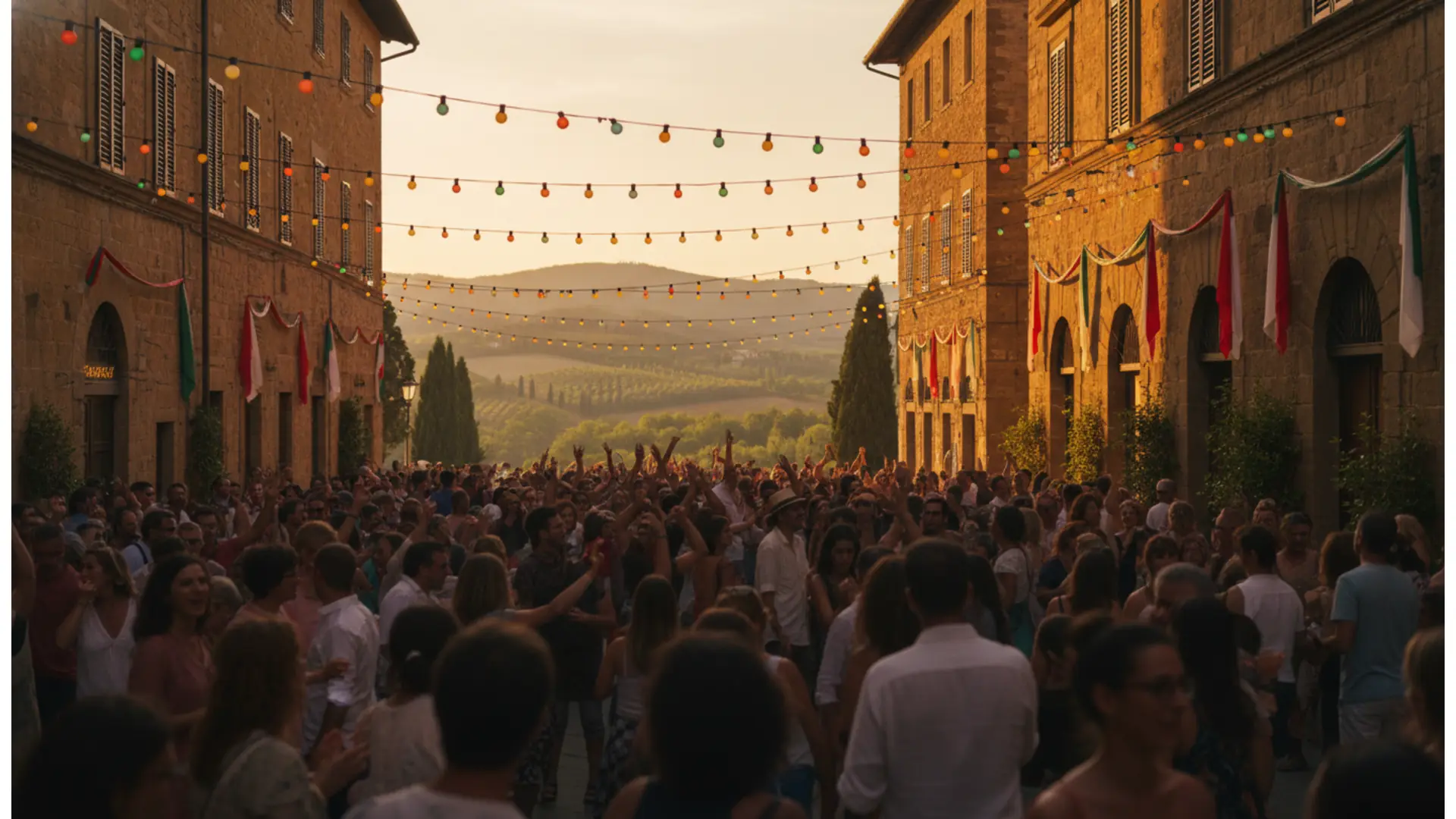
Riardo celebrates its patron saint on Domenica in Albis with a triduum, procession, and live music at Villa Violati
About Feast of Saint Anthony the Abbot
A patronal feast that defies the calendar
In Riardo, a small town of just over two thousand inhabitants in the province of Caserta, Saint Anthony the Abbot is not celebrated on January 17th, as the liturgical calendar dictates, but on Domenica in Albis, the Sunday following Easter. This ancient and deeply rooted tradition shifts the patronal feast from the heart of winter to the height of spring, when the medieval village, perched on the northern slopes of the Trebulani Mountains, can finally open up to processions, lights, and outdoor evenings. For visitors, it is a chance to experience a patronal feast in the inland Campania region in its most genuine form, far from the major tourist circuits.
The 17th-century roots of a devotion
The Riardo tradition dates back to the mid-1600s. After a dramatic plague—the same one that devastated the Kingdom of Naples in 1656—the community chose to honor the hermit saint by moving the festivities to Domenica in Albis, and they have never looked back. The Mother Church of Santa Maria a Silice, the town's religious heart, houses the wooden statue of Saint Anthony the Abbot, linked to the memory of those years and the generosity of Duchess Aldobrandini, alongside the venerated statue of the Virgin, a work of the Neapolitan school.
The festival was once associated with rural rites that the town still remembers: the lighting of fires, the blessing of animals brought to the square—Saint Anthony is the protector of farm and stable animals—and the water from the so-called "Saint Anthony's bell," which, according to popular belief, helped children with speech difficulties. These are traces of a rural civilization that has never been entirely forgotten here.
The preparatory triduum
The festival does not begin on Sunday, but three days earlier. The triduum is celebrated in the Mother Church: the Holy Rosary at 6:30 PM followed by the Eucharistic celebration at 7:00 PM, led by the parish priest, Father Marco Stolfi. These are intimate evenings, attended primarily by locals, which spiritually prepare for the solemn day and set the slow, steady pace typical of village festivals.
The patronal Sunday, hour by hour
- Early morning: The band parade through the town streets, led by the local ensemble "Ritmo e Armonia," waking Riardo with traditional marches.
- Morning: Two Holy Masses in the Mother Church, the second featuring a panegyric dedicated to the patron saint.
- Late afternoon: The procession with the statue of Saint Anthony the Abbot, starting from the Mother Church and winding through the historic center.
- Evening: The closing concert, the most anticipated moment for young people and families, ending the day with music in the crowded square.
Villa Violati, the festival stage
The secular part of the festivities is concentrated at Villa Violati, an open-air space that hosts orchestras, live bands, and artists from the Neapolitan and Caserta scenes every year. In recent years, beloved names from the popular Campania repertoire have taken the stage, from dance orchestras to comedian-singer-songwriters: a deliberately popular program designed to get three generations dancing together. This is where the patronal feast stops being just a ritual and becomes a collective gathering.
Riardo, a medieval village among mineral waters
It is worth arriving a few hours early. Riardo preserves a fortified village with a Lombard-origin castle, evidence of an ancient settlement already known to the Romans for its waters. The local springs have fueled the town's modern success: the bottling plants for famous natural sparkling mineral waters, among the best-known in Italy, are located here. The landscape is that of the Alto Casertano, characterized by olive groves, vineyards, and small hillside towns not far from Teano, Pietramelara, and Roccamonfina.
Visitor tips
- The date changes every year: it depends on Easter, as the feast always falls on the following Sunday. Check the calendar before traveling.
- The most intense moment remains the late afternoon procession: those wishing to photograph it should position themselves along the alleys of the historic center well in advance.
- Local cuisine is worth a stop: fresh pasta, grilled meats, and buffalo mozzarella from the Caserta area.
- Parking in the center is very limited during the festival: it is best to leave the car at the entrance to the village and walk up.
Feast of Saint Anthony the Abbot — edition 2026
Four days for Saint Anthony
In 2026, Easter fell on April 5, and consequently, Domenica in Albis was on April 12. The community of Riardo, in the Alto Casertano area, celebrated its patron saint from Thursday, April 9 to Sunday, April 12. The preparatory triduum, which began on Thursday the 9th, brought the faithful together every evening at the Mother Church of Santa Maria a Silice for the Rosary and the Eucharistic celebration led by the parish priest, Father Marco Stolfi.
Music at Villa Violati
The secular festivities were concentrated at Villa Violati. On Saturday, April 11, the evening featured the "Noi del Sud" Orchestra, followed by a performance by Tony Tammaro, one of the most popular faces of Neapolitan comic song. On Sunday the 12th, after the procession, the stage lit up again with "Le Note di Niki's Band."
The religious heart
Sunday began at dawn with the band parade of the "Ritmo e Armonia" ensemble from Riardo, directed by Maestro Nicola Tartaglia. This was followed by Masses at 8:30 AM and 11:00 AM, the latter featuring the saint's panegyric, and at 5:45 PM, the procession with the statue of Saint Anthony the Abbot through the town's usual streets. The organization was managed by the parish priest together with the Patronal Feast Committee, with the collaboration of the entire community.
Programme Feast of Saint Anthony the Abbot 2026
Thursday, April 9 - Saturday, April 11, 2026 — Triduum at the Mother Church (Santa Maria a Silice)
- 6:30 PM — Holy Rosary
- 7:00 PM — Eucharistic celebration
Saturday, April 11, 2026 — Villa Violati
- 9:00 PM — Concert by the "Noi del Sud" Orchestra
- 10:15 PM — Performance by Tony Tammaro
Sunday, April 12, 2026 — Domenica in Albis, Patron Saint's Day
- 8:00 AM — Band parade by the "Ritmo e Armonia" ensemble of Riardo, directed by Maestro Nicola Tartaglia
- 8:30 AM — Holy Mass at the Mother Church
- 11:00 AM — Holy Mass presided over by Father Marco Stolfi, parish priest, with the saint's panegyric
- 5:45 PM — Procession with the statue of Saint Anthony the Abbot, starting from the Mother Church through the town's usual streets
- 9:00 PM — Concert by "Le Note di Niki's Band"
Highlights Feast of Saint Anthony the Abbot 2026
- The Domenica in Albis procession: at 5:45 PM on April 12, from the Mother Church through the village alleys.
- Tony Tammaro at Villa Violati: Saturday, April 11 at 10:15 PM, following the "Noi del Sud" Orchestra.
- The dawn band parade: at 8:00 AM with "Ritmo e Armonia," a tradition that wakes the town.
- The 11:00 AM solemn Mass with the patron saint's panegyric.
- "Le Note di Niki's Band" closing the festival on the evening of Sunday the 12th.
Prices Feast of Saint Anthony the Abbot 2026
Practical information — Feast of Saint Anthony the Abbot
How to get there
By car: Take the Caianello exit on the A1 Rome-Naples motorway, then follow provincial roads toward Riardo (a few kilometers). By train: Riardo-Pietramelara station on the Rome-Cassino-Naples line, a short distance from the center. By plane: Naples-Capodichino Airport, about an hour's drive away.
Where it takes place
Religious celebrations and the start of the procession are at the Mother Church of Santa Maria a Silice; evening shows are held at Villa Violati.
Admission
Celebrations, the band parade, and the procession are free to attend. There are no tickets for the evening shows; local sources do not report any advance sales.
Tips
Wear comfortable shoes for the village's sloping alleys, bring a sweater for the evening (temperatures drop after sunset in April), and be patient regarding parking. For accommodation, options are concentrated in the agritourisms of the Alto Casertano and hotels in Teano and Vairano Patenora.
Festival-goer photos
No photos yet. Share yours!
Share your photos
5 photos max, 5 MB per photo (JPG, PNG, WebP)
Noticed an error or missing information?
Help us keep this listing up to date. Every proposal is verified by our team before publication.
Festival-goer reviews
No rating yet — be the first!
No comments yet. Be the first!
Were you there?
Share your experience with the community.
Published by Valentin Contard, festival listings writer. Reviewed, corrected and approved by Christophe Contard, editor-in-chief. .
Where does it take place — Feast of Saint Anthony the Abbot
Chiesa Madre di Santa Maria a Silice e Villa Violati