Madonna del Carmine Patronal Festival
Faith, tradition, and music in the Alburni mountains at the end of July
About Madonna del Carmine
The Madonna del Carmine Patronal Festival in Postiglione
Every year at the end of July, Postiglione—a village perched on the slopes of the Alburni Mountains in the Province of Salerno, Campania—experiences its most significant days. The Madonna del Carmine Patronal Festival, or Our Lady of Mount Carmel, is a deeply rooted solemnity: the civil and religious calendars overlap, municipal offices reduce their hours, and the entire village reorganizes around the festivities. The Municipality itself describes it as an event "deeply felt by the people of Postiglione" due to their great devotion to the Virgin, who has always been invoked as the community's protector.
The Cult of Our Lady of Mount Carmel
Carmelite devotion is among the most widespread in Southern Italy and takes on particularly intense forms in the Salerno area. In Postiglione, the heart of the festival is the sanctuary dedicated to the Madonna, where solemn masses are held throughout the day on July 31st. It is not uncommon for the celebrations to be presided over by bishops invited from neighboring dioceses, confirming the importance this event holds well beyond the village borders.
The Procession and the 'Cente'
The most anticipated moment arrives on the evening of the feast day, when the procession winds through the entire village: a parade of confraternities and the faithful who raise songs and prayers, accompanying the venerated image along the narrow streets of the historic center. The procession is accompanied by the tradition of the cente—votive structures adorned and carried in the parade—one of the most characteristic features of popular religiosity in the Alburni and the inland Cilento region.
The Historic Carmine Fair
Alongside the sacred rites, the festival preserves its historic fair: in the days leading up to July 31st, the village streets fill with stalls and markets featuring local products, handicrafts, sweets, and all kinds of goods. It is the legacy of the ancient patronal fairs that, in the villages of the Salerno hinterland, combined the devotional aspect with economic exchange, attracting vendors and visitors from neighboring towns.
Performances, Music, and Conviviality
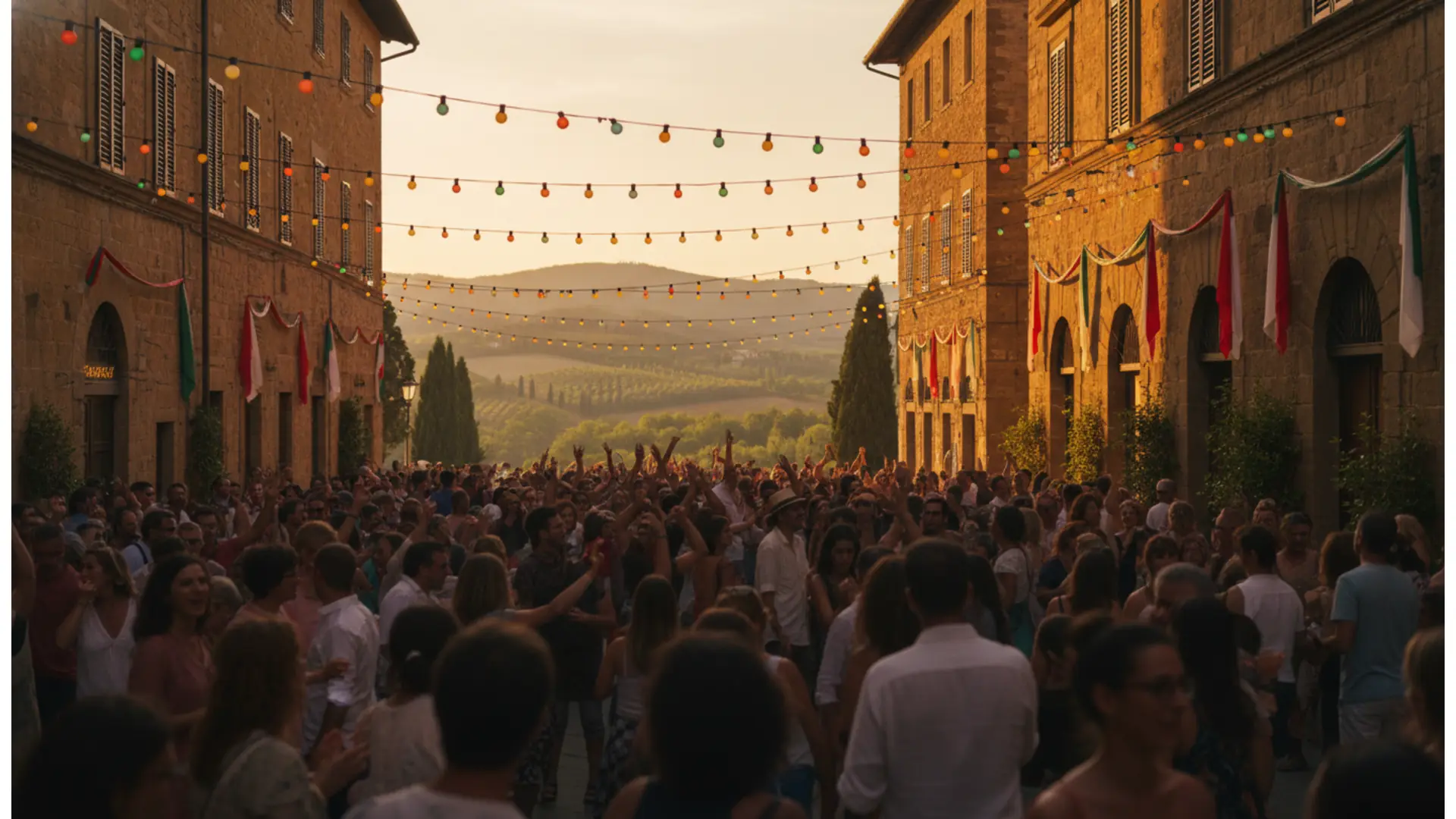
The civil dimension of the festival is concentrated primarily on the Santa Maria square, which hosts performances and concerts open to everyone on the eve and the day of the solemnity. In recent years, the program has alternated between theater, marching bands, and big names in Italian music, with free-entry evenings that turn the square into the village's living room. It is the moment when the festival also becomes an opportunity for families to reunite and for those who have returned to Postiglione from Northern Italy or abroad to gather.
Postiglione, between Alburni and Cilento
Dominated by the remains of the Norman castle and overlooking the Sele plain, Postiglione is one of the gateways to the Cilento, Vallo di Diano and Alburni National Park. The village is also known for its caves and the trails that climb toward the Alburni plateau: those arriving for the patronal festival will find, beyond the rites and music, a territory perfect for hiking and a cuisine that remains rooted in the traditional Campanian peasant culture.
An Event Open to All
Organized by the San Giorgio and San Nicola Parish with the support of the Municipality of Postiglione, the festival is free and open to the public in all its religious and civil aspects. For those visiting the Province of Salerno at the end of July, it is one of the most authentic opportunities to connect with the traditions of the inland villages of Campania.
Madonna del Carmine — edition 2026
The 2026 edition of the Madonna del Carmine Patronal Festival in Postiglione, Province of Salerno, took place as usual between July 30th and 31st. Official confirmation came from the Municipality, which announced on July 30th the afternoon closure of municipal offices for Friday, July 31st, on the occasion of the Madonna del Carmine Festival, wishing the citizenry "a good celebration of faith and conviviality."
The structure of the solemnity followed the tradition handed down for generations: the eve with performances on the Santa Maria square and markets filling the neighborhood, followed by the day of the 31st with solemn masses in the sanctuary dedicated to the Virgin and, at dusk, the procession winding through the entire village with confraternities and the faithful. The full details of the 2026 civil program were not released online.
Programme Madonna del Carmine 2026
The detailed program for the 2026 festivities was not published online by the organizers. Official information available concerns the date and the traditional structure of the solemnity:
- Friday, July 31, 2026 — Day of the Madonna del Carmine Festival, confirmed by the Municipality of Postiglione with a notice of afternoon office closure;
- July 30, Eve — Performances on the Santa Maria square and markets in the neighborhood, according to tradition;
- July 31, Feast Day — Solemn masses in the sanctuary dedicated to the Madonna;
- July 31, Evening — Procession with confraternities and the faithful through the village streets, amidst songs and prayers.
For precise times and the civil event schedule, please refer to the channels of the San Giorgio and San Nicola Parish and the Municipality of Postiglione.
Highlights Madonna del Carmine 2026
Prices Madonna del Carmine 2026
Practical information — Madonna del Carmine
How to get there
Postiglione is located in the hinterland of the Province of Salerno, on the slopes of the Alburni Mountains. By car, it can be reached from the A2 del Mediterraneo motorway (Salerno–Reggio Calabria) by exiting in the Alburni area and continuing along the provincial roads that climb toward the village. Those arriving by train can use the stations on the Battipaglia–Potenza line and complete the journey by car or local connections.
When
The festivities are concentrated at the end of July: the eve, July 30th, with performances on the Santa Maria square and markets, and July 31st, the day of the feast, with solemn masses and the evening procession. In the richest editions, the program extends to the preceding days with the Carmine Fair and cultural events.
Useful Information
Admission to all events, including concerts in the square, is free. During the procession, some streets in the historic center are closed to traffic: it is advisable to leave your car in the parking lots at the entrance to the village. The village is on a slope and the streets are mostly paved with cobblestones: comfortable shoes are recommended. As it is mid-summer, it is useful to bring water and light clothing, but also something warmer for the evening, when the temperature drops at higher altitudes.
Festival-goer photos
No photos yet. Share yours!
Share your photos
5 photos max, 5 MB per photo (JPG, PNG, WebP)
Noticed an error or missing information?
Help us keep this listing up to date. Every proposal is verified by our team before publication.
Festival-goer reviews
No rating yet — be the first!
No comments yet. Be the first!
Were you there?
Share your experience with the community.
Published by Valentin Contard, festival listings writer. Reviewed, corrected and approved by Christophe Contard, editor-in-chief. .
Where does it take place — Madonna del Carmine
Piazza Santa Maria