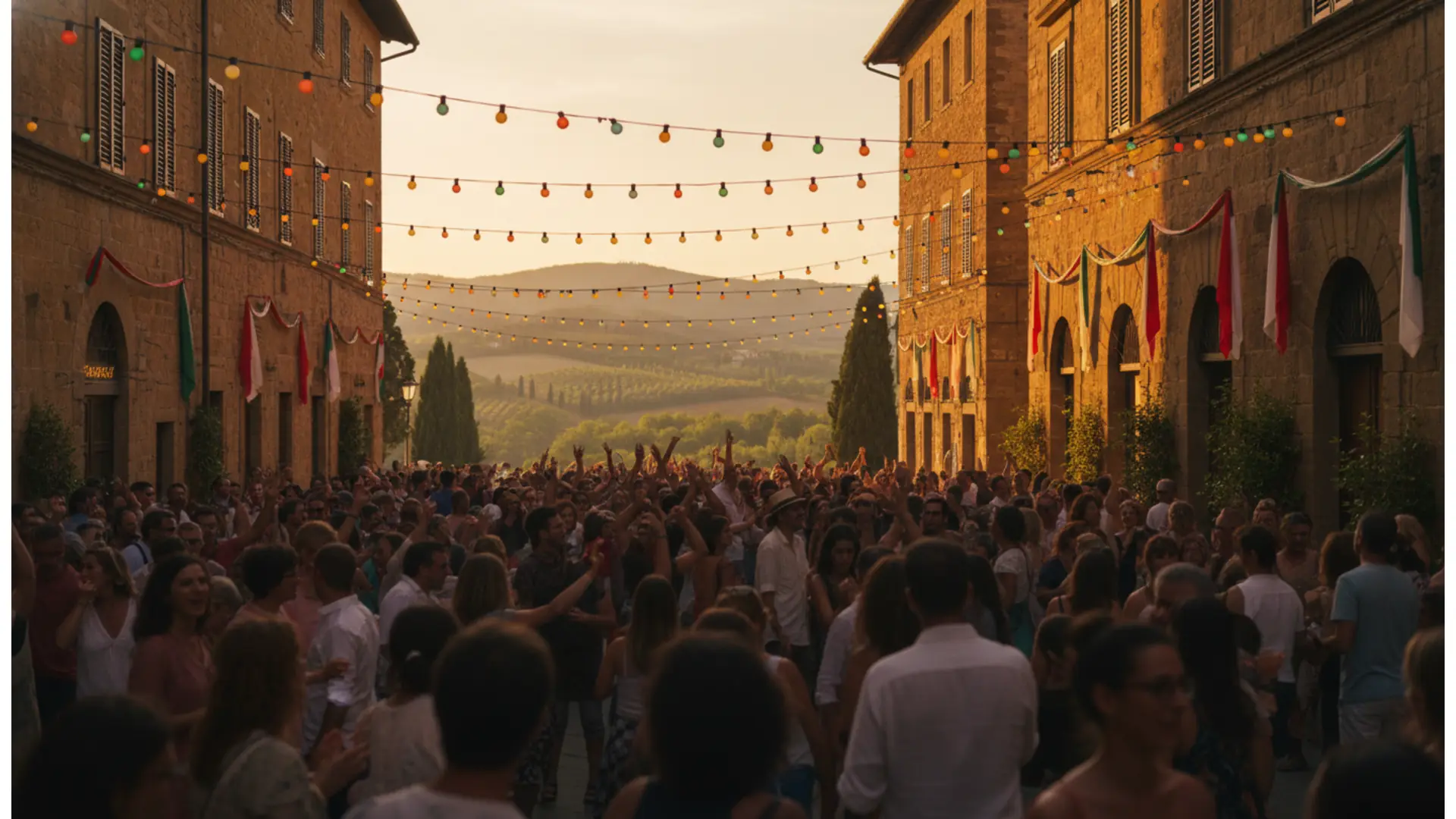
Luciese Historical Carnival – U Catalettu
The historic Carnival of Santa Lucia del Mela and the symbolic death of Cannaluvari
About U Catalettu
One of Sicily's most unique Carnival celebrations
The Luciese Historical Carnival, known to all as «U Catalettu», is a deeply rooted folk event in Santa Lucia del Mela, a small village in the province of Messina, Sicily. Every year during the Carnival season, the town's historic center transforms into a large open-air stage where tradition, popular satire, and conviviality merge into an ancient and unmistakable ritual.
Origins and meaning of the rite
The roots of the festival go back centuries: the first documentary evidence of the Luciese Carnival dates back to around 1580, when rites linked to the end of the carnival period and the beginning of Lent were already being celebrated. After a long period of decline during the 20th century, the tradition was rediscovered and revitalized in 2013 thanks to the efforts of local cultural associations. In 2015, the Luciese Historical Carnival was inscribed in the Register of Intangible Heritage of Sicily, a recognition that confirms its cultural and identity value.
The heart of the event is the symbolic death of Carnival, personified by the Cannaluvari mask. According to the ritual, Carnival is publicly tried in the square for the sin of gluttony: sentenced, he dies choking on a ricotta fraviola, the quintessential local pastry. His body is then placed on «u catalettu», the ancient stretcher once used to transport the sick and dying, and accompanied in a funeral procession to the final pyre.
The Lapi and the parade
Among the most spectacular elements of the festival are «i Lapi i Cannaluvari»: the three-wheeled Ape vehicles (known in dialect as «lapi») decorated and transformed into small floats, which parade through the village streets filled with color, masks, and satirical messages. The competition for the «most beautiful lapa» involves groups, families, and associations in a spirit of healthy competition and popular creativity.
The funeral procession is accompanied by prefiche (professional mourners), the traditional «cianci morto», who weep and sing the praises of the deceased Carnival, while a funeral band plays grotesque marches. The ritual concludes with the burning of the effigy in the main square, marking the end of the revelry and the beginning of the time of penance.
The Maccheroni and Pastry Festival
No Sicilian festival is complete without its gastronomic dimension. During the Luciese Carnival, the Maccheroni and Carnival Pastry Festival takes place: pasta with sauce, sausage, sandwiches, and wine accompany visitors, while typical sweets — chiacchiere, pignolata, and especially the ricotta fraviole — complete the experience with the authentic flavors of the Luciese tradition.
A defining local event
More than just a party, «U Catalettu» is a moment of strong cohesion for the community of Santa Lucia del Mela and a draw for visitors from neighboring towns in the province of Messina. Combining re-enactment, satire, music, and gastronomy, the Luciese Historical Carnival represents one of the most authentic and well-preserved Carnival rites in Sicily.
U Catalettu — edition 2026
For the 2026 edition, the Municipality of Santa Lucia del Mela renewed the organization of the Luciese Historical Carnival, publishing a call for interest in September 2025 aimed at local associations for the realization of the festival. The main events were concentrated during the Carnival days: the Lapi i Cannaluvari parades — the Ape vehicles decorated as allegorical floats — enlivened the historic center on the Sundays of February 8 and 15, while the «U Catalettu» ritual with the trial of Cannaluvari, his symbolic death, and the burning of the effigy was celebrated on Shrove Tuesday, February 17. The maccheroni and carnival pastry festival and moments dedicated to music and entertainment were also highlights.
Highlights U Catalettu 2026
Prices U Catalettu 2026
Practical information — U Catalettu
How to get there
Santa Lucia del Mela is located in the hinterland of the province of Messina, a few kilometers from the Tyrrhenian coast. By car, it can be reached via the A20 Messina-Palermo motorway, taking the Milazzo exit and continuing inland. The nearest train station is Milazzo, which is connected to the Sicilian regional network.
When
The festival takes place during the Carnival period, between late January and February, with the «U Catalettu» ritual on Shrove Tuesday. The Lapi parades enliven the Sundays of Carnival.
Admission and tips
Events in the historic center are free of charge. It is recommended to check the Facebook page of the Municipality and the organizing associations for the updated program and parade times. Wear comfortable clothing to move around the village streets.
Festival-goer photos
No photos yet. Share yours!
Share your photos
5 photos max, 5 MB per photo (JPG, PNG, WebP)
Noticed an error or missing information?
Help us keep this listing up to date. Every proposal is verified by our team before publication.
Festival-goer reviews
No rating yet — be the first!
No comments yet. Be the first!
Were you there?
Share your experience with the community.
Published by Valentin Contard, festival listings writer. Reviewed, corrected and approved by Christophe Contard, editor-in-chief. .
Where does it take place — U Catalettu
Centro storico