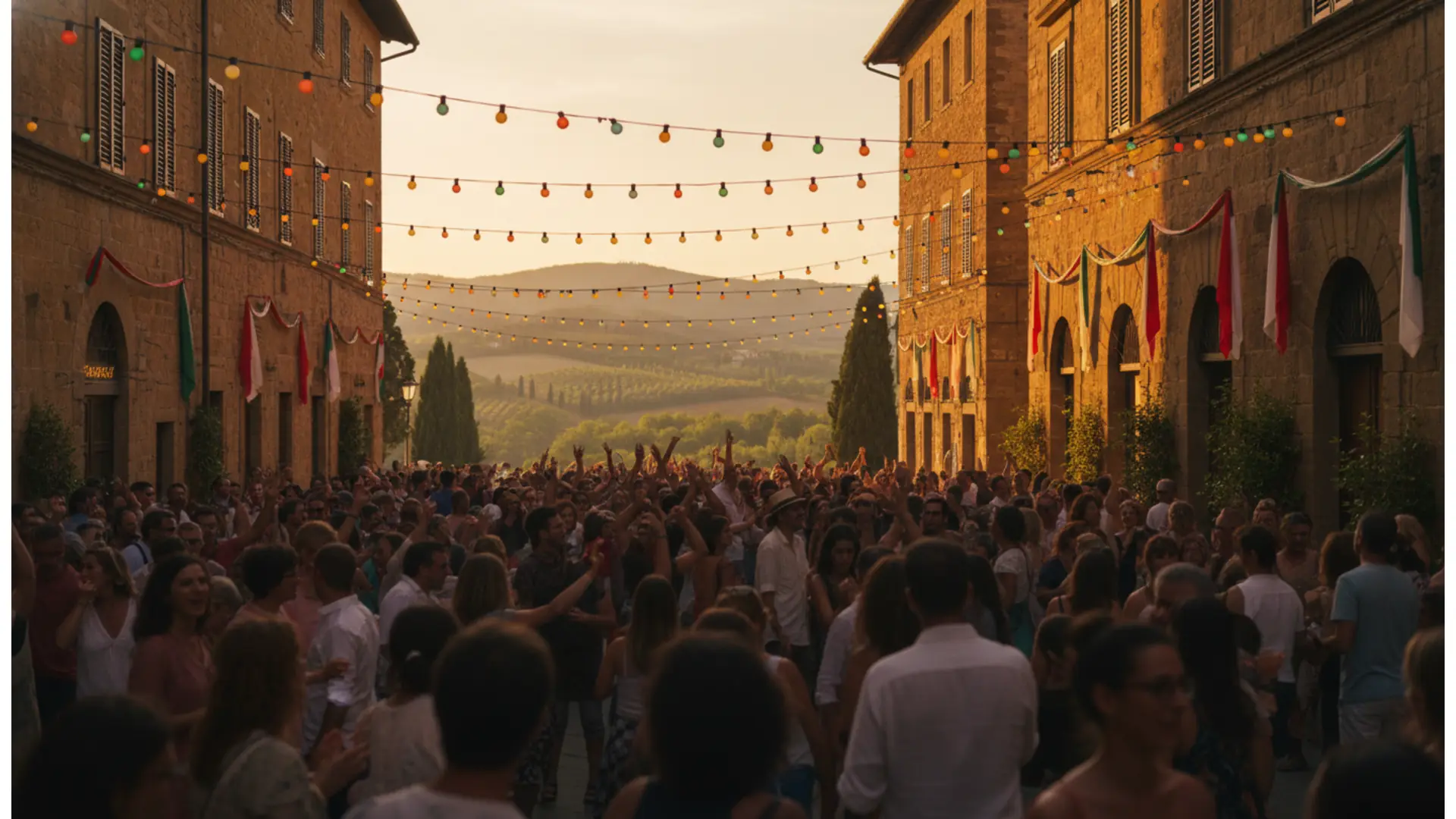
Latin American Carnival
The grand parade of Rome's Latin American communities between the Aventine Hill and the Baths of Caracalla
About Latin American Carnival
A Latin American carnival in the heart of Rome
The Latin American Carnival is the largest celebration of the Latin American communities residing in the capital. Born from the initiative of REDCLA (Network of Latin American communities in Rome), the event has established itself over the years as one of the most attended multicultural gatherings in the Municipality of Rome and the entire Lazio region. This is not merely a folkloric re-enactment: it is the way thousands of residents of Latin American origin share their culture with the city, transforming—as the organizers put it—curiosity into knowledge and diversity into a collective value.
The route: from the Aventine to Porta Capena
Since 2026, the parade has taken place along the Viale delle Terme di Caracalla, one of the most evocative stretches of archaeological Rome. The procession begins at Piazzale Numa Pompilio, at the foot of the Aventine Hill, and descends toward Piazza di Porta Capena and the Piazzale delle Vittime del Terrorismo, just a short walk from the Colosseum and the Circus Maximus. In previous editions, the parade took place along Via dei Fori Imperiali, between the Colosseum and Piazza Venezia: a change that has lost none of the scenery, with the ruins of the Severan baths serving as a natural backdrop for the feathered costumes.
The delegations and dances
Each edition brings together a dozen or more groups, each representing a country or cultural association. In recent years, delegations have included:
- Brazil — samba, capoeira, and performers in feathers, with live bands on floats;
- Bolivia — the Tinku and the Morenada, among the most anticipated moments of the parade;
- Ecuador — the Diablada Pillareña and traditional Andean dances;
- Peru, Colombia, and Chile — costumed processions with live music;
- El Salvador and, from 2026, Mexico, a new entry to the event.
Performances take place before a jury, but the spirit of the event is explicitly non-competitive: in 2026, groups appeared in alphabetical order, a choice made to eliminate any hierarchy, and the three awarded groups received equal recognition.
Atmosphere and audience
The Carnival takes place in the morning, starting around 9:00 AM and concluding in the early afternoon: a timeframe that makes it a perfect event for families and those who want to combine the festivities with a walk to the Circus Maximus or the Colosseum Archaeological Park. Admission is free and open to all: you simply line up along the avenue, where percussion, brass instruments, embroidered costumes, and groups of children in traditional dress alternate. It is one of the few occasions where the Roman public and migrant communities truly mingle, without barriers and without tickets.
Why it's worth attending
In a city defined by major institutional events, the Latin American Carnival is one of the most genuinely participatory gatherings of the Roman spring. Visitors from outside Rome will find a vivid portrait of the contemporary capital: multicultural, loud, and welcoming. Those who already live here know that on the first Sunday of May, the Viale delle Terme di Caracalla changes color.
Latin American Carnival — edition 2026
14th edition — May 3, 2026
For the first time, the parade left Via dei Fori Imperiali for the Viale delle Terme di Caracalla. The procession started at 9:00 AM from Piazzale Numa Pompilio, on the Aventine Hill, and headed down toward Piazza di Porta Capena. The delegations performed before the jury in alphabetical order, a choice made by REDCLA to eliminate any hierarchy between communities. Among the most applauded performances were the Bolivian Tinku, Brazilian samba and capoeira, and the Ecuadorian Diablada Pillareña. Three groups—Brazil Maravilha, Tinkus Roma, and Casa Mexico—received equal recognition, with a prize of 350 euros each, consistent with the non-competitive spirit of the event.
Programme Latin American Carnival 2026
Program for Sunday, May 3, 2026
- 7:00 AM — Road closure and setup along Viale delle Terme di Caracalla and Via Antonina
- 9:00 AM — Parade start from Piazzale Numa Pompilio (Aventine)
- Morning — Route along Viale delle Terme di Caracalla and delegation performances before the jury (dance, live music, traditional costumes)
- Arrival — Piazza di Porta Capena / Piazzale delle Vittime del Terrorismo, a short walk from the Colosseum
- 3:00 PM — Conclusion of the event and reopening of traffic
Countries represented: Bolivia, Brazil, Chile, Colombia, Ecuador, El Salvador, Mexico (2026 novelty), and Peru.
Highlights Latin American Carnival 2026
- Fourteenth edition, for the first time at the Baths of Caracalla
- Debut of the Mexican delegation
- Bolivian Tinku, Brazilian samba and capoeira, Ecuadorian Diablada Pillareña
- Parade in alphabetical order: no hierarchy among communities
- Shared prize for Brazil Maravilha, Tinkus Roma, and Casa Mexico
Prices Latin American Carnival 2026
Practical information — Latin American Carnival
How to get there
Metro B, Circo Massimo station (400 meters from Piazza di Porta Capena) or Colosseo. Numerous bus lines serve Viale Aventino and Piazza di Porta Capena. If arriving by train, get off at Roma Termini and take Metro B toward Laurentina.
By car
Strongly discouraged: during the event, transit is prohibited on Via Antonina and the side lanes of Viale delle Terme di Caracalla between Piazza di Porta Capena and Piazzale Numa Pompilio. It is best to leave your car in the suburbs and use the subway.
Prices
Free outdoor event, no booking required.
Tips
The parade starts early in the morning: arrive by 9:00 AM to find a spot along the barriers. A hat and water are useful, as shade along the avenue is scarce. The event is suitable for children and strollers.
Festival-goer photos
No photos yet. Share yours!
Share your photos
5 photos max, 5 MB per photo (JPG, PNG, WebP)
Noticed an error or missing information?
Help us keep this listing up to date. Every proposal is verified by our team before publication.
Festival-goer reviews
No rating yet — be the first!
No comments yet. Be the first!
Were you there?
Share your experience with the community.
Published by Valentin Contard, festival listings writer. Reviewed, corrected and approved by Christophe Contard, editor-in-chief. .
Where does it take place — Latin American Carnival
Viale delle Terme di Caracalla
Piazzale Numa Pompilio, 00153 Roma