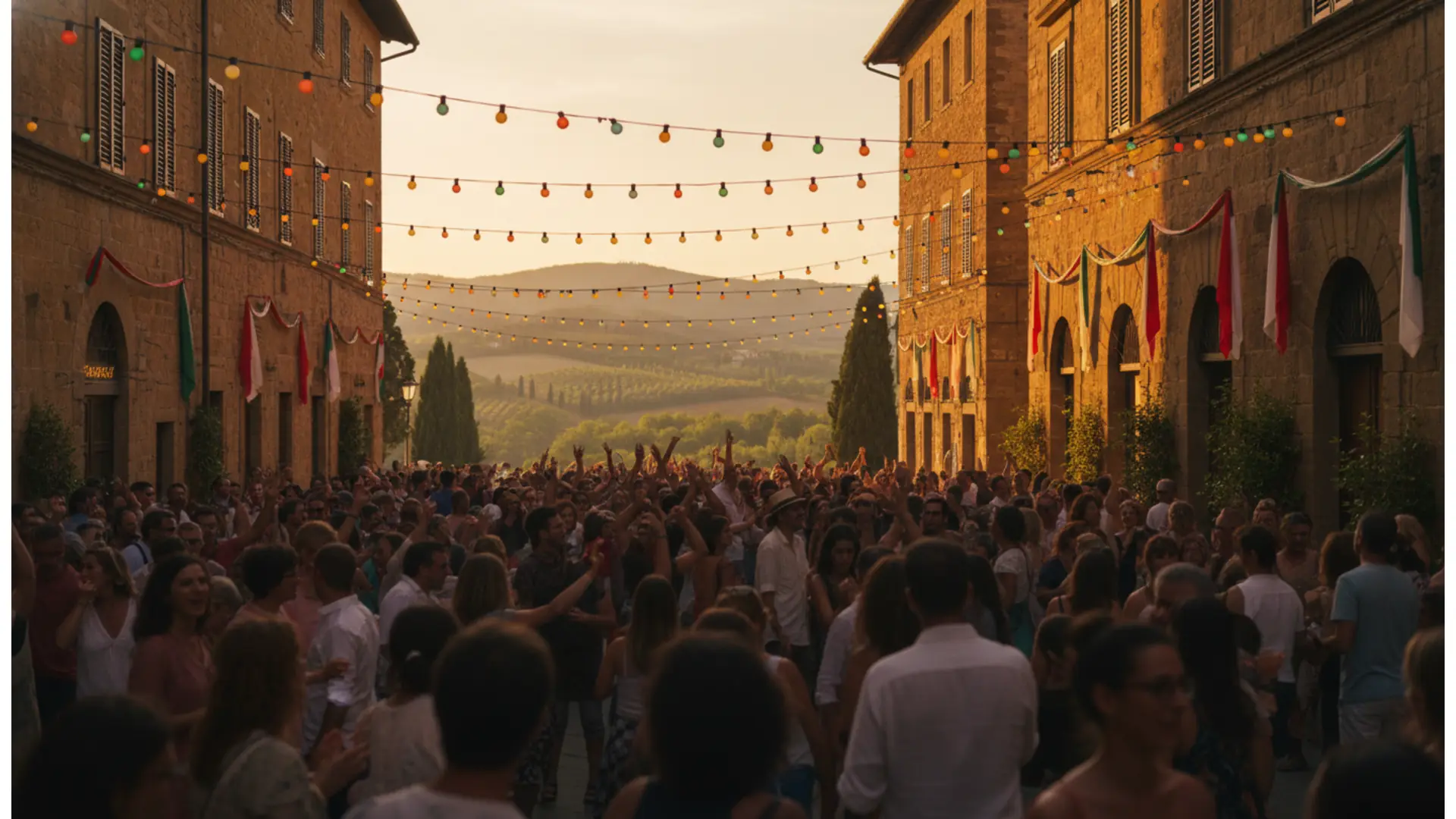
Lacedonia Carnival
Allegorical floats, the Carnival bonfire, and the Pignata breaking in the heart of Alta Irpinia
Edition 2026 not confirmed to date
This edition has not been confirmed by the organiser to date. We recommend checking before going.
About Lacedonia Carnival
The Lacedonia Carnival: A Three-Act Celebration
The Lacedonia Carnival is one of the most deeply rooted events in the calendar of this village in Alta Irpinia, in the province of Avellino, on the eastern border of Campania. It is not just a single day of celebration, but a three-act journey that guides the community from the days of Shrovetide to the threshold of Lent: the parade of allegorical floats, the burning of the Carnival effigy, and the breaking of the Pignata.
This is a village carnival in the truest sense of the word: the floats are born from the voluntary efforts of groups, families, and associations, and the masks are worn by people of all ages. Visitors do not witness a show packaged for tourism, but rather step into a celebration that the village prepares for itself.
The Allegorical Float Parade
The most visible moment of the event is the parade of allegorical floats. The procession traditionally starts from the area known as «piscilo» and, traveling along Corso Augustale, reaches Piazza Francesco De Sanctis, the heart of the village. Accompanying the floats are masks of all ages, music, and entertainment.
Each float tells a story—satirical, fairy-tale, or topical—built with papier-mâché, fabrics, and artisanal ingenuity. In documented editions, the Pro Loco has awarded prizes for the most beautiful float, the most creative masked group, and the best mask. The parade also features local school students, who in some editions have opened the festivities with traditional songs and dances through the streets of the center.
The Carnival Bonfire
On Shrove Tuesday, when the procession breaks up in Piazza De Sanctis, the time comes for the Carnival Bonfire: a wooden effigy, built for the occasion, is set ablaze before the gathered community. It is an ancient rite widespread in Southern Italy, staging the symbolic death of Carnival on the eve of Lent.
Around the bonfire, people drink a glass of wine, eat traditional 'chiacchiere' pastries, and dance: it is the most attended evening of the entire Lacedonia Carnival.
The Breaking of the Pignata
Closing the festivities on the first Sunday of Lent is the Rottura della Pignata (Breaking of the Pignata). In a large space—a threshing floor or the main square—terracotta pots called «pignate» are hung from a wire, which blindfolded participants take turns trying to strike.
Local sources recall that, more than a game, «in the past it was a ritual, an ancient tradition» used to test one's luck. The pots can contain candies and sweets, but also water or ash to make the challenge more playful; winners were often rewarded with a salami or a wheel of cheese. Amidst laughter, tarantellas, and dancing, the evening ends with shared wine and sweets: it is the most anticipated event for children and teenagers, and the true farewell to the festival.
Who Organizes the Event
The Lacedonia Carnival is organized by the Pro Loco «Gino Chicone» with the patronage of the Municipality of Lacedonia, the participation of local school students, and the collaboration of local associations: a collective effort that relies entirely on volunteering.
- Allegorical float parade from «piscilo» along Corso Augustale to Piazza De Sanctis
- Masks and masked groups of all ages
- Prizes for the most beautiful float, the most creative group, and the best mask
- Burning of the Carnival effigy on Shrove Tuesday
- Breaking of the Pignata on the first Sunday of Lent
- Chiacchiere, traditional sweets, and local wine
Lacedonia, a Village in Alta Irpinia
Lacedonia is a small municipality perched among the hills of Alta Irpinia, overlooking Puglia. Its calendar of traditions does not end with Carnival: the village celebrates the great Saint Joseph bonfires in March, the pilgrimage to the Madonna delle Grazie on the first Sunday of May, the feast of Saint Philip Neri, the feast of Saint Gerard Majella in October, and the patron saint Saint Nicholas on December 6th. Carnival is the winter link in this chain of popular rites.
When It Takes Place
The dates change every year because they follow the movable calendar of Carnival: the parade and bonfire take place on Shrove Tuesday, and the Pignata breaking on the first Sunday of Lent. Documented editions have taken place in the second half of February, with some postponements due to bad weather. An official program for 2026 has not yet been released: it is best to follow the channels of the Pro Loco «Gino Chicone» and the Municipality of Lacedonia.
Lacedonia Carnival — edition 2026
The Lacedonia Carnival, in the village of Alta Irpinia in the province of Avellino, returns according to the movable calendar of Carnival, generally in the second half of February. The structure of the festival is well-established: a parade of allegorical floats and masks from the «piscilo» along Corso Augustale to Piazza Francesco De Sanctis, the burning of the Carnival effigy on Shrove Tuesday, and the 'Rottura della Pignata' on the first Sunday of Lent.
At the time of writing this entry, no official calendar for 2026 has been released: dates, times, and program details are therefore not confirmed. To stay updated, it is best to follow the channels of the Pro Loco «Gino Chicone» and the Municipality of Lacedonia, which publish the program in the days immediately preceding the event.
Highlights Lacedonia Carnival 2026
Prices Lacedonia Carnival 2026
Practical information — Lacedonia Carnival
How to Get There
Lacedonia is located in Alta Irpinia, at the eastern end of the province of Avellino, in Campania, not far from the border with Puglia. It can be reached by car via the state and provincial roads connecting the towns in the area; the most convenient airports and train stations remain those of Naples and Foggia, with onward travel by road. The historic center, where the parade takes place, is entirely pedestrian.
Where the Events Take Place
The float procession starts from the «piscilo» area and continues along Corso Augustale to Piazza Francesco De Sanctis, where the Carnival Bonfire and the Breaking of the Pignata are held.
Costs
The event takes place on public streets and is free to attend: there is no ticketing.
Tips
In February, temperatures in Alta Irpinia are cold, especially on the evening of the bonfire: warm clothing and comfortable shoes are essential. Bring a mask, because here you experience Carnival by participating. Always check the updated program before traveling: in case of bad weather, events may be postponed by a few days, as has happened in the past.
Festival-goer photos
No photos yet. Share yours!
Share your photos
5 photos max, 5 MB per photo (JPG, PNG, WebP)
Noticed an error or missing information?
Help us keep this listing up to date. Every proposal is verified by our team before publication.
Festival-goer reviews
No rating yet — be the first!
No comments yet. Be the first!
Were you there?
Share your experience with the community.
Published by Valentin Contard, festival listings writer. Reviewed, corrected and approved by Christophe Contard, editor-in-chief. .
Where does it take place — Lacedonia Carnival
Centro storico, corso Augustale e piazza Francesco De Sanctis