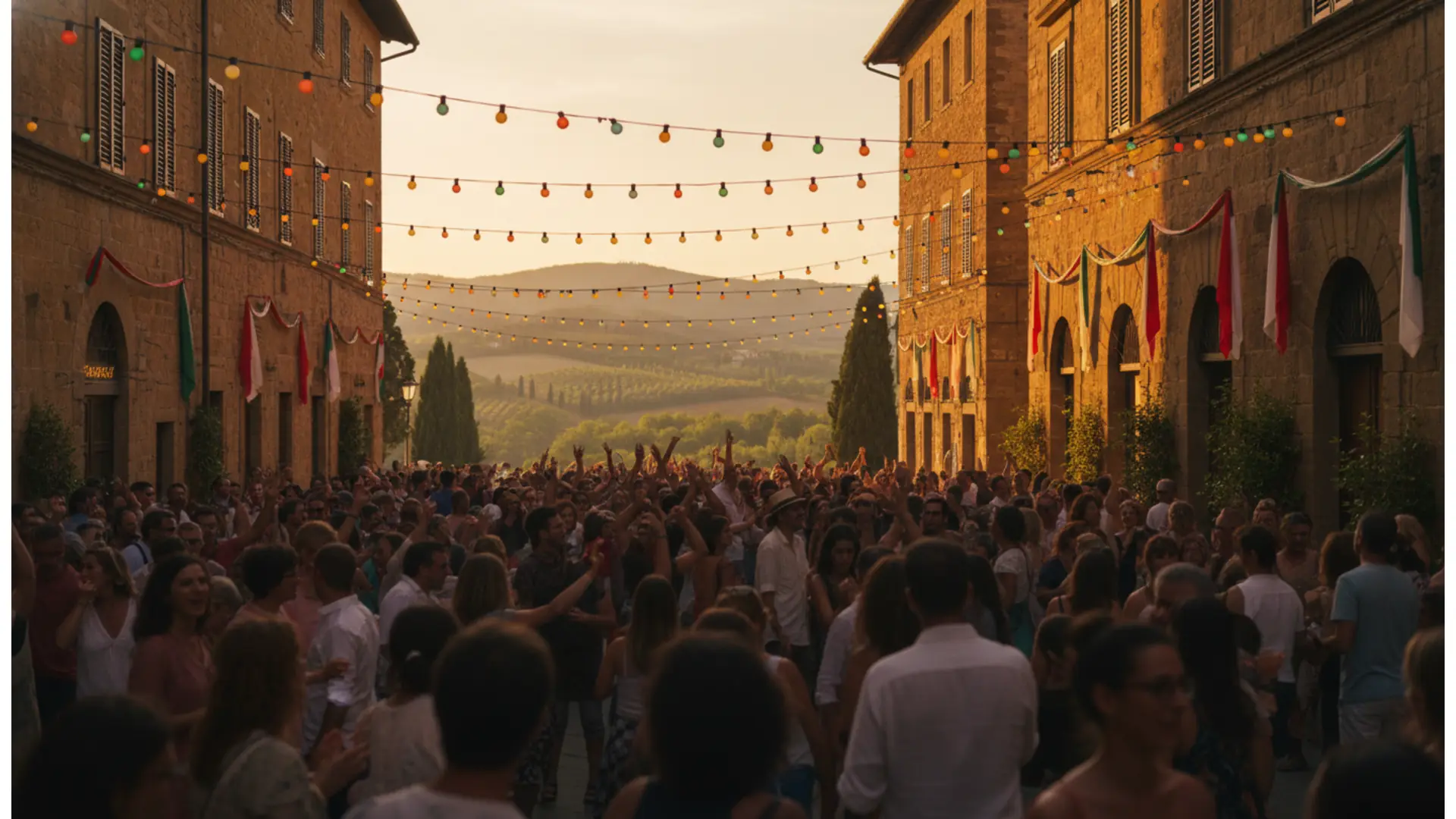
Historical Via Crucis of San Cipriano d'Aversa
The Passion of Christ comes to life on the streets of the Agro Aversano
About Via Crucis of San Cipriano
The historical Via Crucis of San Cipriano d'Aversa
In the heart of the Agro Aversano, in the province of Caserta, the town of San Cipriano d'Aversa hosts one of the most popular Passion re-enactments in Campania. Every year, on Palm Sunday, the town becomes a grand open-air stage: about two hundred costumed actors retrace the final hours of Jesus of Nazareth, from his condemnation to the crucifixion, ending with the deposition in the tomb and the Resurrection, which concludes the performance with a powerful emotional impact.
A long-standing tradition
Local history traces the origins of this sacred performance back to the 16th century, when the Via Crucis was held every four years. The frequency changed in 2013, when it became an annual event firmly tied to Palm Sunday. Since then, the festival has grown to become the defining event of Holy Week in San Cipriano, attracting audiences from neighboring towns in the Agro Aversano and the area north of Naples.
The procession, scene by scene
The gathering and departure traditionally take place in the courtyard of the former Palazzo Bevilacqua, on Via Roma, which is transformed for the occasion into the setting for Jesus' condemnation. From there, the procession moves through the town streets, alternating between living tableaux and moments of traditional procession. It is not a static show: the public follows the participants along the route and watches the scenes at the designated stations.
- The Condemnation: the trial before Pontius Pilate, with Herod, the soldiers, and the crowd.
- The Flagellation, historically staged in the Trivio area.
- The Walk to Calvary, featuring Jesus falling under the weight of the cross and his encounters with Veronica and the Samaritan woman.
- The Roman soldiers in armor and horse-drawn carriages, which add a dramatic flair to the procession.
- The Crucifixion, the deposition in the tomb, and the Resurrection, the final moment of the performance.
The 2026 edition and the new route
The 2026 edition took place on Sunday, March 29, Palm Sunday. The organizers announced it well in advance, introducing a new itinerary that, for the first time, passed through streets never before touched by the procession: a choice designed to involve more neighborhoods and better distribute the crowd along the route.
A ritual that also reaches television
The historical procession is filmed and broadcast on television: in recent years, the Via Crucis of San Cipriano d'Aversa has aired on Rete+Italia (channel 98) on Easter Sunday and Easter Monday, allowing those who cannot be present to follow the performance.
The context: Holy Week in Campania
In Campania, Holy Week is marked by deeply intense popular rituals: processions of the Mysteries, hooded confraternities, and living Via Crucis that involve entire towns. San Cipriano d'Aversa fits into this devotional landscape with a unique formula that combines the religious dimension of the procession with the theatrical nature of the historical re-enactment, the result of months of work on costumes, sets, and rehearsals. It is an event built by the community for the community, which is evident in the attention to detail and the number of volunteers involved.
How to experience the day
It is best to arrive early: on Palm Sunday afternoon, the streets along the route are closed to traffic and the center fills with spectators. Those who want to follow the entire performance should position themselves near the starting point; those who prefer to see only the main scenes can wait at the locations where the flagellation and crucifixion are staged, which remain the most intense moments of the day.
Via Crucis of San Cipriano — edition 2026
Via Crucis 2026: the Passion returns to the streets on March 29
Palm Sunday 2026 fell on March 29 and brought the living re-enactment of the Passion of Christ back to San Cipriano d'Aversa, in the province of Caserta. The event, awaited all year by the community, confirmed the formula that made the festival famous: about two hundred costumed participants, living tableaux set up along the route, Roman soldiers, and horse-drawn carriages.
The new route
The novelty of the 2026 edition was the itinerary. The organizers announced a new route in advance via the festival's social media channels: for the first time, the Via Crucis passed through some town streets previously excluded from the path, expanding neighborhood involvement and offering new observation points to the public.
The scenes
As per tradition, the performance retraced the final hours of Jesus of Nazareth: the condemnation, the flagellation, the walk to Calvary with the falls under the weight of the cross, the crucifixion, the deposition, and the final Resurrection. Participation was free and open, with the affected streets closed to traffic for the procession.
Programme Via Crucis of San Cipriano 2026
Highlights Via Crucis of San Cipriano 2026
Prices Via Crucis of San Cipriano 2026
Practical information — Via Crucis of San Cipriano
Where
San Cipriano d'Aversa (Postcode 81036), province of Caserta, Campania. The procession takes place through the streets of the town center; in recent editions, the departure was set in the courtyard of the former Palazzo Bevilacqua, on Via Roma.
When
Every year on Palm Sunday, in the afternoon. The 2026 edition was held on Sunday, March 29.
How to get there
- By car: reach it from the Asse Mediano following signs for Casal di Principe and San Cipriano d'Aversa, or from the Via Domitiana. On the afternoon of the event, some central arteries, including Corso Umberto, are closed to traffic: it is better to park in the outskirts and reach the center on foot.
- By train and bus: Aversa station, served by regional lines, then take a bus to San Cipriano d'Aversa. During the days of the event, Air Campania lines passing through the town may follow alternative routes.
Costs
Participation is free: the performance takes place on the street and there is no ticketing.
Tips
- Arrive at least an hour before the start to find a spot along the route.
- Wear comfortable shoes: you will be walking following the procession for a good part of the afternoon.
- Follow the instructions of the staff and law enforcement, especially near the scenes with horses.
- The period is that of Holy Week: you can combine the visit with other rituals in the Agro Aversano and the diocese of Aversa.
Festival-goer photos
No photos yet. Share yours!
Share your photos
5 photos max, 5 MB per photo (JPG, PNG, WebP)
Noticed an error or missing information?
Help us keep this listing up to date. Every proposal is verified by our team before publication.
Festival-goer reviews
No rating yet — be the first!
No comments yet. Be the first!
Were you there?
Share your experience with the community.
Published by Valentin Contard, festival listings writer. Reviewed, corrected and approved by Christophe Contard, editor-in-chief. .
Where does it take place — Via Crucis of San Cipriano
Centro storico di San Cipriano d'Aversa