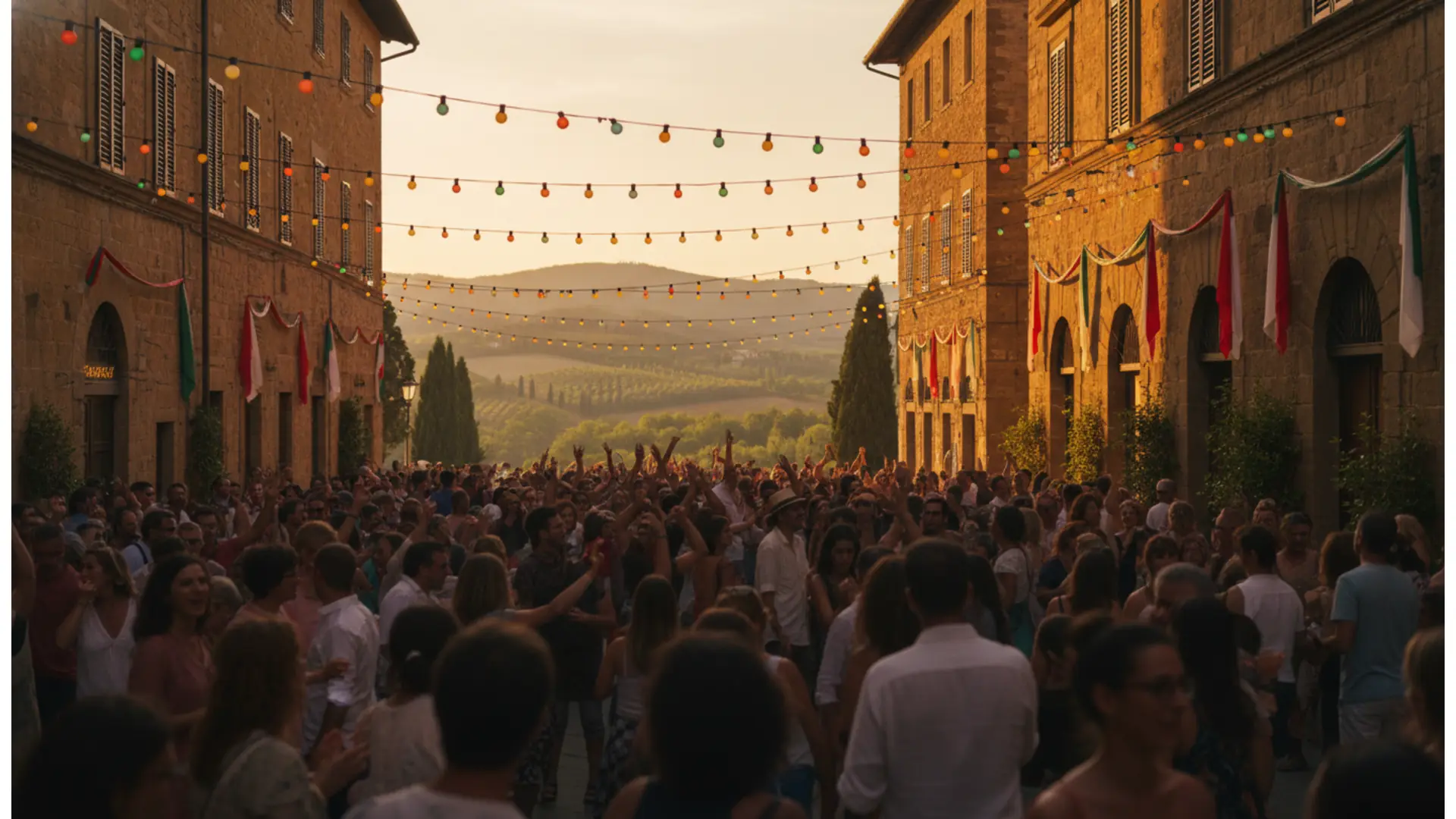
Gnocchi al Castrato Festival
The most anticipated evening of the Sant'Anna Festival in the heart of Sabina
Edition 2026 not confirmed to date
This edition has not been confirmed by the organiser to date. We recommend checking before going.
About Gnocchi al Castrato
An evening with the scent of Sabina
The Gnocchi al Castrato Festival takes place in Casali di Poggio Nativo, a hamlet of the municipality of Poggio Nativo in the province of Rieti, Lazio. It is not an isolated event; it is one of the highlights of the Sant'Anna Festival, the long summer celebration that has brought the village to life for nearly half a century, spanning about ten days between the second half and the end of July. Along with the Fregnacce Festival, the gnocchi festival represents the most iconic and popular gastronomic moment of the event.
The dish: handmade gnocchi and castrato sauce
The undisputed star is the castrato sauce, a slow-cooked mutton ragù that, in Sabina cuisine and throughout the central Apennines, serves as a direct link to the history of transhumance and pastoral farming. Simmered for hours with tomatoes, wine, and herbs, it is served over gnocchi handmade by the volunteers of the Committee. It is a hearty, flavorful dish meant to be enjoyed outdoors in good company: the festival is not a tourist showcase, but a village kitchen opening its tables to everyone.
Edition after edition, since 1999
The event has now surpassed its twenty-seventh edition: the 26th took place in 2024, and the 27th in 2025, as part of the 47th Sant'Anna Festival. This is a rare continuity for a village of only a few hundred inhabitants, made possible by the volunteer work of the Comitato Casali di Poggio Nativo, which every summer organizes food stalls, concerts, card tournaments, sports events, and a grand fireworks finale.
More than just food: music and village festivities
After dinner, which usually begins around 8:00 PM, the evening continues with live music in the square. In recent years, local cover bands have kept multiple generations singing and dancing late into the night. The format is that of a classic Italian patronal feast, where the stage is just a few meters from the dining tables, creating a seamless connection between the performers and the community.
- Where: Casali hamlet, Poggio Nativo (RI), Sabina
- When: As part of the Sant'Anna Festival, second half of July
- Signature dish: Handmade gnocchi with castrato sauce
- Extras: Live music, tournaments, fireworks to close the festival
Poggio Nativo and the Sabina region worth visiting
Poggio Nativo sits on a rocky spur overlooking the Farfa Valley, about 57 kilometers from Rome. The village preserves its medieval herringbone layout, with narrow, stepped alleys, a 16th-century gate, and a fortress at the opposite end of the town. The church of the Santissima Annunziata and the monastic complex of San Paolo, founded in the mid-14th century with its inlaid wooden choir and 17th-century altarpiece, are well worth a visit. Nearby lies Santacittarama, the first Theravada Buddhist monastery in Italy, open to visitors since 1990.
The area is known for its Sabina DOP extra virgin olive oil and cherries; a visit to the festival can easily be combined with purchasing local products and exploring the villages of the Rieti Sabina. The Battifratta cave, a prehistoric site frequented since the Middle Paleolithic, has yielded a 7,000-year-old clay Neolithic figurine, testifying to the ancient human presence in these hills.
Why it's worth going
Those looking for an authentic festival, not built for mass tourism, will find exactly that here: affordable prices, generous portions, a dish not easily found elsewhere, and a community that spends days in the kitchen. It is also a great way to discover Sabina in the summer, when the evenings cool down and the villages fill with people until late at night.
Gnocchi al Castrato — edition 2026
2026 Edition
The 2026 Sant'Anna Festival is confirmed in Casali di Poggio Nativo, in the province of Rieti. The Fregnacce Festival, another historic event of the same celebration, took place from July 17 to 19, 2026, with stalls opening at 8:00 PM. The Gnocchi al Castrato Festival, which in previous years has been held in the second half of the festival, is expected in the last ten days of July, but the official date has not yet been released.
What to expect
The established format includes the evening opening of food stalls around 8:00 PM, featuring handmade gnocchi topped with castrato sauce, followed by live music in the square. The festival also includes card tournaments, sports events, and concludes with a fireworks display.
For date confirmation and the detailed program, it is best to consult the Facebook page of the Comitato Casali di Poggio Nativo, which publishes the flyer with the schedule and musical guests every year.
Programme Gnocchi al Castrato 2026
Highlights Gnocchi al Castrato 2026
Prices Gnocchi al Castrato 2026
Practical information — Gnocchi al Castrato
How to get there
By car from Rome: take the A1 motorway, exit at Fiano Romano, then follow the SS4 Salaria towards Rieti and take the turn-off for Poggio Nativo (about one hour). From Rieti, take the Salaria south for about 30 kilometers. The Casali hamlet is reached via the provincial road connecting Poggio Nativo to the Salaria.
Train station
The most convenient stations are on the FL1 Rome-Orte line (Poggio Mirteto Scalo, about 20 minutes by car); from there, you must continue by private vehicle or taxi, as evening public transport is very limited.
Costs and reservations
Entry to the festival area is free. You pay for each dish at the counter, with typical village festival prices. Table reservations are generally not available: it is best to arrive early when the stalls open.
Tips
Bring cash, as not all stalls accept electronic payments. Summer evenings in the hills can be cool: a light sweater is useful. Parking is available in spaces along the road; arriving early is recommended.
Information
For updates on dates and the program, check the Facebook page of the Comitato Casali di Poggio Nativo and the website of the Municipality of Poggio Nativo.
Festival-goer photos
No photos yet. Share yours!
Share your photos
5 photos max, 5 MB per photo (JPG, PNG, WebP)
Noticed an error or missing information?
Help us keep this listing up to date. Every proposal is verified by our team before publication.
Festival-goer reviews
No rating yet — be the first!
No comments yet. Be the first!
Were you there?
Share your experience with the community.
Published by Valentin Contard, festival listings writer. Reviewed, corrected and approved by Christophe Contard, editor-in-chief. .
Where does it take place — Gnocchi al Castrato
Frazione Casali di Poggio Nativo
Viale Roma, 02030 Poggio Nativo