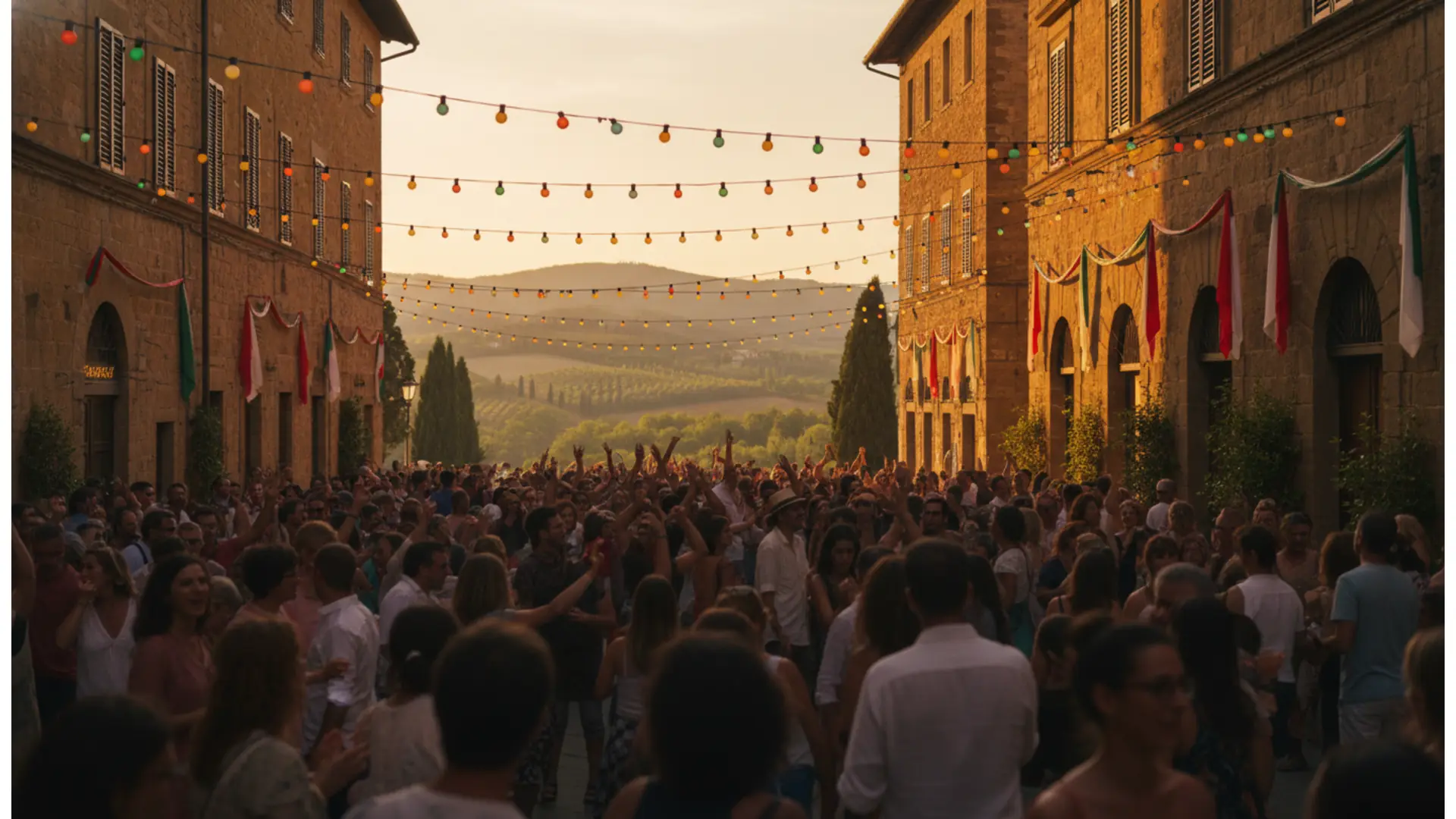
Gigli Festival of Casamarciano
The Nola tradition of wooden obelisks comes alive in the heart of the Vesuvius area
About Gigli of Casamarciano
A festival rooted in the Nola tradition
The Gigli Festival of Casamarciano is the local expression of one of the most famous and ancient traditions in Campania: the Gigli Festival of Nola, recognized by UNESCO in 2013 as an intangible cultural heritage of humanity as part of the network of Italian "Great Shoulder-Borne Processional Structures." In Casamarciano, a small municipality in the Metropolitan City of Naples nestled in the Nola area at the foot of Mount Vesuvius, this centuries-old legacy lives on with the same intensity and popular fervor.
What are the Gigli?
At the heart of the festival are the Gigli, towering wooden obelisks that can reach considerable heights and weigh several tons. Covered in papier-mâché decorations, stucco, and ornaments that change every year, the Gigli are carried on the shoulders by teams of porters, known as cullatori, organized into paranze. To the rhythm set by brass bands, the structures are swayed and made to "dance" along the narrow streets of the town in a display of balance, strength, and collective coordination.
Devotion and the bond with Saint Paolino
The tradition of the Gigli originated in Nola in honor of Saint Paolino, the bishop who, according to legend, was welcomed by his people upon his return from long imprisonment with great flowering lilies, which later became a symbol of faith and love for the Patron Saint. From those flowers carried in procession, the wooden obelisks that still characterize the festival throughout the Nola and Vesuvius area, including Casamarciano, were born over the centuries.
The role of committees and the community
In Casamarciano, the festival is brought to life by the town's committees, each with its own paranza and band: among them is the historic Comitato Amicizia, which is very active in the preparation and musical rehearsals preceding the event. The Gigli Festival is not just a spectacle, but a rite of collective participation that involves entire families and generations, through rehearsals, setup, decorations, and the anticipation of the eve.
A defining appointment for Campania
Attending the dance of the Gigli in Casamarciano means experiencing one of the most authentic expressions of Campanian folklore up close, far from the major tourist flows and immersed in the most genuine dimension of the town. The festival attracts residents, returning emigrants, and visitors from neighboring towns, confirming how this tradition remains a powerful bond of identity and community in the province of Naples and the entire Campania Region.
Gigli of Casamarciano — edition 2026
Gigli Festival of Casamarciano 2026
The Gigli Festival of Casamarciano 2026 was held on May 8, 9, and 10. As per tradition, the town's committees prepared for the event for weeks, including setting up the obelisks, decorating, and rehearsing music, which was also captured on social media by local groups like the Comitato Amicizia.
During the festival days, the Gigli were carried on the shoulders by teams of cullatori and made to "dance" to the rhythm of the bands, in a succession of parades and spectacular moments along the streets of Casamarciano's center. The community's participation, as every year, was the beating heart of the event.
Programme Gigli of Casamarciano 2026
Highlights Gigli of Casamarciano 2026
Prices Gigli of Casamarciano 2026
Practical information — Gigli of Casamarciano
How to get there
Casamarciano is located in the Metropolitan City of Naples, in the Nola area. By car, it can be reached via the A16 motorway (Nola exit) or the SS7bis; by train, the reference station is Nola, on the Circumvesuviana line, from where you can continue by local bus.
Admission and proceedings
The festival takes place in the streets and squares of the town center and is free to attend. It is recommended to follow the social media channels of the local committees for updated times of the parades and dances.
Tips
Wear comfortable shoes and be careful during the dances of the obelisks, which require clear space along the route. The festival days can be very crowded: it is better to arrive early.
Festival-goer photos
No photos yet. Share yours!
Share your photos
5 photos max, 5 MB per photo (JPG, PNG, WebP)
Noticed an error or missing information?
Help us keep this listing up to date. Every proposal is verified by our team before publication.
Festival-goer reviews
No rating yet — be the first!
No comments yet. Be the first!
Were you there?
Share your experience with the community.
Published by Valentin Contard, festival listings writer. Reviewed, corrected and approved by Christophe Contard, editor-in-chief. .
Where does it take place — Gigli of Casamarciano
Centro storico di Casamarciano