Festival of the Translation of the Relics of Saint Januarius (Vettica Maggiore)
The spring patronal feast under the majolica-tiled dome of Praiano
About Saint Januarius in Vettica Maggiore
A community celebration overlooking the sea
On the second Sunday of May, the hamlet of Vettica Maggiore, in the municipality of Praiano (Province of Salerno, Campania), gathers around its patron saint for the Festival of the Translation of the Relics of Saint Januarius. This is more than just a liturgical event; it is a moment of identity where this Amalfi Coast village renews an ancient bond with the bishop and martyr of Benevento, venerated here for centuries with deep popular devotion.
What is celebrated
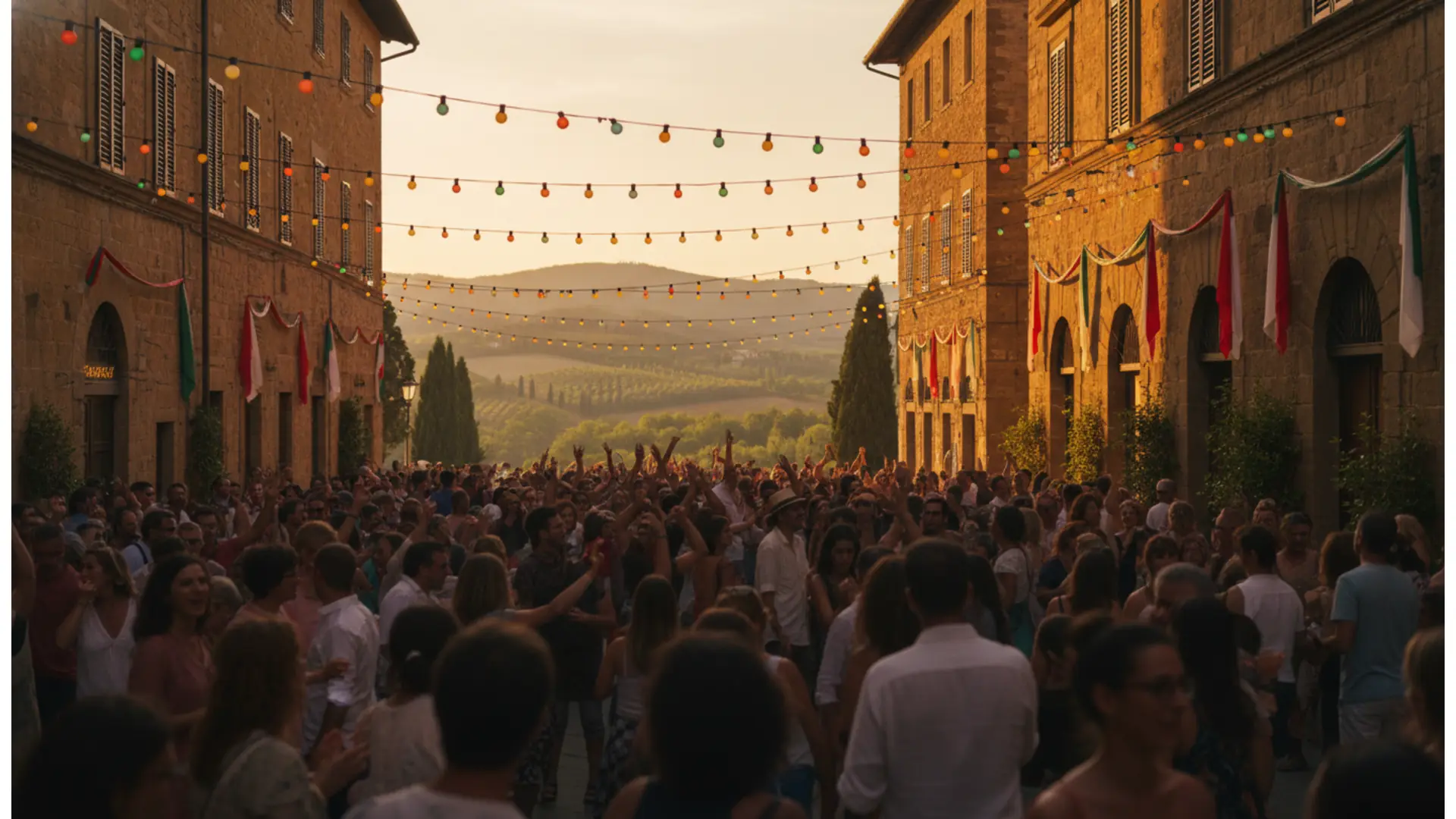
The festival commemorates the translation, or the transfer of the Saint's remains from Pozzuoli to Naples—an episode that has historically solidified the relationship between the martyr and the entire Campania region. While in Naples the May recurrence is linked to the famous miracle of the liquefaction of the blood, in Vettica Maggiore the day takes on the intimate and familiar character of a local patronal feast. The square is adorned with lights and decorations, the scent of sweets fills the air, firecrackers announce the passage of the statue, and bells mark the hours from the first light of dawn.
The church with the majolica dome
The heart of the festival is the Church of Saint Januarius, one of the most photographed monuments on the coast. The parish building dates back to the 15th century and was rebuilt between the late 16th and 17th centuries. It features a Renaissance layout, a Latin cross plan, and, most notably, a dome covered in polychrome majolica tiles that reflects the blue of the sea and is visible from afar along the Amalfi Drive. Inside, it houses valuable works, including the 1696 Annunciation, the Martyrdom of Saint Bartholomew attributed to Giovan Bernardo Lama, and a late 16th-century Holy Family, as well as the Rosary altar linked to the memory of the Battle of Lepanto and the altar dedicated to Saint Januarius.
How the day unfolds
The rhythm is the timeless one of coastal patronal feasts:
- In the morning, community masses, culminating in the solemn celebration accompanied by the parish choir;
- The traditional offering of the candle by the Mayor of Praiano, a gesture that renews the pact between the civil community and its patron;
- In the late afternoon, the procession, with the statue of the Saint leaving the church to travel through the village streets along Via Gennaro Capriglione, amidst hymns, prayers, and celebratory gunfire;
- In the evening, the solemn mass on the churchyard followed by the fireworks display before the statue is returned to its place.
Saint Januarius «'o patanaro»
The devotion in Vettica Maggiore has a unique trait. In the local dialect, the patron was affectionately called Saint Januarius «'o patanaro» (the potato man) or «'o poveriello» (the little poor one): a nickname born from gratitude for good potato harvests, which were long an essential food and economic resource for the village families clinging to the terraces between Mount Sant'Angelo a Tre Pizzi and the sea. It is a sign of a rural and maritime religiosity that coexists with today's tourist vocation.
Three celebrations in one year
In Vettica Maggiore, Saint Januarius is not celebrated just once: in addition to the May translation, there is the September 19th liturgical feast of the martyr, with a broader civil program that has featured coastal marching bands over the years, and the December 16th commemoration of the patronage invoked against the eruptions of Vesuvius. The May festival, however, remains the most intimate, opening the spring and preceding the arrival of the tourist season.
Praiano during the festival
Attending the procession means seeing the Amalfi Coast in its most authentic version, far from the peak tourist months. Piazza San Gennaro, with its majolica-tiled churchyard and a view stretching from Positano to Capri, is one of the most beautiful viewpoints on the coast. On the day of the festival, it becomes the town's living room, where locals who have returned for the occasion mingle with visitors. Those arriving can combine the festival with a walk to the nearby Gavitella beach, the Torre a Mare, or the start of the Path of the Gods, which has one of its access points right in Praiano.
Saint Januarius in Vettica Maggiore — edition 2026
The 2026 edition
The 2026 edition of the patronal feast of Vettica Maggiore took place on Sunday, May 10, on the second Sunday of the month according to local custom. The day began very early, with the parish bells calling the village, and continued with community masses and the solemn morning celebration, enlivened by the parish choir and concluded by the traditional offering of the candle by the Mayor of Praiano.
The procession and fireworks
In the late afternoon, the statue of Saint Januarius left the church to travel through the village streets along Via Gennaro Capriglione, accompanied by songs, prayers, and celebratory gunfire announcing the Saint's passage. In the evening, the solemn outdoor mass preceded the fireworks display and the repositioning of the statue. Piazza San Gennaro, illuminated by lights and overlooking the sea, served as the center of the festival, drawing locals, coastal faithful, and visitors alike.
Programme Saint Januarius in Vettica Maggiore 2026
Sunday, May 10, 2026 — Vettica Maggiore, Church of Saint Januarius
- 7:00 AM — Community Holy Mass
- 9:00 AM — Community Holy Mass
- 11:00 AM — Solemn Mass with the traditional offering of the candle by the Mayor of Praiano
- 6:30 PM — Procession with the statue of Saint Januarius, departing from Via Gennaro Capriglione
- 7:30 PM — Solemn mass on the churchyard, followed by a fireworks display and repositioning of the statue
Throughout the day, the square is animated by lights, decorations, and stalls selling traditional sweets.
Highlights Saint Januarius in Vettica Maggiore 2026
- The 11:00 AM solemn mass with the candle offering by the Mayor
- The evening procession of the statue of Saint Januarius through the village alleys
- The final fireworks display over the sea
- The polychrome majolica-tiled dome of the parish church, a symbol of the Coast
- Piazza San Gennaro decorated for the festival, a natural viewpoint over Positano and Capri
Prices Saint Januarius in Vettica Maggiore 2026
Practical information — Saint Januarius in Vettica Maggiore
Where it takes place
Church of Saint Januarius and Piazza San Gennaro, Vettica Maggiore hamlet, 84010 Praiano (SA). The procession follows Via Gennaro Capriglione, the main axis of the village.
How to get there
By car: State Road 163 Amalfitana, between Positano and Amalfi. Parking is limited and paid: on festival days, it is best to arrive early or leave the car outside the center. By bus: SITA Sud lines Amalfi–Positano–Sorrento, stop Praiano/Vettica Maggiore. By train: Salerno or Vietri sul Mare station, then bus or seasonal ferry to Amalfi. By plane: Naples Capodichino Airport, about two hours away.
Costs
Religious celebrations, the procession, and the fireworks display are free and open to the public.
Tips
The village is full of stairs and steep alleys: comfortable shoes are essential. For the evening procession, it is advisable to position yourself early in the church square, which offers the best view of the fireworks and the sea. As this is a religious function, respectful attire is recommended inside the church.
Festival-goer photos
No photos yet. Share yours!
Share your photos
5 photos max, 5 MB per photo (JPG, PNG, WebP)
Noticed an error or missing information?
Help us keep this listing up to date. Every proposal is verified by our team before publication.
Festival-goer reviews
No rating yet — be the first!
No comments yet. Be the first!
Were you there?
Share your experience with the community.
Published by Valentin Contard, festival listings writer. Reviewed, corrected and approved by Christophe Contard, editor-in-chief. .
Where does it take place — Saint Januarius in Vettica Maggiore
Chiesa di San Gennaro e Piazza San Gennaro, Vettica Maggiore
Piazza San Gennaro, 84010 Praiano