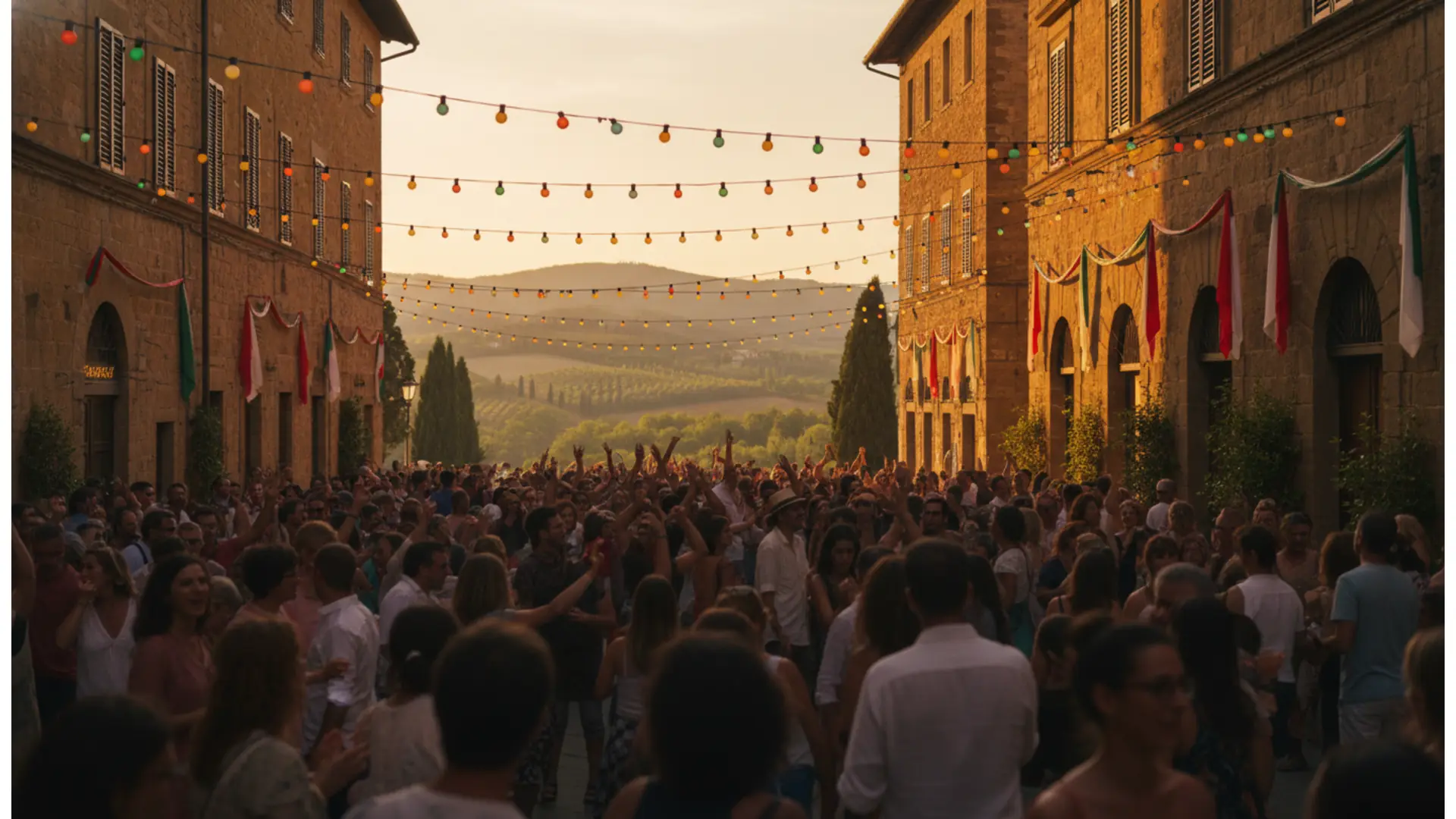
Festival of the Autari of Saint Joseph
Votive altars and the Holy Family banquet in Mirabella Imbaccari
About Autari of Saint Joseph
The Festival of the Autari of Saint Joseph
Every year in mid-March, the town of Mirabella Imbaccari, located in the Calatino area of the Catania province, celebrates one of its most cherished traditions: the Festival of the Autari of Saint Joseph. Saint Joseph is venerated here as the town's co-patron alongside Our Lady of Grace, and the festival centers on the autari, the votive altars that devotees set up in their homes in his honor.
The Votive Altars
The autari are true works of art that families spend days preparing. On tiered wooden structures covered with white embroidered linens, they arrange oranges, laurel branches, flowers, candles, statues, and sacred images, alongside fruit, sweets, oil, and wine. Tradition dictates that one should visit at least seven of them, walking from house to house through the town. According to the oldest customs, lamentanze—devotional chants passed down through generations—are sung before the altars.
The Votive Breads
A central element of the festival is the votive bread, hand-shaped and rich in symbolic meaning: u Pagnoccu, elongated in shape, represents Saint Joseph; a Cuddura, decorated with roses, evokes the Madonna; and u Gaddu, shaped like a rooster, symbolizes the Baby Jesus. Alongside the bread, one finds traditional dishes: pasta with beans and wild fennel, sfinge, cassatedde, and other specialties of Sicilian peasant cuisine.
The Holy Family Banquet
The most moving moment is the Holy Family banquet: three people chosen from among the town's neediest residents impersonate the Holy Family. According to tradition, the Madonna must be unmarried, the Child under thirteen, and Saint Joseph a married man. After the blessing, the "three Saints" consume the ceremonial meal, which begins with the breaking of the blessed bread and concludes with pasta with beans and wild fennel; the leftover food is distributed, renewing an ancient gesture of charity.
Roots and Symbolism
The festival has its roots in ancient agrarian rites linked to the cult of Demeter, which were Christianized in the Middle Ages through the figure of Saint Joseph, protector of families and workers, invoked to ensure abundant harvests. The lavishly decorated altar has always been a sign of faith and gratitude for life and for the hardships overcome.
The Procession
The festivities culminate on March 19th, when the statue of Saint Joseph is carried in procession along the traditional route through the alleys of Mirabella Imbaccari. The day closes in the evening with the blessing of the faithful and fireworks, a luminous seal on a festival that weaves together devotion, folk art, and gastronomic tradition in the heart of Sicily.
Autari of Saint Joseph — edition 2026
During the 2026 edition, the devotees of Mirabella Imbaccari set up the autari of Saint Joseph in their homes, opening them to visitors in the days leading up to the festival, following the custom of visiting at least seven of them.
The procession of the statue of Saint Joseph was held on the afternoon of March 19, 2026, along the traditional route through the town's alleys, accompanied by the Holy Family banquet and votive breads. The festivities closed in the evening with the blessing and fireworks.
Programme Autari of Saint Joseph 2026
- Days preceding March 19: setup and visits to the autari in the homes of devotees, with the singing of lamentanze
- March 19, afternoon: solemn procession of the statue of Saint Joseph
- March 19, evening: blessing of the faithful and fireworks
Highlights Autari of Saint Joseph 2026
- Visits to the autari, the votive altars set up in the homes of devotees
- Holy Family banquet with the "three Saints"
- Votive breads: Pagnoccu, Cuddura, and Gaddu
- Procession of the statue and fireworks
Prices Autari of Saint Joseph 2026
Practical information — Autari of Saint Joseph
Getting there
Mirabella Imbaccari is located in the province of Catania, in the Calatino area. By car, it can be reached via the SS117bis and the provincial roads connecting Caltagirone and San Michele di Ganzaria. The nearest airport is Catania-Fontanarossa, about an hour and a half away by car.
When
The festival takes place in March: visits to the altars occur in the days leading up to March 19th, with the solemn procession held on the afternoon of March 19th.
Admission
Participation in the festival and visits to the autari are free.
Festival-goer photos
No photos yet. Share yours!
Share your photos
5 photos max, 5 MB per photo (JPG, PNG, WebP)
Noticed an error or missing information?
Help us keep this listing up to date. Every proposal is verified by our team before publication.
Festival-goer reviews
No rating yet — be the first!
No comments yet. Be the first!
Were you there?
Share your experience with the community.
Published by Valentin Contard, festival listings writer. Reviewed, corrected and approved by Christophe Contard, editor-in-chief. .
Where does it take place — Autari of Saint Joseph
Centro storico di Mirabella Imbaccari