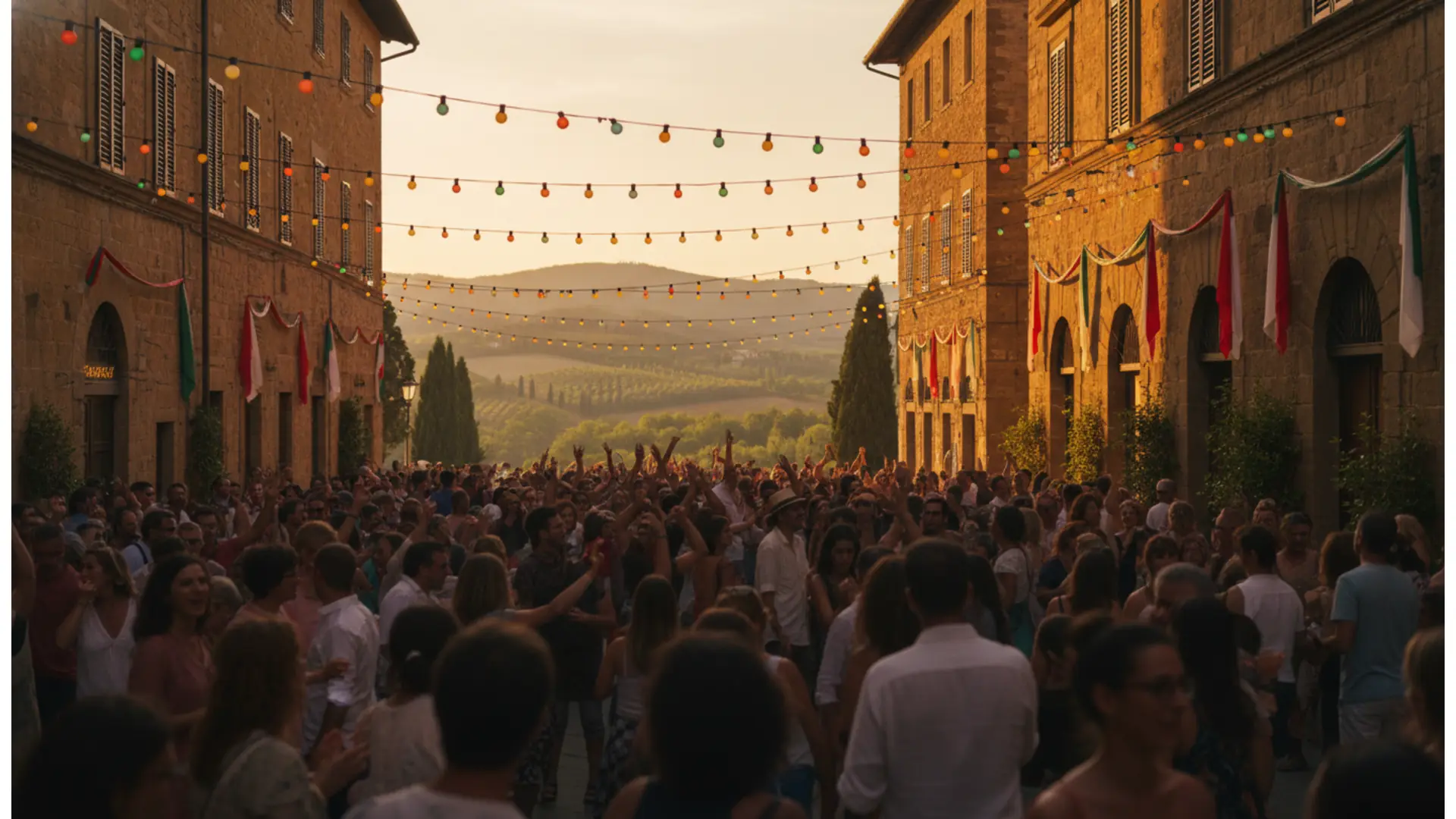
Festival of Saint Calogero the Hermit (Bread Festival)
Votive breads, the procession of the Black Saint, and rural re-enactments in Caltavuturo
About Saint Calogero Festival
A celebration of faith and bread in the heart of the Madonie
Every year, on the first Sunday of July, the town of Caltavuturo — a village perched in the Madonie mountains, in the province of Palermo — gathers around Saint Calogero the Hermit, the famous "Black Saint" venerated throughout Sicily as a miracle worker and healer. The festival, organized by the Confraternity of Saint Calogero, is also known as the Bread Festival due to the spectacular tradition of votive breads, which remains its most iconic and defining feature.
Votive breads: the soul of the festival
In the days leading up to the celebration, local women bake the so-called Pani di San Calogero at home, using natural yeast and sugar instead of salt. Their shapes are never random: they mold pupu and pupidda (boy and girl), tistuzza (head), amma (leg), pedi (foot), manu (hand), cori (heart), and ucchizzu (eye). Each shape represents the body part for which healing is sought, as a votive offering or a plea to the healing Saint. On the Saturday before the procession, following Holy Mass at the Church of the Immaculate Conception, baskets filled with bread are arranged on a large table before the altar, blessed by the priest, and distributed to all those present.
The procession of the Black Saint
Sunday is the highlight of the event. Holy Masses are held throughout the morning, while cannon fire announces the festival to the town. In the afternoon, following the traditional Children's Race along Via Riscossa, the procession of the statue of Saint Calogero and his relic begins through the town streets, accompanied by a brass band. It is a moment of deep popular devotion, bringing together the entire community of Caltavuturo and many emigrants who return home for the occasion.
'A Sudura: memories of peasant life
Among the side events, the scenic re-enactment 'A Sudura stands out, bringing the ancient peasant culture of Caltavuturo back to life: the cycles of field work, moments of celebration, traditional games, and courtship scenes of the past. It is a living fresco that offers visitors a taste of authentic rural Sicily, now jealously guarded by the collective memory of this Madonie village.
Why it's worth visiting
Saint Calogero, originally celebrated on June 18th, the day of his passing, is one of the most beloved figures in Sicilian popular devotion. In Caltavuturo, his festival is much more than a religious appointment: it is a community ritual, a blend of the sacred and the profane, of bread and prayer, that tells the deepest identity of this corner of the Madonie in the province of Palermo.
Saint Calogero Festival — edition 2026
The Festival of Saint Calogero the Hermit returns to Caltavuturo (province of Palermo) on the first Sunday of July 2026. As per tradition, the previous Saturday is dedicated to the blessing and distribution of votive breads at the Church of the Immaculate Conception, while Sunday is marked by morning Holy Masses and, in the afternoon, the Children's Race along Via Riscossa and the solemn procession of the statue of the Black Saint through the town streets. Among the side events, the 'A Sudura re-enactment of local peasant life is highly anticipated.
The full program with detailed times will be published by the Confraternity of Saint Calogero of Caltavuturo closer to the event.
Programme Saint Calogero Festival 2026
The detailed program for the 2026 edition, including times for Holy Masses, the distribution of votive breads, and the procession, will be announced by the Confraternity of Saint Calogero in the weeks preceding the festival. The traditional structure includes: Saturday, Holy Mass with the blessing and distribution of votive breads at the Church of the Immaculate Conception; Sunday, morning Holy Masses, and in the afternoon, the Children's Race on Via Riscossa and the procession of the Black Saint's statue and relic through the town streets, accompanied by a brass band.
Highlights Saint Calogero Festival 2026
Prices Saint Calogero Festival 2026
Practical information — Saint Calogero Festival
How to get there
Caltavuturo is located in the Madonie mountains, in the province of Palermo. By car, it can be reached via the A19 Palermo-Catania motorway (Tre Monzelli/Scillato exit) and the SS120. The reference railway station is Scillato-Caltavuturo on the Palermo-Catania line, while the nearest airport is Falcone-Borsellino in Palermo.
When
The festival takes place on the first Sunday of July, with the distribution of votive breads on the preceding Saturday at the Church of the Immaculate Conception.
Admission
All religious and folkloristic events are free and open to the public.
Tips
Wear comfortable shoes to follow the procession through the historic center and bring water, given the summer season.
Festival-goer photos
No photos yet. Share yours!
Share your photos
5 photos max, 5 MB per photo (JPG, PNG, WebP)
Noticed an error or missing information?
Help us keep this listing up to date. Every proposal is verified by our team before publication.
Festival-goer reviews
No rating yet — be the first!
No comments yet. Be the first!
Were you there?
Share your experience with the community.
Published by Valentin Contard, festival listings writer. Reviewed, corrected and approved by Christophe Contard, editor-in-chief. .
Where does it take place — Saint Calogero Festival
Chiesa dell'Immacolata