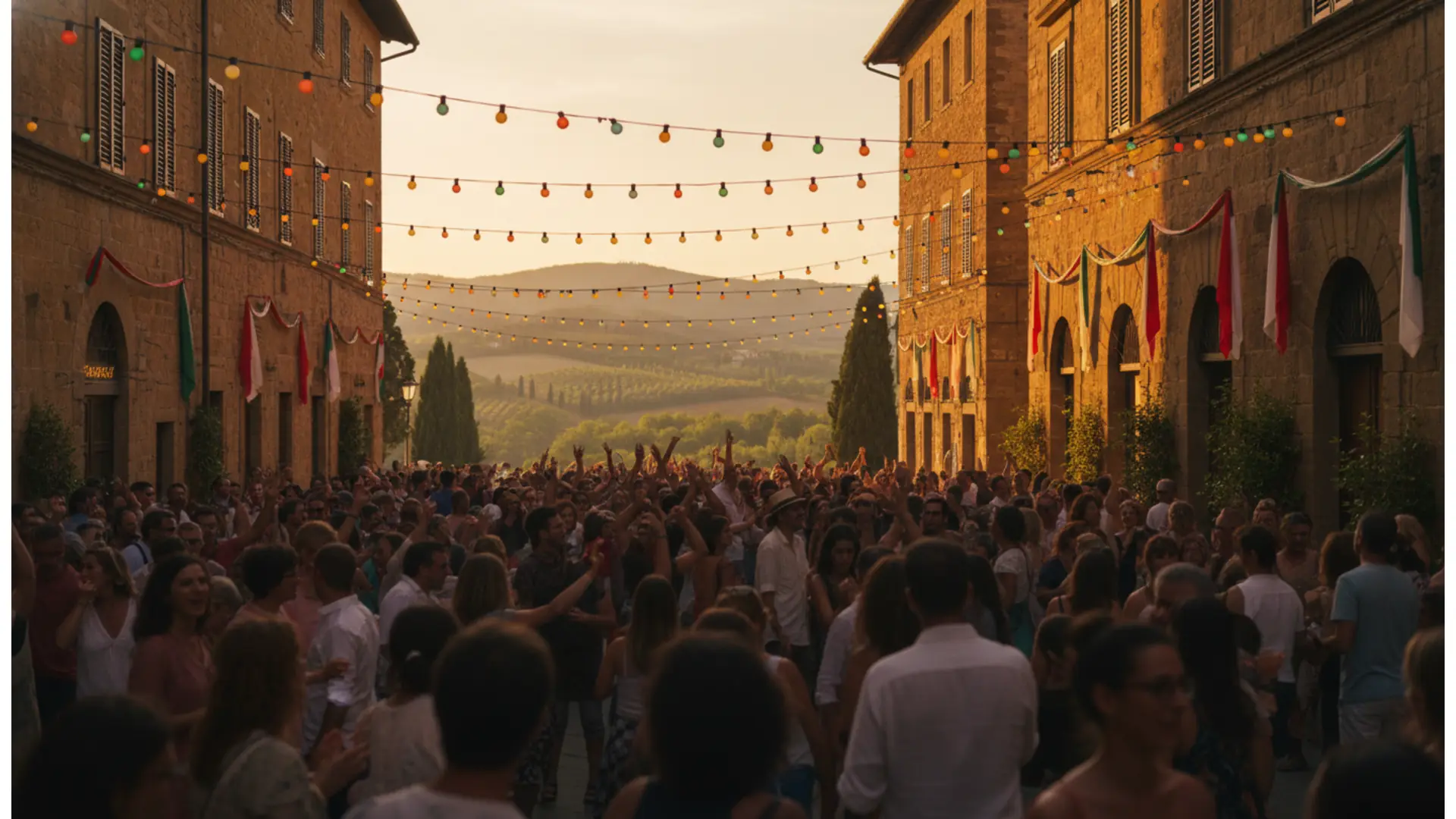
Feast of the Patron Saints Philip and James
On May 3rd, Frascati honors its patron saints with a solemn mass, the offering of votive candles, and a procession through the historic center.
About Saints Philip and James
A festival that embodies the identity of Frascati
May 3rd is the most significant date in the civic and religious calendar of Frascati, a town in the Castelli Romani area near Rome, in the heart of the Lazio region. On this day, the municipality celebrates its Patron Saints Philip and James, two apostles venerated together because their relics were deposited in the Basilica of the Twelve Holy Apostles in Rome. This is no manufactured tourist event; it is the day the local community reaffirms its identity, with schools closed, offices operating on reduced hours, and the historic center bustling with Frascati residents of all ages.
Origins: Cardinal Bessarion and the 15th Century
The festival dates back to the 15th century. It was Cardinal Bessarion, a Greek humanist and Bishop of Frascati between 1449 and 1466, who placed the city under the protection of the two apostles after his transition from the Greek to the Latin Church. Since then, the devotion has remained unbroken, surviving centuries of local history: the city's reconstruction, the era of grand cardinal villas, the 1943 bombings that devastated the center and the Cathedral, and the post-war rebirth. Every May 3rd, the ritual is repeated, remaining identical in substance and vibrant in participation.
The Ritual: Mass, Candles, and Procession
The focal point is the solemn mass at the Cathedral of San Pietro Apostolo, in Piazza San Pietro, presided over by the Bishop of Frascati. During the celebration, the most symbolic gesture of the day takes place: the Mayor offers votive candles to the Patron Saints on behalf of the entire city, a public renewal of the pact between the civic community and its protectors. Following this, the procession carries the sacred images of the two apostles along a route that touches Piazza San Pietro, Via Palestro, Piazza Roma, and the main streets of the historic center, before returning to the Cathedral for a final solemn blessing from the church steps.
The Band, the Square, and the City in Celebration
The day traditionally begins with the «A. Panizza» Classical Band, which marches through the streets with its repertoire of fanfares, waking the city and announcing the festival. Around the liturgical program, a day of widespread social activity unfolds: Frascati's fraschette (traditional taverns) and wine cellars operate at full capacity, with tables filled with porchetta, coppiette, and, naturally, Frascati DOC—the white wine that has made this corner of the Castelli Romani world-famous. While there is no official food festival, the city experiences one of its most gastronomically intense days of the year.
Free Access to the Tuscolano Museum
For several years, the municipality has paired the patronal festival with a cultural gesture: free admission to the Tuscolano Museum, housed in the Scuderie Aldobrandini, which were restored by architect Massimiliano Fuksas. The exhibition tells the story of the territory from ancient Tusculum to the Renaissance, featuring artifacts from the Roman Forum and Theater excavations, the famous series of ten wooden models of the Tuscolan villas, and ancient medals and engravings. The museum also offers a web app that guides visitors with three different narrators: Cicero, a Maenad, and the Cardinal Duke of York.
Why visit
- To witness an authentic patronal festival, not adapted for tourism, just twenty kilometers from Rome
- To attend the offering of the candles, one of the oldest civic rituals in Lazio
- To visit the Tuscolano Museum and the Scuderie Aldobrandini for free
- To combine the festival with a walk through the Tuscolan villas, the archaeological site of Tusculum, and the cellars of Frascati DOC
The Feast of Saints Philip and James is also shared by two other towns in the Castelli Romani, Lanuvio and Nemi, which venerate the same patrons—a small clue to how deep this devotion runs in the religious fabric of the area south of Rome.
Saints Philip and James — edition 2026
Frascati, May 3rd, 2026
The Feast of the Patron Saints fell on a Sunday, encouraging even wider participation than usual. The day followed the traditional format: opening by the town band, solemn mass at the Cathedral of San Pietro with the offering of votive candles on behalf of the city, and in the late afternoon, the procession through the historic center, returning to the Cathedral for a solemn blessing from the church steps.
Free Tuscolano Museum
For the patronal festival, the municipality confirmed free admission to the Tuscolano Museum in the Scuderie Aldobrandini: collections ranging from ancient Tusculum to the Renaissance, the ten wooden models of the Tuscolan villas, medals, and engravings, as well as the new visitor web app with three narrators (Cicero, a Maenad, and the Cardinal Duke of York). During the weekend, a registration booth for the Race for the Cure 2026 was also active in the Scuderie courtyard.
Programme Saints Philip and James 2026
Program of the day — Sunday, May 3rd, 2026
- Morning — The «A. Panizza» Classical Band tours the historic center with its repertoire of marches, opening the festival day
- Cathedral of San Pietro Apostolo — Solemn mass presided over by the Bishop of Frascati, with the offering of votive candles to the Patron Saints by the Mayor on behalf of the city
- Procession — The sacred images of Saints Philip and James travel through the historic center: Piazza San Pietro, Via Palestro, Piazza Roma, and the main streets, returning to the Cathedral
- Solemn blessing given from the church steps at the end of the procession
- All day — Tuscolano Museum, Scuderie Aldobrandini: free admission
Precise times for the celebrations are released annually by the Diocese of Frascati and the Municipality in the days immediately preceding the festival.
Highlights Saints Philip and James 2026
- The Mayor's offering of votive candles during the solemn mass, a civic gesture repeated since the 15th century
- The evening procession with the sacred images of the two apostles through the historic center
- Free opening of the Tuscolano Museum in the Fuksas-designed Scuderie Aldobrandini
- The «A. Panizza» Classical Band opening the day by marching through the city
- The local fraschette serving porchetta, coppiette, and Frascati DOC
Prices Saints Philip and James 2026
Practical information — Saints Philip and James
Getting there
By train: FL4 line from Rome Termini to Frascati, approximately 30 minutes; the Frascati station is a few minutes' walk from Piazza San Pietro. By car: Take the Via Tuscolana (SS215) or the GRA exit 21–22, then follow signs for Frascati; on May 3rd, the historic center is subject to traffic closures for the procession, so it is advisable to use peripheral parking lots. By bus: Cotral connections from Rome Anagnina (Metro A).
Prices
Participation in the celebrations and the procession is completely free. On May 3rd, admission to the Tuscolano Museum at the Scuderie Aldobrandini is free.
Tips
Arrive early for the mass, as the Cathedral fills up quickly. For lunch or dinner, book a table at one of the local fraschette, as demand is very high on May 3rd. Combine your day with a visit to Villa Aldobrandini and the archaeological site of Tusculum.
Information
URP (Public Relations Office) of the Municipality of Frascati, Piazza Guglielmo Marconi 3 — tel. +39 06 941841 — [email protected]
Festival-goer photos
No photos yet. Share yours!
Share your photos
5 photos max, 5 MB per photo (JPG, PNG, WebP)
Noticed an error or missing information?
Help us keep this listing up to date. Every proposal is verified by our team before publication.
Festival-goer reviews
No rating yet — be the first!
No comments yet. Be the first!
Were you there?
Share your experience with the community.
Published by Valentin Contard, festival listings writer. Reviewed, corrected and approved by Christophe Contard, editor-in-chief. .
Where does it take place — Saints Philip and James
Cattedrale di San Pietro Apostolo e centro storico
Piazza San Pietro, 00044 Frascati