Feast of San Salvatore da Horta
Popular devotion, processions, and illuminations at the Sanctuary of the Agro Atellano
About San Salvatore da Horta
A patronal feast in the heart of the Agro Atellano
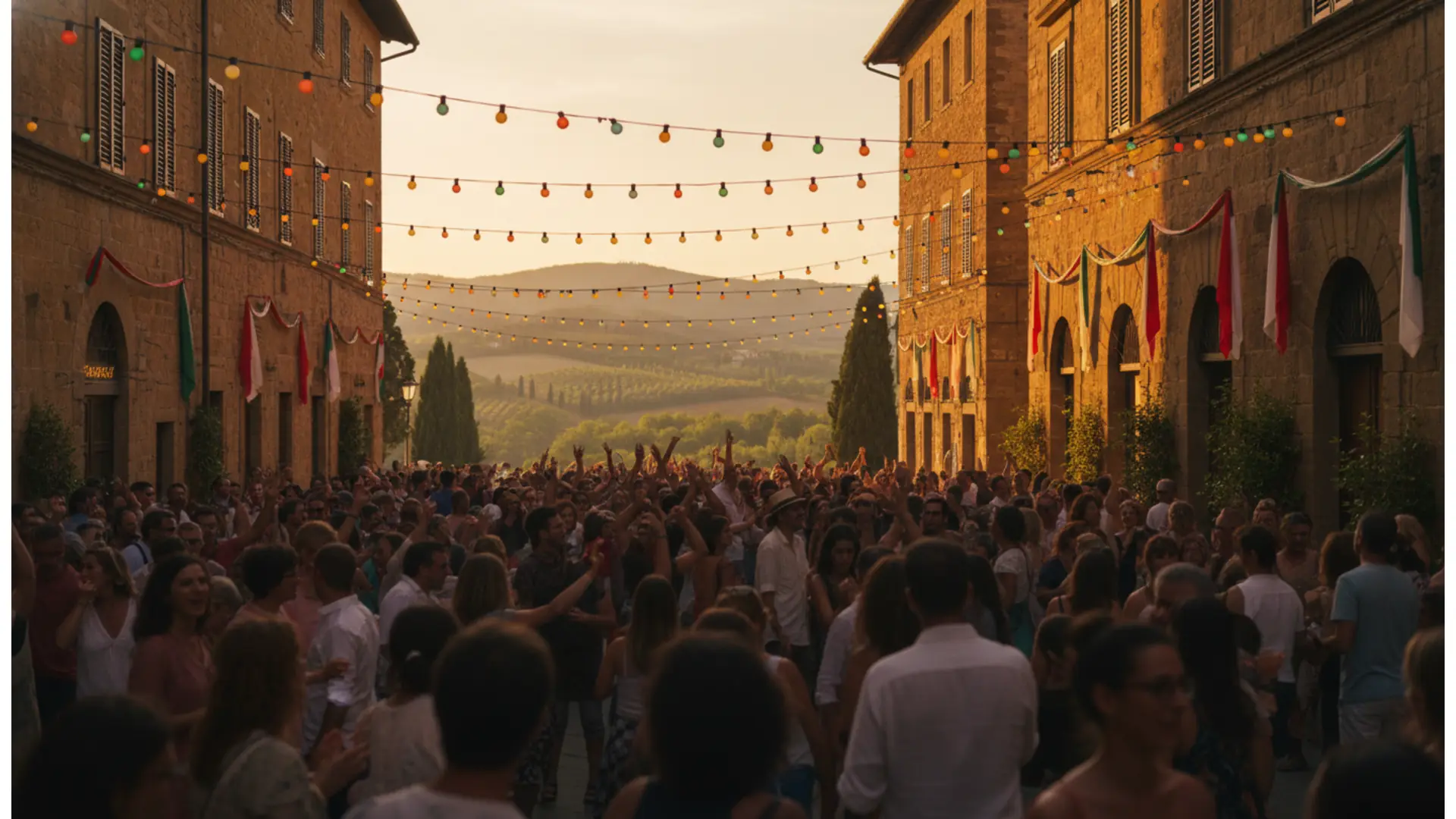
The Feast of San Salvatore da Horta is the defining event for the Municipality of Orta di Atella, in the province of Caserta, located in the heart of the densely populated plain north of Naples that still bears the name of the ancient Oscan city of Atella. For weeks, between late May and mid-June, the town transforms: arches of lights line the main streets, bunting decorates the balconies, stalls selling nougat and hazelnuts fill the square, and a continuous stream of pilgrims reaches the Diocesan Sanctuary of San Salvatore da Horta.
The festival is promoted by the San Salvatore Festival Committee in collaboration with the Orta Franciscan Association, the local Secular Franciscan Order, and the Friars Minor who guard the Sanctuary, with the support of the municipal administration. This is not a manufactured tourist event: it is a grassroots devotion, passed down from generation to generation, which the committee has requested to be inscribed in the Regional Register of Religious and Popular Interest Events of the Campania Region.
Who was San Salvatore da Horta
Salvatore was born in December 1520 in Santa Coloma de Farners, Catalonia. Orphaned, he moved to Barcelona to support himself and his sister, and in May 1541, he joined the Friars Minor, taking the name Brother Salvatore. He lived for a long time in the convent of Horta, in Aragon, where the fame of his miracles became so overwhelming that his superiors were forced to transfer him repeatedly. He finally arrived in Cagliari in November 1565 and died there on March 18, 1567. Beatified by Paul V in 1606, he was canonized by Pius XI on April 17, 1938. His remains are kept in the church of Santa Rosalia, in the Marina district of Cagliari.
The extraordinary 2026 exposition
The bond between Orta di Atella and the Catalan Saint experienced its most intense moment in 2026: from May 15 to June 15, 2026, for the first time in over twenty-three years, the body of San Salvatore da Horta returned to the city for an extraordinary exposition, authorized by decree of the Metropolitan Archdiocese of Cagliari. After a stop at the Royal Basilica of Santa Chiara in Naples, the urn was welcomed on May 15 by a festive procession through the city streets and by thousands of faithful who arrived not only from the Aversa area but also from Puglia, Sardinia, and Spain.
Rites, traditions, and atmosphere
The heart of the festival remains the procession: the reliquary statue, carried on shoulders, travels through every alley of the town accompanied by brass bands, the throwing of flowers from balconies, and the illuminations that light up the squares. Many faithful walk the final stretch barefoot to fulfill a vow, give thanks for a healing, or ask for a grace: an ancient gesture that has been repeated unchanged for centuries.
- Novenas, triduums, and solemn masses presided over by bishops and provincial ministers of the Friars Minor
- Pilgrimages from neighboring parishes, traditionally culminating on Pentecost Sunday
- Solemn procession of the reliquary statue through the districts, with the raising of flags
- Fireworks displays that illuminate the Atellano night as if it were day
- Band and choral concerts, featuring the Corale Franciscus and the Atellana Marching Band
Culture, music, and solidarity
Alongside the liturgy, the calendar hosts annual painting exhibitions dedicated to the Saint, historical conferences, Franciscan-inspired training meetings, and concerts by local artists. The charitable dimension is also present, with a soup kitchen for the poor that recalls the Saint's message of charity, and the Festa dos Irmanos linked to Franciscan missions in Brazil. Homes open their doors, tables are set with traditional Campanian dishes, and music enlivens the evenings until late at night: this is the secular side of the festival, the one that unites generations and brings emigrants back to town.
When to go
The peak period runs from late May to mid-June, with the spiritual climax traditionally placed on Pentecost Sunday. Those seeking the most authentic atmosphere should aim for the day of the solemn procession, when the entire town takes to the streets. The Sanctuary remains open all year round for the devotion of the faithful, with a constant flow of pilgrims from the province of Caserta and the metropolitan area of Naples.
San Salvatore da Horta — edition 2026
A month of grace in the Atellano Sanctuary
2026 marked an unprecedented event in the memory of the last generations for the Municipality of Orta di Atella. The remains of San Salvatore da Horta, usually kept in the church of Santa Rosalia in Cagliari, were solemnly translated on May 11 after verification of the integrity of the seals and placement in a wooden urn suitable for pilgrimage, with Brother Simone Farci appointed as the official custodian of the relics.
After a stop at the Royal Basilica of Santa Chiara in Naples, the urn arrived in Orta di Atella on Friday, May 15, welcomed by a procession through the city streets and a Mass presided over by H.E. Msgr. Angelo Spinillo, Bishop of Aversa. For an entire month, the diocesan Sanctuary remained open for veneration, with daily celebrations, prayer vigils, and visits of the Saint to neighboring parishes. The conclusion took place on Monday, June 15, with the final supplication and farewell before the return to Sardinia.
Programme San Salvatore da Horta 2026
Friday, May 15 — Arrival of the Saint's body
- 4:00 PM — Welcoming procession starting from Via San Massimo: Via Garibaldi, Via Stanzione, San Massimo Parish, Via Chiesa, Via San Donato, Via Tenente Di Lorenzo, Via Diaz, arrival at the Sanctuary
- 6:00 PM — Solemn Holy Mass presided over by H.E. Msgr. Angelo Spinillo, Bishop of Aversa, with numerous Franciscan concelebrants and music by the Corale Franciscus
- Followed by — Fireworks display
Saturday, May 16
- 6:30 PM — Holy Mass celebrated by Brother Giuseppe Sorrentino, Provincial Vicar of the Friars Minor
Sunday, May 17 — Ascension
- 4:00 PM — Procession for the raising of flags in the city districts, led by the committee with Brother Olivier Machozi Mbusa, rector of the Sanctuary, and accompanied by the Atellana Marching Band directed by Maestro Giuseppe Lettiero
- 6:30 PM — Holy Mass presided over by Brother Carlo M. D'Amodio, Provincial Minister of the Friars Minor
Sunday, May 24 — Solemnity of Pentecost
- 10:30 AM — Eucharistic celebration of the pilgrimage
- 3:30 PM — Extraordinary welcoming of pilgrims for the privileged veneration of the Saint's body
Tuesday, May 26 — Main Day
- Solemn celebrations dedicated to the Saint and grand procession through the town streets
- In the evening — Music and fireworks display
From May 15 to June 15 — Throughout the month
- Daily masses and moments of communal prayer with bishops, priests, and Franciscan friars
- Pilgrimages organized by parishes from Campania, Puglia, Sardinia, and Spain
- Painting exhibitions dedicated to San Salvatore da Horta
- Historical conferences, cultural and training meetings of Franciscan inspiration
- Concerts and musical evenings
- Soup kitchen for the poor, in memory of the Saint's charity
Sunday, June 14
- Conferral of honorary citizenship to San Salvatore da Horta, approved by the City Council on June 12 and accepted by Brother Simone Farci, custodian of the remains and rector of the church of Santa Rosalia in Cagliari
Monday, June 15 — Conclusion
- Concluding celebration and final supplication, farewell to the Saint's body and return to Cagliari
Highlights San Salvatore da Horta 2026
- Extraordinary exposition of the body of San Salvatore da Horta, the first in over twenty-three years
- The welcoming procession on May 15 and the Mass by the Bishop of Aversa, Msgr. Angelo Spinillo
- May 26, the main day, with the grand procession and fireworks
- The Pentecost pilgrimage on May 24, the traditional spiritual climax of the festival
- Thousands of pilgrims from Campania, Puglia, Sardinia, and Spain
- The honorary citizenship conferred upon the Saint by the Municipality of Orta di Atella
Prices San Salvatore da Horta 2026
Practical information — San Salvatore da Horta
Where it takes place
Diocesan Sanctuary of San Salvatore da Horta, Piazza San Salvatore 11, 81030 Orta di Atella (CE). The processions cover the historic center and city districts: on peak days, several streets are closed to traffic.
How to get there
- By car: Take the Sant'Arpino/Frattamaggiore exit from the Asse Mediano (SS 162 NC), then follow signs for Orta di Atella. About 20 km from Naples, about 25 km from Caserta. Parking is recommended in the peripheral areas of the town on festival evenings.
- By train: The most convenient stations are Frattamaggiore-Grumo Nevano (Naples-Aversa-Rome line) or Aversa; continue by bus or taxi.
- By plane: Naples-Capodichino Airport, about 15 km away.
Costs
Free entry to all celebrations, processions, and fireworks. Any offerings are intended for the Sanctuary and charitable works.
Contacts
Phone +39 081 8917157 — email [email protected]. Updates and detailed program on the Sanctuary's Facebook page and those of the Festival Committee.
Tips
On days with high attendance, it is advisable to arrive well in advance: the Sanctuary is small, and queues for veneration can be long. Wear clothing appropriate for a place of worship. The late spring weather is already warm: water and a hat are useful during afternoon processions.
Festival-goer photos
No photos yet. Share yours!
Share your photos
5 photos max, 5 MB per photo (JPG, PNG, WebP)
Noticed an error or missing information?
Help us keep this listing up to date. Every proposal is verified by our team before publication.
Festival-goer reviews
No rating yet — be the first!
No comments yet. Be the first!
Were you there?
Share your experience with the community.
Published by Valentin Contard, festival listings writer. Reviewed, corrected and approved by Christophe Contard, editor-in-chief. .
Where does it take place — San Salvatore da Horta
Santuario diocesano di San Salvatore da Horta
Piazza San Salvatore 11, 81030 Orta di Atella