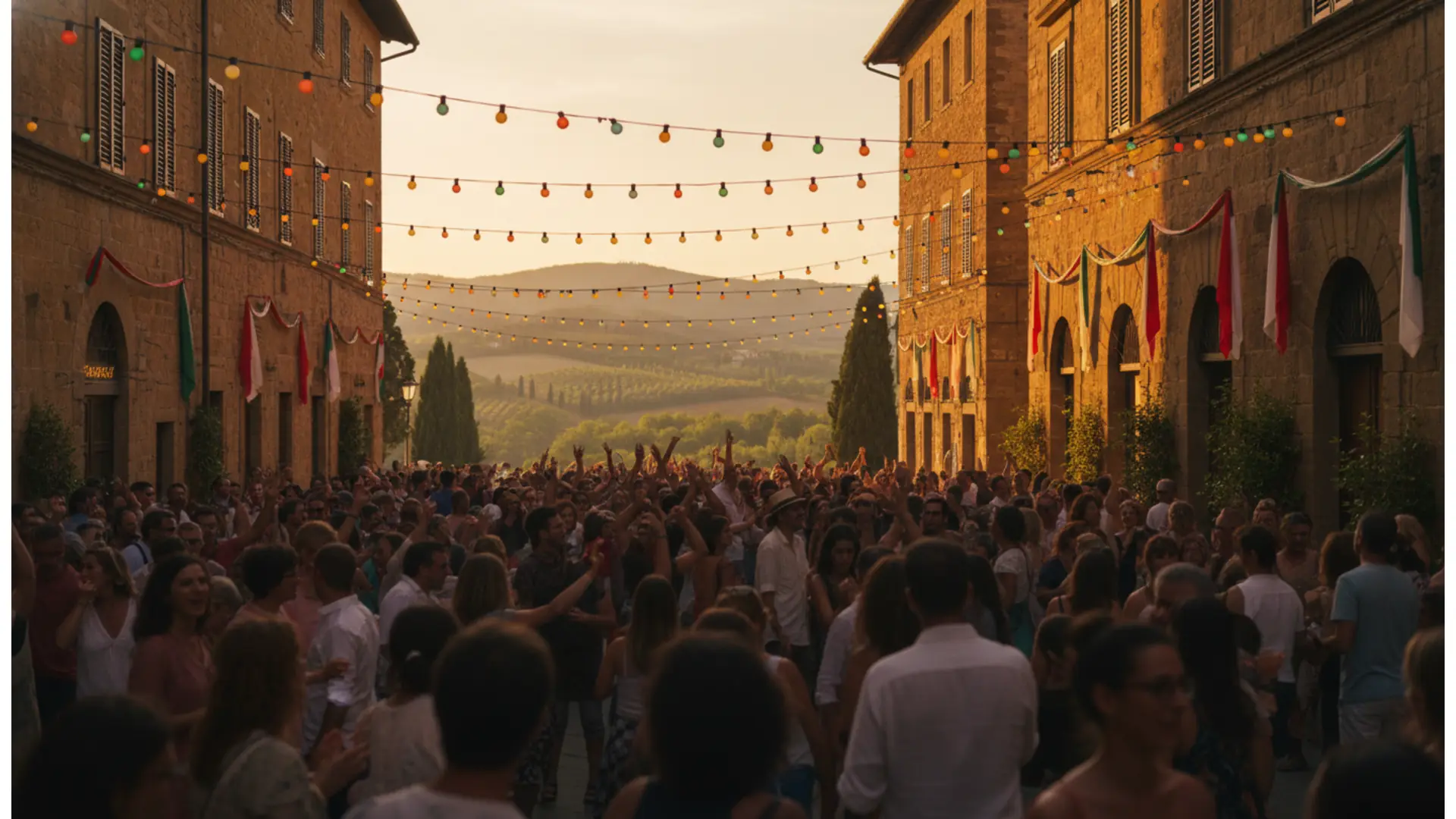
Fanoja Festival
The Saint Joseph bonfire festival in Vieste, blending tradition and folk music
About Fanoja Festival
The Fanoja of Saint Joseph in Vieste
The Fanoja Festival is the annual event in Vieste, in the province of Foggia, that celebrates the Fanoja of Saint Joseph, one of the most deep-rooted folk traditions of the Gargano. The term comes from the local dialect and refers to the large bonfire lit in honor of Saint Joseph: a propitiatory fire, a symbol of purification and the transition from winter to spring. Families, groups of friends, and curious visitors have always gathered around the flames to share music, food, and festive moments. The festival captures this ancient custom and turns it into a widespread event that enlivens the city's districts and squares.
Two days between the 19th-century district and Marina Piccola
The event spans two days and two iconic locations in Vieste: the 19th-century district, where the Fanoja has its roots, and Piazza Marina Piccola, the beating heart of the evening concerts. From the morning, woodpiles are prepared together with schools, food stalls featuring typical Gargano flavors open, and street performances, flag-wavers, stilt-walkers, and folk groups follow one another. At dusk, the lighting of the bonfires takes place—the most anticipated and evocative moment, weaving together the past and present in a unique atmosphere.
Folk music, taranta, and contemporary energy
The stage features a rotation of traditional artists and names from the Southern Italian folk scene, with a mix of pizzica, tarantella, folk, and electronic music. Recent editions have featured groups and musicians such as Sud Folk, Ciccio Merolla, Bundamove, and the famous Sud Sound System, accompanied by brass bands, fire processions, and folk collectives from across the south. The formula combines respect for the religious and community ritual with a festive and engaging language, capable of attracting both residents and visitors.
A defining event of the Gargano
Promoted with the support of the Municipality of Vieste, the Fanoja Festival is much more than just a simple lineup of shows: it is a collective ritual that strengthens the bond between the community and its history. At a time of year far from the beach season, the festival reveals the authentic face of Vieste and the Gargano area of Puglia, through devotion to Saint Joseph, local gastronomy, and folk culture. Admission is free and the entire city participates, making the Fanoja a major regional attraction.
Fanoja Festival — edition 2026
Fanoja Festival 2026 — 14th edition
The 2026 edition of the Fanoja Festival took place in Vieste on March 20 and 21, spread between the 19th-century district and Piazza Marina Piccola. The first day began in the morning with the setting up of woodpiles with local schools and the opening of food stalls, continuing in the afternoon with folk performances, flag-wavers, and street artists, culminating in the lighting of the bonfires. The evenings featured Ciccio Merolla, Sud Folk, Bundamove & Friends, and the Sud Sound System on stage, alongside the Bassa Banda di Molfetta, the folk group I Dragoni del Molise, and numerous DJ sets. The highlight was the fire procession with the 'Ndocciata di Agnone association, the flag-wavers of Lucera, and stilt-walkers.
With the theme "from tradition to innovation," the event confirmed its ability to combine the community ritual of the Fanoja of Saint Joseph with a contemporary musical program, attracting residents and visitors to Vieste with free admission.
Programme Fanoja Festival 2026
Friday, March 20 — 19th-century district
- 10:00 — Setting up the bonfires with schools
- 10:30 — Opening of food stalls
- Afternoon — Folk performances, flag-wavers, street artists, and lighting of the bonfires
- Evening — Concerts: Ciccio Merolla, Sud Folk, Bundamove & Friends, DJ sets
Saturday, March 21 — Piazza Marina Piccola
- 10:15 — Bassa Banda di Molfetta and food stalls
- 11:15 — Folk group I Dragoni del Molise
- Noon — DJ set
- 17:30 — Fire procession with 'Ndocciata di Agnone, flag-wavers of Lucera, and stilt-walkers
- Evening — Lighting of the bonfires and concert by Sud Sound System
Highlights Fanoja Festival 2026
- Concert by Sud Sound System
- Fire procession with the 'Ndocciata di Agnone
- Lighting of the great Fanoja of Saint Joseph bonfires
- Ciccio Merolla, Sud Folk, and Bundamove & Friends live
Prices Fanoja Festival 2026
Practical information — Fanoja Festival
Where
The festival takes place in Vieste (FG), in Puglia, between the 19th-century district and Piazza Marina Piccola. Admission to the events is free.
How to get there
By car: Vieste can be reached via the SS89 along the Gargano. By plane: Bari (Karol Wojtyła) and Foggia airports, with bus connections to Vieste. By train + bus: Foggia station followed by a bus to the Gargano. During the festival days, please note that there will be changes to traffic and circulation in the city center.
Tips
The event is held at the end of winter: we recommend clothing suitable for cool evenings. Many of Vieste's accommodation facilities remain open even in the low season.
Festival-goer photos
No photos yet. Share yours!
Share your photos
5 photos max, 5 MB per photo (JPG, PNG, WebP)
Noticed an error or missing information?
Help us keep this listing up to date. Every proposal is verified by our team before publication.
Festival-goer reviews
No rating yet — be the first!
No comments yet. Be the first!
Were you there?
Share your experience with the community.
Published by Valentin Contard, festival listings writer. Reviewed, corrected and approved by Christophe Contard, editor-in-chief. .
Where does it take place — Fanoja Festival
Borgo Ottocentesco e Piazza Marina Piccola