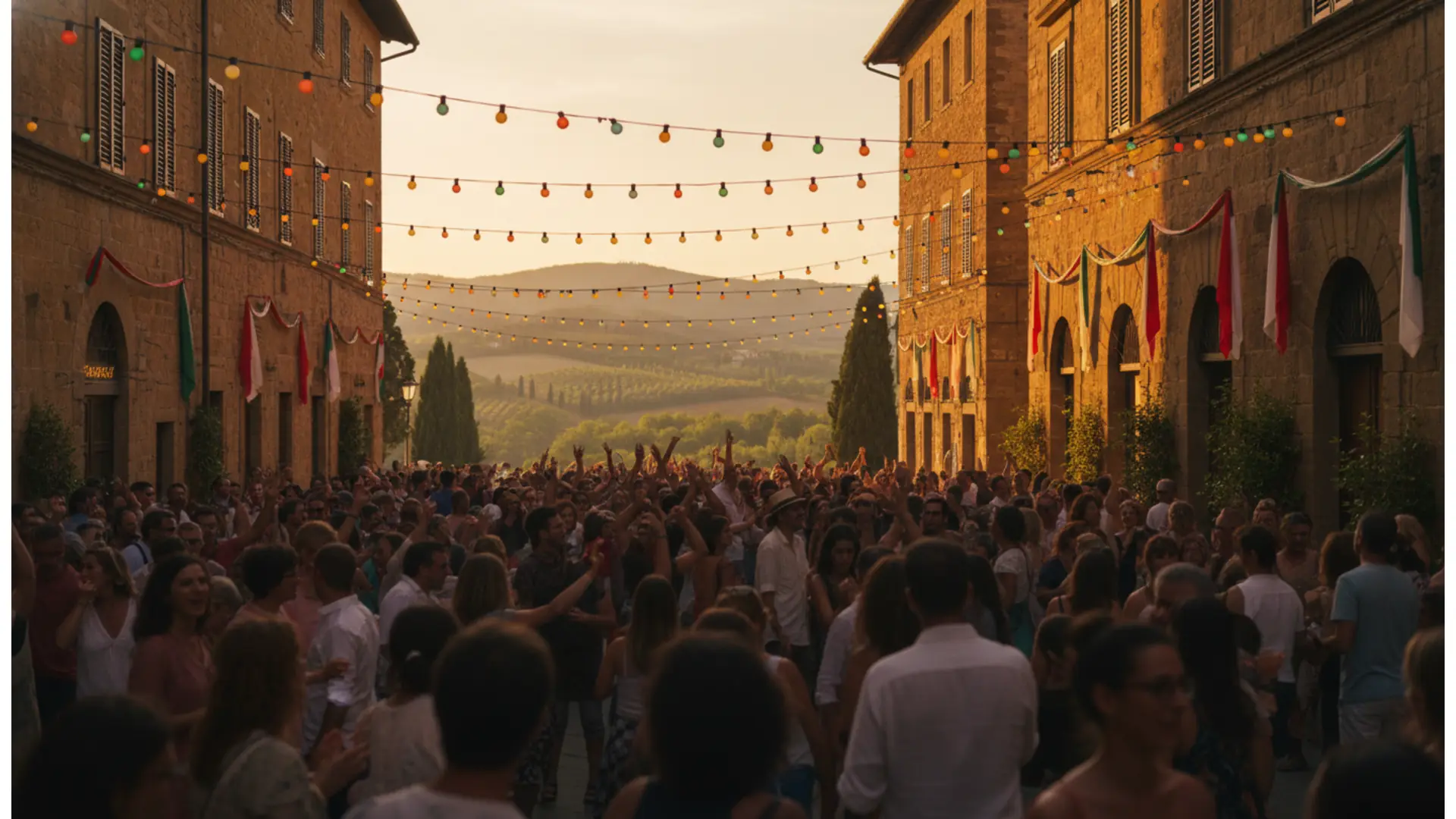
Cosentini Carnival «Carnuluvaro mio»
The old-time carnival of the Cilento region: maschkarata, tofa, and the Ballata di Zeza
About Carnuluvaro mio
A peasant carnival that the Cilento region has not forgotten
Cosentini is a small village in the municipality of Montecorice, in the province of Salerno, overlooking the Cilento coast and located within the Cilento, Vallo di Diano and Alburni National Park. Here, every year between February and March, the community reenacts its traditional Carnival: «Carnuluvaro mio», a festival that the village elders remember dating back at least to the 1940s, and which the Associazione Euphòria has brought back to life by collecting testimonies, songs, and memories door-to-door.
The result does not resemble the large tourist carnivals of Campania: no floats, no store-bought costumes, no stage. It is a humble, participatory carnival where the entire village—children, youth, and the elderly together—becomes both actor and audience.
The maschkarata: humble masks and ancient trades
The heart of the event is the maschkarata, the masked procession that starts from Piazza Assunta and winds through the streets of the historic center. The masks are made at home using humble materials—paper, flour, and water—following techniques passed down by local families.
- The Devil and Death, archaic figures that open and close the procession;
- ancient trades, such as the Cardalana, the wool carder;
- religious figures: the Confessastelle, the Abbot, and the Monk;
- the tofa, the conch shell instrument used by Cilento farmers and fishermen, whose hoarse sound accompanies the entire procession.
The Ballata di Zeza
Upon reaching the historic center, the procession stops and the community performs «La Ballata di Zeza», the folk theater in verse that serves as the soul of the Cilento Carnival. On stage are Zeza, her husband Prucenella, and their daughter Vicenzella, the protagonists of a story about a thwarted marriage, told through local dialect, songs, and folk dances. It is not a professional show but a collective action: the performers are the same neighbors who stitched their own costumes the day before.
Shrove Tuesday: the death of Carnuluvaro and the Quarajesema
The final day is Shrove Tuesday. The maschkarata takes to the streets a second time, the Ballata di Zeza returns to the square, and then the ritual that concludes everything takes place: the death of Carnuluvaro. The community intones a funeral lament, and the effigy representing the Carnival is burned in the town square. Immediately after, the Quarajesema is set up—the old woman with seven chicken feathers, one for each week leading up to Easter: the time for celebration ends, and Lent begins.
Intangible Heritage of Campania
In 2023, «Carnuluvaro mio — La Ballata di Zeza» was included in the Inventory of Intangible Cultural Heritage of Campania (IPIC), in the section dedicated to traditional cultural expressions. The Cosentini Carnival also participates in the Stati Generali della Zeza, the annual meeting that brings together traditional Campanian carnivals that share this form of folk theater.
«Maschkari e suoni pe sta via»: the open-air museum
In July 2026, the Associazione Euphòria unveiled an open-air museum in Cosentini dedicated to the Carnival, created with the support of the Cilento, Vallo di Diano and Alburni National Park. Ten majolica panels by artist Mariana Gonzales, scattered throughout the historic center and equipped with QR codes, provide access to videos of recent editions and testimonies collected from residents; two boards in the village squares display the itinerary map, including a virtual path designed for those with mobility issues. The museum allows visitors to experience the Cosentini Carnival all year round, even out of season.
When and where
The event takes place over two days, Carnival Sunday and Shrove Tuesday, with the procession departing in the early afternoon from Piazza Assunta. Everything takes place outdoors, along the streets and squares of the village, under the patronage of the Municipality of Montecorice and the Province of Salerno. It is one of the best opportunities to visit the inland Cilento region in the low season, when the hillside villages above the coast are returned to their inhabitants.
Carnuluvaro mio — edition 2026
Carnuluvaro mio 2026
Two days, as tradition dictates: Carnival Sunday and Shrove Tuesday. On February 15, 2026, the maschkarata departed at 2:30 PM from Piazza Assunta, crossing the streets of Cosentini to the sound of the tofa until reaching the historic center, where La Ballata di Zeza was performed with Zeza, Prucenella, and their daughter Vicenzella, together with the Devil, Death, the Cardalana, the Confessastelle, the Abbot, and the Monk.
On February 17, Shrove Tuesday, the procession went out a second time and the day ended with the ritual of the death of Carnuluvaro: the community's funeral lament and the burning of the effigy in the town square, marking the beginning of Lent.
The 2026 edition was followed, in the following summer, by the presentation of the open-air museum «Maschkari e suoni pe sta via», ten majolica panels with QR codes along the village streets, created by artist Mariana Gonzales with the support of the Cilento, Vallo di Diano and Alburni National Park.
Programme Carnuluvaro mio 2026
Sunday, February 15, 2026
- 2:30 PM — Meeting and departure of the maschkarata from Piazza Assunta.
- Masked procession through the streets of Cosentini to the historic center, accompanied by the sound of the tofa.
- Performance of the Ballata di Zeza with traditional characters: Zeza, her husband Prucenella and their daughter Vicenzella, the Devil, Death, the Cardalana, the Confessastelle, the Abbot, and the Monk.
- Folk songs and dances in the village squares.
Tuesday, February 17, 2026 — Shrove Tuesday
- Second outing of the maschkarata through the streets of the village.
- Final Ballata di Zeza in the square.
- Death of Carnuluvaro: collective funeral lament and burning of the effigy in the town square, to close the Carnival and open the Lenten season.
Event organized by the Associazione Euphòria, with the patronage of the Municipality of Montecorice and the Province of Salerno.
Highlights Carnuluvaro mio 2026
- The maschkarata with masks made at home from paper, flour, and water: no floats, no store-bought costumes.
- The sound of the tofa, the conch shell instrument of the Cilento peasant and maritime tradition.
- The Ballata di Zeza, folk theater performed by residents of all ages.
- The burning of Carnuluvaro on Shrove Tuesday, preceded by the collective lamentation.
- Recognition in the Inventory of Intangible Cultural Heritage of Campania (IPIC).
Prices Carnuluvaro mio 2026
Practical information — Carnuluvaro mio
How to get there
Cosentini is a village in Montecorice (SA), on the Cilento coast. By car: A2 del Mediterraneo motorway, take the Battipaglia exit, then the SS18 towards Agropoli and provincial roads towards Montecorice; alternatively, from the coast, follow signs for Ortodonico and Cosentini. By train: Agropoli-Castellabate or Vallo della Lucania-Castelnuovo station on the Tyrrhenian line, then bus or taxi. Nearest airport: Salerno-Costa d'Amalfi.
Parking
The historic center has restricted traffic during the procession: it is best to leave your car in the open spaces at the entrance to the village and continue on foot.
Tips
- The meeting point is Piazza Assunta, the starting point of the maschkarata in the early afternoon.
- We are in the hills in the middle of winter: comfortable shoes and warm clothing are essential.
- The most intense ritual is on Shrove Tuesday, with the lamentation and the burning of the effigy: it is worth attending both days.
- Outside of Carnival days, you can explore the «Maschkari e suoni pe sta via» open-air museum in the historic center by following the majolica panels and QR codes.
Information
Associazione Euphòria, Via Scipione Landulfo 23, Cosentini di Montecorice — [email protected], tel. +39 338 1021203.
Festival-goer photos
No photos yet. Share yours!
Share your photos
5 photos max, 5 MB per photo (JPG, PNG, WebP)
Noticed an error or missing information?
Help us keep this listing up to date. Every proposal is verified by our team before publication.
Festival-goer reviews
No rating yet — be the first!
No comments yet. Be the first!
Were you there?
Share your experience with the community.
Published by Valentin Contard, festival listings writer. Reviewed, corrected and approved by Christophe Contard, editor-in-chief. .
Where does it take place — Carnuluvaro mio
Centro storico di Cosentini
Piazza Assunta, frazione Cosentini, 84060 Montecorice