Catanazzo Festival
In Giovi, in the hills above Salerno, the festival celebrating tripe soup with peas and cherry tomatoes, tied to the Madonna dei Campi
About Catanazzo Festival
A spring festival in the hills of Salerno
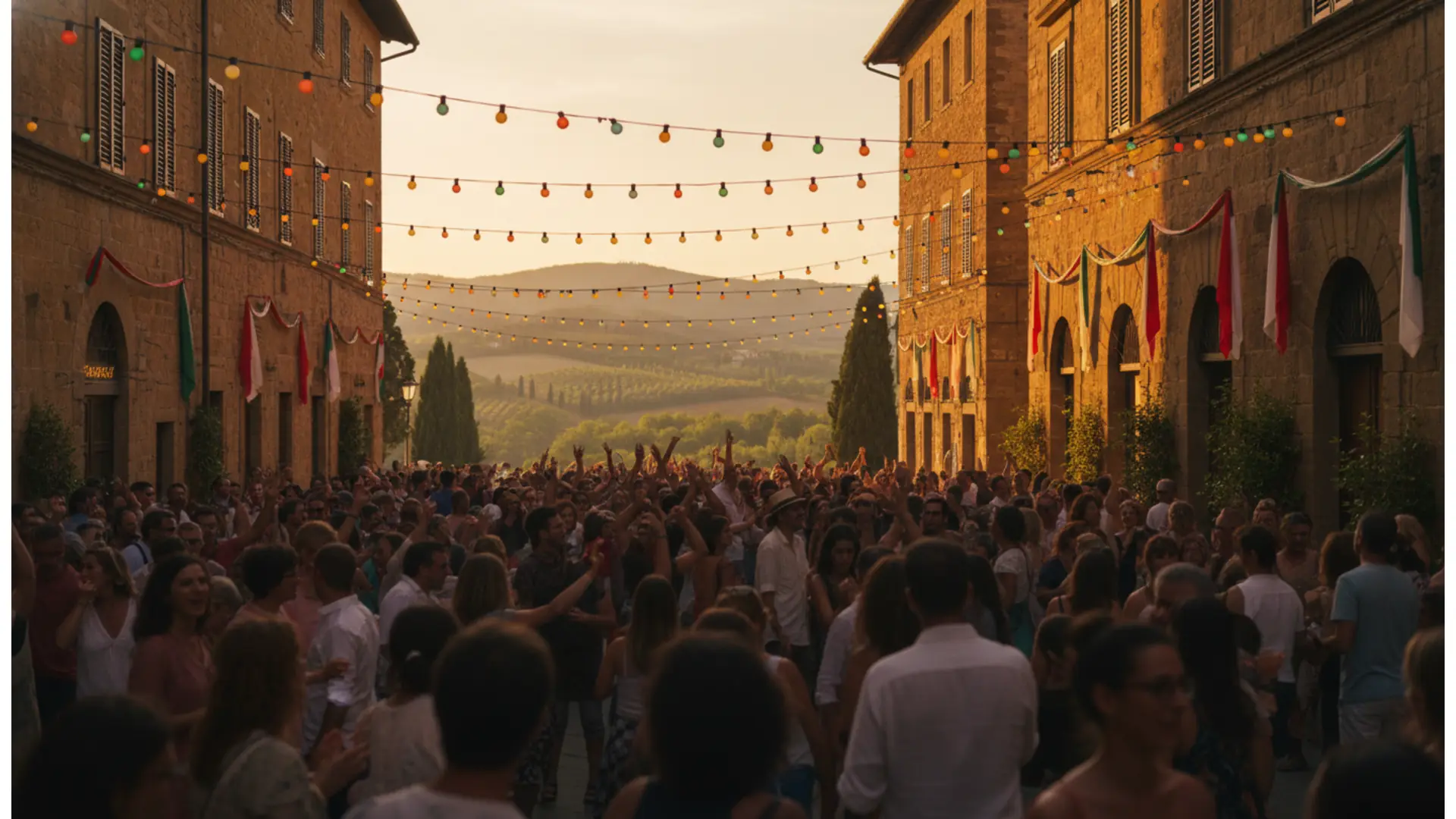
The Catanazzo Festival takes place in Giovi, one of the hillside hamlets of the Municipality of Salerno, in the heart of Campania. The setting for the festivities is the square of the Church of Santa Maria dei Campi, where for several spring evenings the lights of the food stalls are turned on, outdoor tables are set up, and the hamlet fills with visitors coming up from the center of Salerno and neighboring towns. In 2026, the event reached its 34th edition: a milestone that speaks volumes about how deeply rooted this appointment is in the life of the community.
Catanazzo: the soup of peasant cuisine
Catanazzo is a dish you will hardly find anywhere else. It is a tripe soup slow-cooked with fresh peas, cherry tomatoes, and herbs, served piping hot and accompanied by homemade bread. It is a dish of peasant cuisine in the most authentic sense: humble ingredients, long cooking times, and no concessions to the superfluous. The name itself, in the local dialect, is used to indicate something difficult to define, and it fits perfectly with a preparation that sits somewhere between winter and spring.
The recipe handed down in Giovi involves cleaned tripe cut into small pieces, deglazed with white wine, and then combined with a base of sautéed carrots, celery, onion, and garlic, with lard and olive oil; the peas are added halfway through the approximately two hours of cooking, along with ripe cherry tomatoes. It is a preparation that requires patience and expert hands: the volunteers of the hamlet, and in particular Mrs. Amelia Parisi, whose version is considered the original, guard it edition after edition.
Devotion to the Madonna dei Campi
The festival did not arise in isolation: it is the gastronomic offshoot of the celebrations in honor of the Madonna dei Campi, whose feast traditionally falls on the Monday after Pentecost. The devotion is typical of an agricultural community asking for protection for the crops and families at the beginning of the warm season. This also explains the logic of the dish: peas and cherry tomatoes are among the first fruits that spring offers, and their presence in the tripe soup is the peasant way of celebrating the return of the productive season. Those who arrive in Giovi therefore find two dimensions intertwined: the religious one around the small church and the convivial one of the food stalls.
The stalls and the festival menu
The stalls open in the evening and offer, alongside the catanazzo, a parallel menu that expands the choice for those who are not tripe lovers. Recent editions have featured:
- catanazzo served hot with homemade bread, the festival's signature dish;
- pasta e fagioli (pasta and beans) and other traditional dishes from the Salerno countryside;
- sausage sandwiches and other filled rolls;
- pizzas cooked to order;
- traditional desserts and hot zeppole fried on the spot;
- locally produced wine.
The service is the classic one of village festivals, with outdoor tables and an informal rhythm: you queue at the register, pick up your plate, and eat together with others, often sharing the table with strangers.
Music, dance, and folk evenings
Every evening has its own highlight on stage. The program alternates different genres to reach different audiences: dance performances by local schools, DJ sets for the younger crowd, tribute bands dedicated to the great names of Italian pop music, and, inevitably, an evening of folk music with tammurriate and traditional songs from Campania. This is the moment when the festival shows its most authentic face, as the tammurriata is one of the most powerful musical expressions of the Vesuvius and Salerno areas.
Giovi, the hillside hamlet of Salerno
Giovi is located on the heights north of the center of Salerno, in the province of Salerno, and retains a rural character that the capital has long since lost. The houses are spread out along the hillside road among olive groves and vegetable gardens, and from the panoramic points, the view opens up over the gulf. For the visitor, the festival is also an opportunity to discover this little-traveled part of the city, just a few minutes' drive from the seafront but with a completely different atmosphere.
A festival of volunteers
The event is organized by the hamlet's volunteers, who take care of everything: purchasing raw materials, cooking, table service, and setting up the stage. There is no professional structure behind the festival, and this is felt in the family atmosphere that characterizes it. The proceeds serve to support the community's activities and allow the festival to return the following year, in a logic of self-financing that is the rule in village festivals in inland Campania.
When it takes place
The festival is traditionally held between the second half of May and the first days of June, coinciding with the celebrations for the Madonna dei Campi. The dates therefore change from year to year following the liturgical calendar: in 2025 the event fell from June 6 to 9, in 2026 from May 22 to 24. It is advisable to check the official dates on the festival's social media channels before setting off.
Catanazzo Festival — edition 2026
The 34th edition
The 2026 edition of the Catanazzo Festival, the thirty-fourth, was held from Friday, May 22 to Sunday, May 24, 2026 in Giovi, a hamlet of the Municipality of Salerno, at the Church of Santa Maria dei Campi. The stalls opened every evening at 8:30 PM.
At the heart of the festival, as always, was the catanazzo: the tripe soup with peas, cherry tomatoes, and herbs served hot with homemade bread, prepared according to the recipe handed down by the hamlet's volunteers. Alongside the signature dish, the menu offered pasta e fagioli, sausage sandwiches, pizzas, traditional desserts, hot zeppole, and local wine. On Sunday, lunch was also added, with a full menu for 15 euros.
The musical program changed register each evening: dance on Friday, tribute bands on Saturday, tammurriate and folk music on Sunday, closing the weekend in the most traditional way.
Programme Catanazzo Festival 2026
Friday, May 22, 2026
- Opening of food stalls at 8:30 PM in the square of the Church of Santa Maria dei Campi.
- Dance performance by ASD Premuda Dance Studio, directed by Samuele Grimaldi.
- Followed by DJ set with Mike Megaro.
Saturday, May 23, 2026
- Food stalls open from 8:30 PM.
- Concert by Come Max, an 883 and Max Pezzali tribute band.
- Closing of the evening with DJ set by Mike Megaro.
Sunday, May 24, 2026
- Lunch with a dedicated menu for 15 euros.
- Food stalls open from 8:30 PM.
- Evening of folk music with Tammorrasia, featuring tammurriate and traditional songs from Campania.
Highlights Catanazzo Festival 2026
- 34th edition of the festival, from May 22 to 24, 2026.
- Catanazzo served hot with homemade bread, prepared according to the original local recipe.
- Stalls open every evening from 8:30 PM in the square of the Church of Santa Maria dei Campi.
- Dance performance by ASD Premuda Dance Studio with DJ set by Mike Megaro (Friday).
- Concert by Come Max, an 883 and Max Pezzali tribute band (Saturday).
- Folk music and tammurriate with Tammorrasia (Sunday).
- Full Sunday lunch menu for 15 euros.
- Pizzas, sausage sandwiches, traditional desserts, hot zeppole, and local wine at the stalls.
Prices Catanazzo Festival 2026
Practical information — Catanazzo Festival
How to get there
Giovi is a hillside hamlet of the Municipality of Salerno, reachable by car from the city center by driving up the panoramic roads that lead toward the heights north of the capital. By train, you arrive at Salerno station, which is connected to high-speed and regional coastal lines; from there, you can continue by car or taxi. On the motorway, the reference exit is Salerno on the A2 del Mediterraneo. The festival area is the square of the Church of Santa Maria dei Campi, along Viale degli Eucalipti.
Hours and admission
The food stalls open in the evening, approximately from 8:30 PM for the 2026 edition and from 7:00 PM for editions with more days. Admission to the festival is free: you only pay for what you consume at the stalls.
Practical tips
- Parking in the hamlet is limited: it is best to arrive early or be prepared to leave your car a few hundred meters away.
- Hillside evenings can be cool even in May: it is better to bring a sweatshirt.
- Catanazzo is a substantial tripe-based dish; those who do not like it will still find pizzas, sandwiches, and desserts.
- Sunday is the busiest day, with lunch available in addition to dinner.
Contacts
Updates on dates and the program are published on the festival's social media channels (Instagram: @sagradelcatanazzo.giovi) and covered by the local Salerno press.
Festival-goer photos
No photos yet. Share yours!
Share your photos
5 photos max, 5 MB per photo (JPG, PNG, WebP)
Noticed an error or missing information?
Help us keep this listing up to date. Every proposal is verified by our team before publication.
Festival-goer reviews
No rating yet — be the first!
No comments yet. Be the first!
Were you there?
Share your experience with the community.
Published by Valentin Contard, festival listings writer. Reviewed, corrected and approved by Christophe Contard, editor-in-chief. .